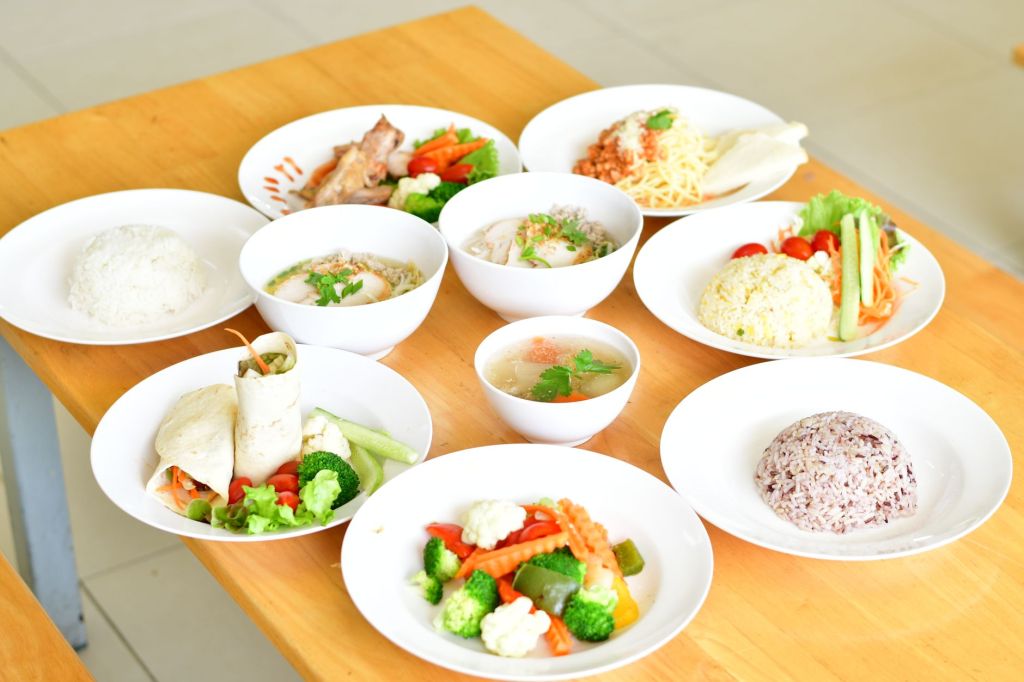
Learn what a healthy plate is, how to balance vegetables, fruits, whole grains, protein and healthy fats, and how simple food choices can help you cultivate better nutrition and wellness.
Introduction
What did you eat on your plate today?
It is a simple question, but it can reveal a great deal about how we nourish our bodies.
For many people, healthy eating sounds complicated.
There are diets.
There are food rules.
There are superfoods.
There are fasting plans.
There are low-carbohydrate diets, high-protein diets, plant-based diets and countless other approaches competing for our attention.
With so much information available, it is easy to become confused.
But healthy eating does not have to begin with complicated calculations.
Sometimes, it can begin with something much simpler:
Look at your plate.
A healthy plate is a practical way of thinking about balanced nutrition. Instead of obsessing over individual nutrients or labeling foods as completely “good” or “bad,” the healthy-plate approach encourages you to consider the overall composition of a meal.
Are you eating vegetables or fruits?
Do you have a source of protein?
Are your carbohydrates mostly nutrient-rich choices?
Have you included some healthy fats?
Are your portions appropriate for your needs?
And perhaps most importantly:
Does your overall eating pattern give your body the nourishment it needs?
At The Body Garden Mastery, we use the garden as a picture for understanding wellness.
Your body is a garden.
Food is one of the ways you cultivate that garden.
Let’s explore what a healthy plate really means.
What Is a Healthy Plate?
A healthy plate is a simple visual approach to building a balanced meal.
Rather than focusing on one food or one nutrient, you aim to include several food groups in appropriate proportions.
A general healthy-plate model emphasizes:
Vegetables and fruits
Protein-rich foods
Whole or minimally refined carbohydrate sources
Healthy fats
The exact proportions do not need to be identical at every meal.
Your nutritional needs can vary depending on your age, activity level, body size, health circumstances, cultural food traditions and other individual factors.
The goal is not to create a perfect plate.
The goal is to develop a balanced pattern of eating over time.
That distinction is important.
One meal does not determine your health.
One food does not make a diet healthy or unhealthy.
Your body experiences your eating pattern repeatedly, day after day.
That is where cultivation comes in.
Think of Your Plate as a Garden
Imagine preparing a garden.
You would not expect one type of plant to provide everything the garden needs.
Different plants have different characteristics.
Likewise, different foods provide different nutrients.
Vegetables can provide vitamins, minerals, fiber and many beneficial plant compounds.
Fruits can provide vitamins, minerals, fiber and naturally occurring carbohydrates.
Beans, peas, lentils, eggs, fish, poultry, dairy products, nuts and other foods can provide protein and other nutrients.
Whole grains and other carbohydrate-rich foods can provide energy, fiber and nutrients.
Healthy fats can provide essential fatty acids and help with the absorption of certain fat-soluble vitamins.
The lesson is simple:
Variety matters.
Your body needs a variety of nutrients, and variety becomes easier when your meals contain a variety of nutritious foods.
Start With Vegetables
One of the simplest ways to improve a meal is to make vegetables a regular part of your plate.
Vegetables come in many forms and colors.
Think about:
Spinach.
Kale.
Sukuma wiki.
Cabbage.
Carrots.
Tomatoes.
Pumpkin.
Broccoli.
Cauliflower.
Green beans.
Peppers.
Eggplant.
Traditional leafy greens.
Other locally available vegetables.
Different vegetables provide different combinations of nutrients and plant compounds.
Instead of asking, “Which vegetable is the healthiest?”
A more useful question may be:
How can I eat a greater variety of vegetables over time?
You can vary the colors.
You can vary the textures.
You can vary preparation methods.
You can eat some vegetables raw when appropriate, while cooking others.
You can include locally available seasonal vegetables.
The objective is not perfection.
It is variety and consistency.
Don’t Forget Fruits
Fruit can also form an important part of a balanced eating pattern.
Examples include:
Bananas.
Oranges.
Mangoes.
Pawpaw.
Pineapple.
Watermelon.
Passion fruit.
Avocado.
Berries where available.
Apples.
Guavas.
And many other locally available fruits.
Whole fruit generally provides fiber along with its naturally occurring sugars.
This is different from drinking large quantities of fruit juice, which can make it easier to consume more sugar and less fiber than you would by eating the whole fruit.
A practical principle is:
When possible, eat the fruit rather than simply drinking it.
That does not mean fruit juice can never be consumed.
It means whole fruit can be a useful default choice within a balanced eating pattern.
Add a Protein Source
Protein is an essential nutrient involved in many functions throughout the body.
It contributes to the maintenance and repair of tissues and plays important roles in enzymes, hormones and other biological processes.
Protein-rich foods include:
Beans.
Lentils.
Peas.
Eggs.
Fish.
Chicken.
Lean meats.
Milk.
Yoghurt.
Other dairy products.
Nuts and seeds.
Soy and other plant-based protein sources.
One of the advantages of combining different food groups is that you can create satisfying meals without relying on a single food.
For example, a meal could combine beans with vegetables and a whole-grain carbohydrate.
Another meal could include fish, vegetables and a suitable carbohydrate source.
A vegetarian meal could combine legumes, vegetables, grains and other nutritious plant foods.
The best choices depend on individual needs, preferences, availability and dietary patterns.
Understand Carbohydrates
Carbohydrates have sometimes become the villain of modern diet culture.
But carbohydrates are not automatically unhealthy.
They are found in many nutritious foods, including fruits, vegetables, legumes and whole grains.
The more useful question is often:
What type of carbohydrate am I eating, and how much?
Instead of building meals primarily around highly refined carbohydrate foods, consider including more minimally processed sources such as:
Whole grains.
Oats.
Brown rice.
Whole-grain maize.
Millet.
Sorghum.
Sweet potatoes.
Beans and other legumes.
Fruits.
Vegetables.
These foods can provide carbohydrates alongside varying amounts of fiber, vitamins, minerals and other nutrients.
This does not mean every carbohydrate-rich food needs to be eliminated.
It means learning to distinguish between different carbohydrate sources and considering the overall quality of your eating pattern.
Include Healthy Fats
Fat is another nutrient that has often been misunderstood.
Your body needs dietary fat.
The important question is which fats, how much and as part of what overall eating pattern?
Sources of unsaturated fats include:
Avocados.
Nuts.
Seeds.
Some vegetable oils.
Olives and olive oil.
Fatty fish.
These foods can contribute beneficial fats and other nutrients.
At the same time, many highly processed foods contain large amounts of saturated fats, added sugars and sodium.
A healthy eating pattern generally emphasizes nutrient-rich foods and limits excessive consumption of highly processed foods.
Again, balance matters.
The goal is not to fear fat.
The goal is to understand it.
What About Portion Size?
A healthy plate is not only about what you eat.
It is also about how much you eat.
Portion needs vary considerably from person to person.
Someone who performs physically demanding work may have different energy requirements from someone who spends most of the day sitting.
Children, adults and older people have different nutritional needs.
Athletes may have different requirements from less active individuals.
Medical conditions can also change dietary needs.
Therefore, a healthy plate should be considered a flexible educational model rather than a rigid prescription.
Pay attention to hunger, fullness, energy needs and overall dietary quality.
Eating slowly can also help you become more aware of how much food you actually need.
A Simple Healthy Plate Example
Imagine preparing lunch.
Instead of filling the entire plate with one food, build variety.
You might have:
A generous serving of vegetables.
A portion of beans, fish, eggs or another protein source.
A suitable serving of whole-grain maize, brown rice, millet, sorghum or sweet potato.
A small amount of healthy fat, such as avocado.
You might add a piece of whole fruit afterward or include it elsewhere during the day.
This is not a magic formula.
It is simply an example of how different food groups can work together.
And remember:
Healthy eating does not have to look the same in every household.
A healthy plate in Kenya may look different from one in India, Jamaica, Europe or the United States.
Cultural foods can absolutely be part of healthy eating.
The question is how they fit into the overall pattern.
Traditional Foods Can Belong on a Healthy Plate
There is tremendous value in looking at the foods that are already available within local communities.
Traditional diets in many cultures contain nutritious foods that deserve greater appreciation.
In Kenya, this might include foods such as:
Beans.
Green leafy vegetables.
Traditional vegetables.
Maize.
Millet.
Sorghum.
Sweet potatoes.
Arrowroots.
Pumpkin.
Avocado.
Fruits.
Fish.
Other locally available foods.
Healthy eating does not require abandoning your culture.
Instead, you can examine traditional foods through the lens of balance, preparation methods, portions and variety.
The goal is not to make every meal foreign.
The goal is to make your familiar foods work within a nutritious pattern.
Be Careful With Ultra-Processed Foods
Modern food environments make highly processed foods easy to access.
Some processed foods can fit into a balanced diet.
Processing itself is not automatically bad.
For example, freezing, drying, fermenting, pasteurizing and other processes can be useful ways of preserving or preparing food.
The concern arises when highly processed foods become the foundation of the diet and frequently displace more nutrient-dense foods.
Many highly processed foods are designed to be extremely convenient and highly palatable.
They may contain substantial amounts of added sugars, sodium or unhealthy fats.
Instead of thinking:
“I can never eat processed food.”
Try asking:
“What forms the foundation of most of my meals?”
That question moves the conversation away from perfection and toward patterns.
Healthy Eating Is Not About Perfection
One of the biggest mistakes people make when changing their diet is expecting perfection.
They start a new plan on Monday.
They eat perfectly for several days.
Then they have a meal that does not fit the plan.
They feel guilty.
They conclude that they have failed.
And they abandon the entire effort.
This is unnecessary.
One meal is not your entire diet.
One day is not your entire lifestyle.
If one meal is less balanced than you intended, return to your normal healthy pattern at the next opportunity.
Don’t turn one imperfect meal into an imperfect week.
Cultivation requires consistency, not perfection.
The Healthy Plate and the Healing Gap
This is where the Healing Gap Framework™ becomes useful.
Ask yourself:
Where am I now?
What does my current diet actually look like?
Do I regularly eat vegetables?
Do I eat fruit?
Do I include protein?
Do I drink enough fluids?
How often do highly processed foods dominate my meals?
Where do I want to be?
Perhaps you want to eat more vegetables.
Perhaps you want more consistent meals.
Perhaps you want to reduce excessive sugary foods.
Perhaps you want to improve your overall food quality.
What Is the Gap?
Identify the difference between your current eating pattern and your desired pattern.
What Are the Barriers?
Is it cost?
Time?
Availability?
Food preferences?
Family habits?
Work schedules?
Lack of planning?
Emotional eating?
Understanding the barrier is important because the solution depends on the problem.
What Action Can You Take?
Don’t try to change everything at once.
Perhaps your first action is simply:
Add one serving of vegetables to lunch every day.
Once that becomes easier, build another habit.
How Will You Measure Progress?
Track what you are actually doing.
Not what you intended to do.
Progress becomes easier to understand when it is visible.
What Does Your Freedom Day Look Like?
Your Freedom Day might represent reaching a meaningful wellness milestone.
It could mean developing confidence in your food choices.
It could mean establishing a sustainable healthy eating routine.
It could mean no longer feeling confused every time you plan a meal.
The objective is to create a sustainable relationship with food.
A Simple Healthy Plate Checklist
Before eating, ask yourself:
Where are my vegetables?
Where is my fruit?
Where is my protein?
What is my main carbohydrate source?
Have I included a healthy source of fat?
Is this portion appropriate for me?
Am I eating mostly whole or minimally processed foods?
Am I drinking enough water throughout the day?
Am I eating because I am hungry, or for another reason?
These questions can turn an ordinary meal into an opportunity for awareness.
Your Plate Is a Daily Wellness Classroom
Every meal provides an opportunity to learn.
You learn what makes you feel satisfied.
You learn how different foods fit into your lifestyle.
You learn how to prepare healthier meals.
You learn what foods are available locally.
You learn how to plan.
You learn how to listen to your body while recognizing that symptoms should not be self-diagnosed.
And you learn that healthy eating does not have to be complicated.
The plate in front of you can become a simple reminder:
Nourishment is cultivation.
Start Small
If your current diet is far from where you want it to be, don’t become overwhelmed.
Start with one change.
Add vegetables.
Choose whole fruit more often.
Include a protein source.
Experiment with whole grains.
Drink water regularly.
Reduce your reliance on highly processed foods.
Learn to read food labels where available.
Prepare more meals at home when practical.
Eat mindfully.
Then repeat.
Small improvements can become habits.
Habits can become routines.
Routines can become a lifestyle.
And lifestyle is one part of the garden you cultivate every day.
The Body Garden Challenge
For your next meal, don’t try to create a perfect plate.
Simply observe it.
Look at the foods in front of you.
Ask what is missing.
Then make one improvement.
Maybe add vegetables.
Maybe add a protein source.
Maybe replace a refined carbohydrate with a less processed alternative.
Maybe add a piece of fruit.
Maybe drink water instead of a sugary beverage.
One improvement.
Then another tomorrow.
This is how cultivation begins.
Final Thoughts
A healthy plate is not a rigid formula.
It is a practical way to think about balanced nutrition.
It encourages variety.
It encourages nutrient-dense foods.
It encourages appropriate portions.
It encourages greater awareness.
Most importantly, it reminds us that healthy eating is not about finding one perfect food.
It is about creating a pattern.
Your body is your garden.
Every meal is an opportunity to cultivate it.
You don’t need to change everything today.
Start with the plate in front of you.
Look at it.
Learn from it.
Improve it where you can.
Then do it again tomorrow.
Learn.
Cultivate.
Observe.
Adjust.
Grow.
That is the Body Garden way.
Your body is a garden. Learn how to cultivate wellness.
Health Information Disclaimer: This article is provided for general educational purposes and is not individualized medical or nutritional advice. Nutritional needs vary between individuals, and people with medical conditions, allergies, special dietary requirements or concerns about their nutrition should consult an appropriately qualified healthcare professional or registered dietitian.

