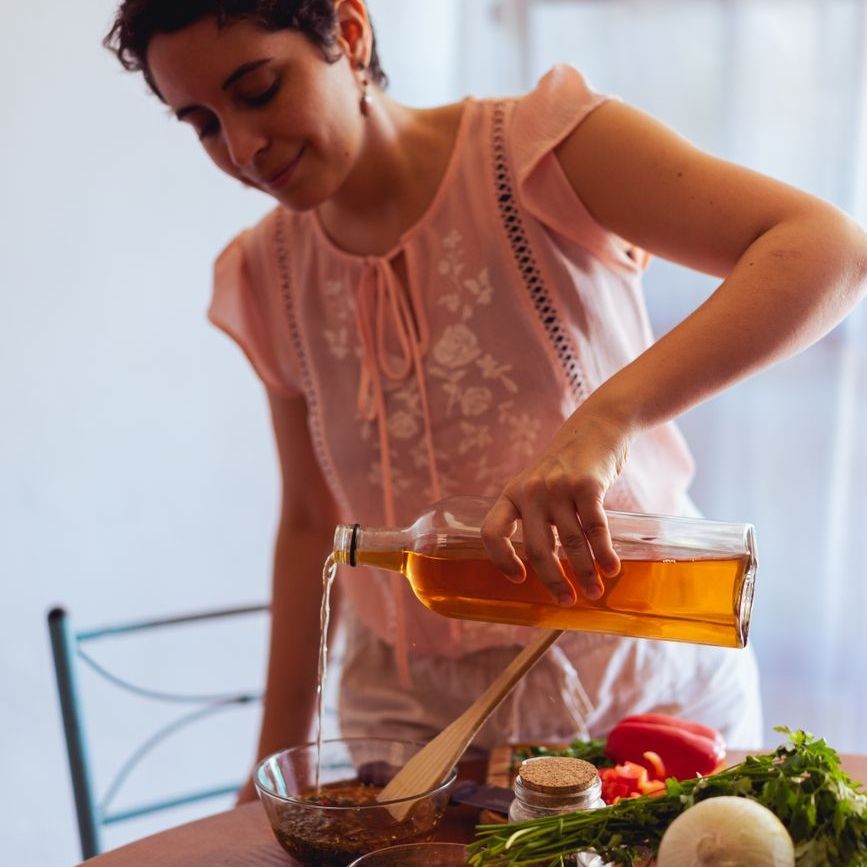
Can dietary vegetable oils lubricate your joints? Discover how olive, flaxseed, sesame and other plant oils may support joint health, healthy inflammation and mobility—and what the science actually says.
Introduction
Have you ever heard someone say, “My joints need oil”?
It is an appealing idea.
Just as we put oil on a squeaky hinge, it can seem logical that eating more oil might somehow lubricate stiff, painful joints.
But the human body does not work quite like a machine.
You cannot drink a spoonful of vegetable oil and expect it to travel directly to your knees, hips, shoulders or fingers and coat the joints like engine oil.
Yet there is an important nutritional idea behind the metaphor.
The fats you eat can influence the building blocks available to your cells, the overall quality of your diet, body weight, and some pathways involved in inflammation.
This makes dietary oils potentially relevant to a Body Garden approach to joint wellness.
The goal is not to “pour oil into the joints.”
The goal is to cultivate the internal environment in which your joints, muscles, bones and connective tissues can function well.
This distinction matters, especially for people living with osteoarthritis, stiffness or recurring joint discomfort.
Your Joints Are Not Hinges
A joint is a living biological structure.
Depending on the joint, it can contain cartilage, synovial fluid, ligaments, tendons, muscles, blood vessels, nerves and other tissues.
Healthy synovial joints already contain a specialized fluid that helps reduce friction and supports movement.
Therefore, when someone says they want to “lubricate their joints,” a more scientifically useful interpretation is:
How can I nourish my body in ways that support healthy joint structure, movement and inflammatory balance?
That is a much better question.
And it brings us directly into the Body Garden.
A garden does not become healthy because you pour cooking oil onto the soil.
It becomes healthy because you provide the right conditions—appropriate water, nutrients, sunlight, healthy soil, protection and regular cultivation.
Your body is similar.
Joint health is cultivated, not simply lubricated.
Why Dietary Fat Matters
Dietary fat is an essential part of human nutrition.
Fats provide energy and help the body absorb fat-soluble vitamins such as vitamins A, D, E and K. They also contribute fatty acids that the body uses in cell membranes and other biological processes.
But not all dietary fats have identical effects.
Different fatty acids can participate in different metabolic and inflammatory pathways.
Research examining fatty acids and osteoarthritis has found particular interest in omega-3 polyunsaturated fatty acids because of their potential influence on inflammatory processes. However, the evidence is not strong enough to conclude that simply increasing dietary oil will prevent or reverse osteoarthritis.
This is an important lesson:
Nutrition can support the body without being a cure.
The Difference Between Lubrication and Nourishment
Imagine two different statements:
“Olive oil lubricates my knee.”
and
“Olive oil can be part of a dietary pattern that supplies beneficial fats and plant compounds.”
The second statement is much more accurate.
When you consume a dietary oil, it is digested and its components are absorbed and metabolized. It does not remain as a layer of oil inside your knee.
So the Body Garden interpretation is:
Dietary oils are nutrients—not joint lubricants.
This does not make them irrelevant.
It simply means we should understand their role correctly.
Olive Oil and the Joint-Friendly Diet
Extra-virgin olive oil is particularly interesting because it contains predominantly monounsaturated fat together with various plant compounds, including polyphenols.
Some olive-derived compounds have been investigated for their possible effects on inflammatory and pain-related pathways.
A 2026 systematic review and meta-analysis of olive-derived extracts and bioactive compounds in people with osteoarthritis or degenerative joint pain found a modest reduction in pain in the small number of studies included, but the researchers emphasized that the evidence remains limited and preliminary.
That distinction is important.
The research does not establish that ordinary olive oil is a treatment or cure for arthritis.
Rather, it adds to the broader nutritional conversation about including plant foods and beneficial fats in a balanced dietary pattern.
Flaxseed Oil and Omega-3 Fatty Acids
Flaxseed oil is another vegetable oil that attracts attention because it is rich in alpha-linolenic acid (ALA), an omega-3 fatty acid.
ALA is an essential fatty acid, meaning the body needs it from the diet.
Other important omega-3 fats include EPA and DHA, which are found mainly in marine foods.
The body can convert some ALA into EPA and DHA, although the conversion is limited.
This means flaxseed oil can contribute omega-3 nutrition, but it should not automatically be considered equivalent to fish-derived EPA and DHA.
Research on omega-3 fatty acids and osteoarthritis has produced interesting but mixed findings.
One 2023 meta-analysis of nine randomized controlled trials involving 2,070 people with osteoarthritis reported improvements in pain and joint function with omega-3 supplementation compared with placebo.
However, another systematic review concluded that the evidence concerning omega-3 and painful osteoarthritis symptoms was relatively low quality because the studies differed considerably in doses, populations and methods.
So the responsible message is:
Omega-3 fats may be useful components of a joint-supportive diet, but they should not be presented as a guaranteed arthritis remedy.
What About Sesame Oil?
Sesame oil is another traditional vegetable oil used in many cultures.
It contains predominantly unsaturated fats and various plant compounds.
Sesame seeds themselves can also contribute protein, minerals, fibre and other nutrients.
From a Body Garden perspective, the important question is not simply:
“Which oil is the miracle oil?”
Instead ask:
“What overall dietary pattern am I cultivating?”
Using a reasonable amount of a quality vegetable oil alongside vegetables, legumes, whole grains, fruits, nuts, seeds and appropriate protein sources is a very different nutritional pattern from consuming large amounts of refined, highly processed foods simply because they contain vegetable oil.
Oil Quality Matters
Not every food containing “vegetable oil” automatically belongs in a joint-supportive diet.
The word vegetable can create a health halo.
But a food can contain vegetable oil while also being highly processed and rich in refined carbohydrates, excess sodium, added sugars or excessive calories.
Consider the difference between:
A meal of vegetables, beans, whole grains and a modest amount of plant oil
and
A packet of highly processed fried food containing refined oil, refined starch and excess sodium.
Both may contain vegetable oil.
They are not nutritionally equivalent.
This is why food quality and dietary pattern matter more than obsessing over one ingredient.
The Five Fires of the Body Garden
When thinking about joint wellness, dietary oil should be considered within the wider garden.
Think about five major “fires” that can influence the condition of the garden:
Nutrition
Are you consistently providing the nutrients your body needs?
Inflammation
Are your overall dietary and lifestyle patterns supporting or challenging healthy inflammatory balance?
Movement
Are your joints receiving appropriate movement and muscular support?
Recovery
Are you sleeping and resting adequately?
Body Weight and Metabolic Health
Are you carrying more body weight than your joints can comfortably manage?
No single oil can compensate for neglecting the rest of the garden.
The Mediterranean-Style Pattern
This is where dietary patterns become particularly interesting.
A Mediterranean-style dietary pattern typically emphasizes vegetables, fruits, legumes, whole grains, nuts, seeds, olive oil and other minimally processed foods, with appropriate amounts of fish and other protein sources.
Research examining dietary patterns and osteoarthritis has reported associations between healthier dietary patterns and better symptom outcomes, although the evidence remains limited and does not prove that a particular diet reverses joint disease.
A 2024 systematic review of dietary interventions in osteoarthritis also found evidence suggesting that diets emphasizing whole plant foods, fish and plant oils may have favorable effects on pain and physical function, although the researchers noted important limitations and risk of bias.
This gives us a more useful principle:
Don’t search for a miracle oil. Build a nourishing dietary garden.
What About Coconut Oil?
Coconut oil is widely used in many parts of the world, including East Africa.
It can be part of a diet, but it is relatively high in saturated fat.
Therefore, it should not automatically be placed in the same nutritional category as oils rich in unsaturated fats.
This does not mean coconut oil is “poison.”
It means that quantity, overall diet and individual nutritional needs matter.
Instead of asking whether one oil is completely good or completely bad, ask:
How much am I consuming?
What foods is it replacing?
What does the rest of my diet look like?
Am I getting enough vegetables, legumes, fruits, whole grains, nuts and seeds?
Is my diet helping me maintain a healthy body weight?
These questions are more useful than searching for one perfect oil.
Can Oils Reduce Arthritis Pain?
Possibly, depending on the oil, fatty acids, dietary pattern and individual circumstances—but the evidence does not justify saying that vegetable oils generally treat arthritis.
Research on omega-3 supplementation has found some improvements in osteoarthritis pain and function, while other studies have found weaker or uncertain effects.
Research on olive-derived compounds has also produced promising but preliminary findings.
This means dietary fats belong in the supportive nutrition conversation rather than the miracle cure conversation.
The Healing Gap Framework™ Approach
The Healing Gap Framework™ begins by identifying where you are now.
That makes dietary oils a perfect example.
Current State
Ask:
What oils and fats do I currently consume?
How much fried food do I eat?
How often do I eat vegetables, legumes, fruits, nuts and seeds?
What is my body weight and activity pattern?
How would I describe my joint pain and stiffness?
Desired State
Your desired state might be:
More comfortable movement.
Better nutritional habits.
A healthier body weight.
Greater physical independence.
More confidence managing your daily wellness.
The Gap
The gap might involve:
Excessive processed foods.
Too little whole plant food.
Poor dietary variety.
Excessive calorie intake.
Low physical activity.
Insufficient sleep.
Or simply a lack of knowledge about nutrition.
The Barriers
Perhaps healthy food seems expensive.
Perhaps family meals are built around deep-fried foods.
Perhaps you have developed habits over many years.
Perhaps you believe you need a special “arthritis oil.”
Identifying the barrier makes change practical.
Action Steps
Start small.
Replace some highly processed foods with whole foods.
Use reasonable amounts of unsaturated plant oils where appropriate.
Add vegetables to more meals.
Include beans, peas, lentils, nuts or seeds.
Choose whole grains more often.
Eat fruit regularly.
Reduce excessive deep-frying.
And gradually build appropriate movement into your day.
Progress
Don’t judge progress only by whether your pain disappears.
Look for improvements in:
Walking.
Stair climbing.
Morning stiffness.
Flexibility.
Energy.
Body weight where appropriate.
Food quality.
Sleep.
Mood.
Daily independence.
Freedom Day
Freedom Day is the point at which you recognize that wellness is becoming a way of life rather than a temporary experiment.
The goal is not to become obsessed with oil.
The goal is to become a better gardener.
How to Use Vegetable Oils Wisely
For most people, a simple approach is enough.
Use vegetable oils in moderate quantities as part of balanced meals rather than consuming large amounts in an attempt to “lubricate” the joints.
Consider oils such as olive, canola or other unsaturated plant oils according to availability, culinary needs and personal dietary circumstances.
Use nuts and seeds as whole foods as well.
Flaxseed, chia seeds, walnuts and other foods can contribute beneficial fats alongside fibre and other nutrients.
And remember:
Whole foods often give you more than isolated oils.
A tablespoon of an oil provides fat.
A handful of seeds can provide fat plus protein, fibre and micronutrients.
This is another Body Garden principle:
Whenever possible, nourish the whole ecosystem rather than chasing isolated nutrients.
A Simple Joint-Supportive Plate
Imagine preparing a meal using:
A large portion of vegetables.
A serving of beans, lentils, fish, eggs or another appropriate protein source.
A moderate portion of whole grains or another minimally processed carbohydrate.
A small amount of a suitable unsaturated vegetable oil.
Perhaps some avocado, nuts or seeds.
Fruit if appropriate.
Water as your primary beverage.
This is far more meaningful for your body than simply taking spoonfuls of oil every morning.
Don’t Forget Movement
There is another important misconception to avoid.
Someone may say:
“I am taking healthy oils, so my joints should become lubricated.”
But joints also need appropriate movement.
Movement helps maintain muscle strength, physical function and mobility.
For someone with joint pain, the appropriate exercise depends on the individual and the condition.
Walking, gentle mobility work, strength training, swimming, cycling or other low-impact activities may be appropriate for some people.
The important principle is:
Nourish the garden and cultivate movement.
The Body Garden Joint-Oil Challenge
For the next seven days, don’t focus on finding a miracle oil.
Instead, cultivate your entire dietary environment.
Day One: Write down the oils and fats you currently consume.
Day Two: Identify one highly processed food you can reduce.
Day Three: Add an extra serving of vegetables.
Day Four: Include a source of omega-3-rich food such as flaxseed, chia seeds, walnuts or fish where appropriate.
Day Five: Prepare one meal using a minimally processed food pattern rather than deep-fried or highly processed foods.
Day Six: Add gentle movement appropriate for your current ability.
Day Seven: Review your week.
Ask:
What changed?
What felt sustainable?
What made movement easier?
What food habits need more cultivation?
This is how the Healing Gap closes.
Not through one dramatic intervention.
Through repeated, intelligent actions.
A Word About Supplements and Concentrated Oils
There is a major difference between using a culinary oil as food and taking concentrated oils or supplements for therapeutic purposes.
Supplements can provide substantially different doses of specific compounds.
They may also interact with medicines or be inappropriate for certain medical conditions.
Therefore, don’t assume that because an oil is natural, concentrated supplementation is automatically safe.
If you take regular medicines, have a chronic condition, are pregnant or breastfeeding, or are considering high-dose supplements, discuss the choice with an appropriately qualified healthcare professional.
When Joint Pain Needs Medical Attention
Dietary changes can be part of a healthy lifestyle, but persistent joint pain deserves appropriate evaluation.
Seek medical attention when joint pain is severe, follows significant injury, is associated with marked swelling or redness, or occurs with fever or feeling acutely unwell.
Sudden severe joint pain should not simply be treated as a “lubrication problem.”
Some joint conditions require timely diagnosis and treatment.
The Body Garden philosophy does not mean avoiding conventional healthcare.
It means becoming an active participant in caring for your body.
Final Thoughts: Don’t Oil the Hinge—Cultivate the Garden
The phrase “lubricating your joints with dietary vegetable oils” can be a useful metaphor, but it should not be taken literally.
Eating vegetable oil does not send oil directly into your knee or hip to lubricate the joint.
What you eat can, however, contribute to the nutritional environment in which your body operates.
Certain unsaturated fats, particularly omega-3 fatty acids, have been studied for their possible effects on pain and inflammatory pathways, with evidence suggesting potential benefits but also important limitations.
Olive-derived compounds are also being studied, with early human evidence suggesting possible modest benefits for osteoarthritis pain, but the evidence remains preliminary.
So don’t look for the one oil that will rescue your joints.
Instead, cultivate the whole Body Garden.
Eat nourishing foods.
Choose fats thoughtfully.
Move appropriately.
Maintain healthy body weight where appropriate.
Sleep and recover.
Manage stress.
Stay hydrated.
Pay attention to persistent symptoms.
And remember the central principle of the Healing Gap Framework:
Your current condition is your starting point—not your destiny.
You don’t have to transform the entire garden in one day.
You simply need to identify the next useful action and cultivate it consistently.
Your body is a living garden.
Cultivate it with knowledge. Cultivate it with consistency. Cultivate it with care.
Health Disclaimer
This article is for educational purposes only and does not diagnose, treat, cure or prevent arthritis or any other disease. Dietary oils and other foods should not be viewed as substitutes for appropriate medical evaluation or prescribed treatment. Evidence concerning dietary fats and joint health is still developing, and effects can vary between individuals. If you have persistent or severe joint symptoms, take prescription medicines, or have a medical condition affected by diet or supplements, consult an appropriately qualified healthcare professional before making major dietary or supplement changes.
About the Author
Published by Alfred Okoko
Founder, The Body Garden Mastery | Creator of the Healing Gap Framework
Alfred Okoko is a wellness educator, author, and advocate of practical, whole-person approaches to cultivating better health. Through The Body Garden Mastery, he teaches readers to view the body as a garden that requires the right conditions, consistent care, knowledge, and purposeful action.
His work combines lifestyle education, nutrition, movement, rest, emotional wellbeing, traditional knowledge, and responsible use of nature-based approaches. His Healing Gap Framework helps people identify the gap between their current state and their desired state of wellbeing, understand the barriers, and develop practical steps for moving forward.
Explore More Works by Alfred Okoko
📚 The Healing Mirror: Mastering the Art of Wholistic Living
A complete blueprint for health, wealth, purpose, love, business, and spiritual fulfilment.
📖 Freedom From Arthritis Naturally
An educational guide exploring lifestyle, nutrition, movement, and natural approaches to supporting healthier joints.
📘 Roll Your Way to Relief
An introduction to using hand and foot reflexology principles and wooden rollers as part of a broader wellness routine.
📗 The Healing Gap Framework
Learn how to identify where you are, define where you want to be, understand the gap, and take practical steps toward your desired outcome.
🌿 The Body Garden Mastery
Cultivating wellness through knowledge, lifestyle, nature, and consistent daily care.
Continue Your Wellness Journey
Don’t just read about better health—cultivate it.
Explore more educational articles, books, guides, wellness resources, and practical tools from Alfred Okoko and The Body Garden Mastery.
Your body is your garden.
Your daily choices are the seeds.
Your lifestyle is the cultivation.
Your results are the harvest.
For inquiries Call/WhatsApp: +254 726 530 868
Educational content only. Information shared on this blog is not a substitute for diagnosis, treatment, or individualized medical advice from a qualified healthcare professional.

