There’s a reason you trust the imported capsule more than the leaf in your garden. Understanding this bias could change how you see everything.
Introduction
There’s a quiet principle running through human psychology that explains some of our strangest decisions: we tend to value what is scarce and distant over what is abundant and near.
It has a name in some circles — the scarcity heuristic — and once you see it, you can’t unsee it.
· The visitor admires the mountain the resident has stopped noticing.
· The collector pays a fortune for a stone from a far country while walking past a more beautiful one in the local river.
· The shopper trusts the capsule from abroad over the leaf from the garden — because the capsule travelled, and the leaf did not.
The Flawed Logic That Feels Like Truth
The reasoning, if you can call it reasoning, runs like this:
If something had to be brought from far away, someone must have decided it was worth bringing. If someone decided it was worth bringing, it must be valuable. And if it is valuable, it must work.
Distance becomes a proxy for potency. Effort becomes evidence of efficacy. The scarcer the source, the stronger the faith.
It’s a compelling chain of assumptions — and it’s wrong more often than we’d like to admit.
The Price of Proximity
Here’s the uncomfortable flip side: the abundant and the near are devalued precisely because they are abundant and near.
· The moringa tree grows so easily by the gate that it cannot possibly be potent medicine.
· The managu grows so freely that it must be “poor man’s food.”
· The neem shades the compound so effortlessly that it becomes a nuisance rather than a remedy.
This isn’t simple foolishness — it’s a shortcut. Our minds evolved to conserve effort, and “far away and hard to get” is a quick signal that something might matter. The problem is that the shortcut ignores context, evidence, and the quiet value of what’s already within reach.
Three Questions to Break the Spell
Before you discount what’s close to home — a remedy, a resource, a person, an idea — ask:
Would I value this more if it came from somewhere else? If yes, that’s the bias talking, not the evidence.
Am I confusing effort with effectiveness? Distance traveled is not proof of quality.
What am I overlooking simply because it’s familiar? The mountain is still a mountain, even to the resident.
The takeaway: Value what works — not what travelled. The most potent things in your life may already be growing by your gate.
If this resonated, share it with someone who’s been overlooking their own garden.
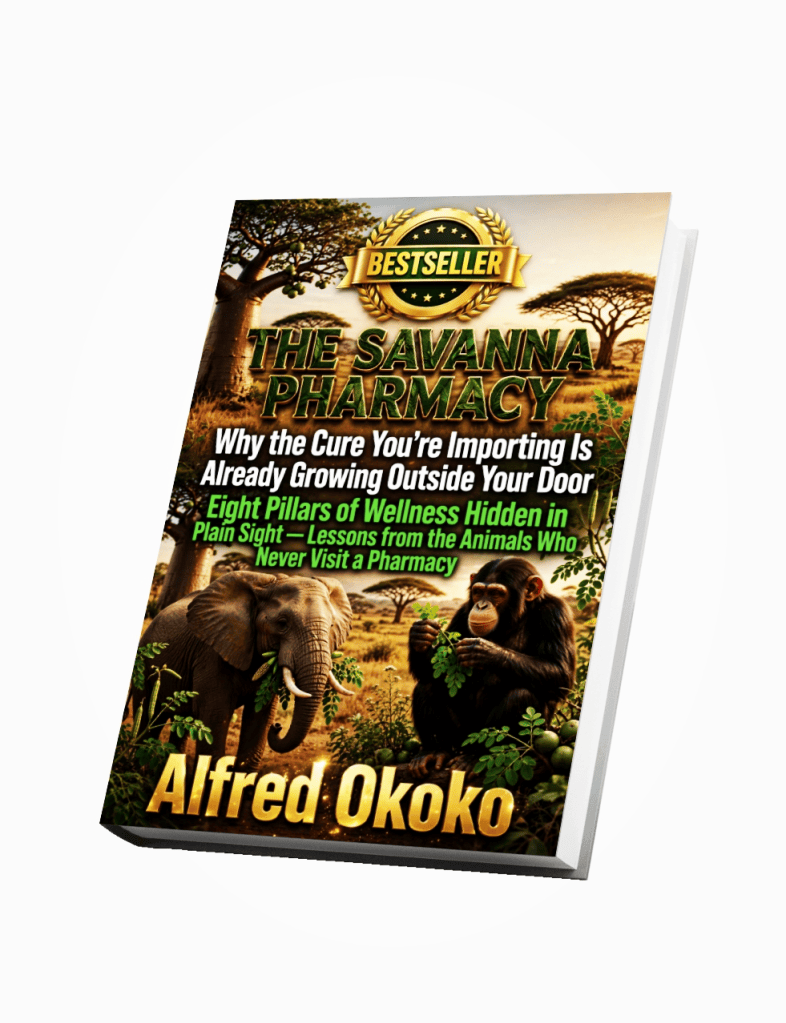
Our Featured Guide Today
The Core Promise of This Book
By the final page, you will see your own environment — your shamba, your fence line, your market, your morning walk — as a complete, free, and scientifically credible wellness system, and you will have a practical, culturally grounded plan to stop paying for health you already own.
1. Stop Buying What YouAlready Have
You will understand, clearly and without shame, why you were convinced that imported equals better — and you will replace that conviction with a working knowledge of the remedies, foods, rhythms, and practices already present in your Kenyan environment, most of them free or nearly free.
2. Recover the Eight Pillars
You will learn to identify and activate all eight pillars of wellness — nourishment, movement, rest, water, herbal wisdom, community, mind and spirit, and purpose — as they exist specifically in the Kenyan landscape, not as abstract imports from foreign wellness culture.
3. Learn from the Animals
You will see the animals of the savanna — the impala, the giraffe, the elephant, the herd — as your teachers and your evidence: living proof that this environment sustains health without pharmacies, supplements, or lifestyle disease, when its own provisions are used.
4. Save Money and Redirect It
You will cut the household spend bleeding into imported supplements and reinvest it — in school fees, in savings, in your home garden — while improving, not sacrificing, your family’s wellness. 5. Act This Week, Not Someday
You will close the book with a concrete seven-day reset, a home pharmacy garden plan, a safety-first guide to herbal use, and a simple way to teach the next generation — so the knowledge becomes practice, and the practice becomes inheritance.
The One-Sentence Promise
This book will convince you that nature already filled your prescription — and then hand you the map to go and collect it.
What This Book Does Not Promise
It does not promise that every plant cures every ailment, or replace qualified medical care for serious conditions.· It does not romanticise poverty or pretend that all traditional knowledge is automatically safe — it insists on informed, responsible use.· It does not ask you to reject modern medicine — it asks you to stop neglecting the medicine that was placed here first. The promise is not a new discovery. It is a homecoming.
To obtain your FREE chapter one Pdf download ,comment the word SAVANNA via WhatsApp number 0726530868
Explore bayberry and ulcers, its traditional digestive uses, what research suggests, possible benefits, safety considerations, and a natural Body Garden approach to digestive wellness.
Introduction
When digestive discomfort appears, many people naturally begin searching for herbs that may support the stomach. Bayberry is one traditional botanical that has been used historically for digestive and gastrointestinal complaints.
But an important question must be asked:
Can bayberry actually treat a peptic ulcer?
The responsible answer is that traditional use does not automatically establish clinical effectiveness. While bayberry has a history of traditional use for digestive complaints, there is not enough high-quality human clinical evidence to establish bayberry as a proven treatment or cure for peptic ulcers.
That distinction is important.
A person experiencing stomach pain may find temporary comfort from a traditional preparation, but symptom relief is not necessarily the same thing as healing an ulcer.
Understanding the difference can help us approach herbs with wisdom rather than hype.
What Is Bayberry?
Bayberry commonly refers to plants in the Myrica genus, particularly Myrica cerifera, also known as southern wax myrtle.
Different parts of bayberry have traditionally been used in herbal preparations, including the bark and root bark.
Traditional herbal systems have associated bayberry with various applications involving:
Digestive wellness
Diarrhea
Astringent preparations
Mucous membranes
Minor inflammatory complaints
General gastrointestinal support
However, bayberry preparations can differ significantly depending on the plant species, plant part, extraction method, concentration, and intended use.
This is one reason herbal medicine should not be approached simply as:
“This plant is good for the stomach.”
The more useful question is:
Which plant, which part, which preparation, at what dose, for which person, and for what condition?
What Are Peptic Ulcers?
A peptic ulcer is an open sore that develops in the lining of the stomach or the first part of the small intestine.
The two major types are:
Gastric ulcers — ulcers occurring in the stomach
Duodenal ulcers — ulcers occurring in the duodenum
Common symptoms may include:
Burning or gnawing stomach pain
Upper abdominal discomfort
Bloating
Nausea
Feeling unusually full
Indigestion
Symptoms that change in relation to meals
But ulcers can sometimes occur with few or no obvious symptoms until a complication develops.
That is why repeatedly treating stomach discomfort at home without determining the underlying cause can be risky.
What Causes Ulcers?
Two major causes of peptic ulcers are:
1. Helicobacter pylori infection
H. pylori is a bacterium capable of damaging the protective lining of the stomach and contributing to ulcer formation.
If an ulcer is associated with H. pylori, simply taking a soothing herb may not eliminate the underlying infection.
2. NSAID medicines
Nonsteroidal anti-inflammatory drugs, commonly called NSAIDs, can increase the risk of stomach and duodenal ulcers.
Examples include medicines such as:
Ibuprofen
Aspirin
Naproxen
Other NSAIDs
This does not mean a person should simply stop a prescribed medicine without professional guidance.
Instead, the medication history should be reviewed with an appropriate healthcare professional.
So, Can Bayberry Treat Ulcers?
This is where responsible herbal education becomes important.
Bayberry has a history of traditional use for digestive complaints, but traditional use is not the same as clinical proof that bayberry heals peptic ulcers.
There is insufficient high-quality human evidence to conclude that bayberry:
Eradicates H. pylori
Heals established peptic ulcers
Prevents ulcer recurrence
Replaces ulcer medication
Prevents ulcer complications
Therefore, bayberry should not be presented as a scientifically proven ulcer cure.
Instead, it may be discussed as a traditional botanical of interest within a broader digestive-wellness approach.
Why Does Bayberry Attract Herbal Interest?
One reason bayberry has attracted interest is its traditional reputation as an astringent botanical.
Astringent herbs contain compounds that can produce a tightening or drying effect on tissues.
Bayberry also contains naturally occurring plant compounds, including polyphenolic constituents, that have generated interest in laboratory research.
But laboratory activity does not automatically translate into a clinically meaningful treatment for human ulcers.
This distinction is essential:
Laboratory evidence → biological possibility
Animal research → additional evidence
Human clinical trials → stronger evidence of practical effectiveness
The further we move toward actual human clinical evidence, the more confidently we can discuss a treatment claim.
For bayberry and peptic ulcers, that evidence remains insufficient.
Bayberry and the Body Garden
At Body Garden Mastery, we use a simple metaphor:
Your body is a garden.
A garden does not thrive simply because one plant has been added to it.
It needs:
Good soil
Water
Nutrients
Sunlight
Air
Rest
Protection
Proper maintenance
The same principle applies to digestive wellness.
Rather than asking only:
“Which herb can cure my ulcer?”
we can ask:
“What conditions are affecting the environment in which my digestive system is trying to function?”
That question creates a much more powerful wellness conversation.
The 8 Pillars of a Healthy Digestive Body Garden
1. Nutrition
Food provides the raw materials the body needs for maintenance and repair.
A digestive-supportive eating pattern should emphasize foods that are personally well tolerated and nutritionally adequate.
Depending on the individual, this may include:
Vegetables
Fruits
Whole or minimally processed foods
Adequate protein
Healthy fats
Fibre-rich foods when tolerated
During active digestive irritation, some people may need to temporarily avoid foods or beverages that clearly worsen their symptoms.
There is no universal “ulcer diet” that works identically for everyone.
2. Hydration
Adequate fluid intake supports normal body functions.
Water is generally the simplest foundation.
Instead of relying heavily on sweetened beverages, excessive caffeine, or alcohol, build a consistent hydration routine around your body’s needs.
3. Movement
Movement supports overall metabolic and digestive health.
It does not need to mean intense exercise.
Walking, stretching, gardening, mobility exercises, and other appropriate activities can become part of a sustainable wellness routine.
4. Sleep
Poor sleep can affect stress regulation, appetite, recovery, and overall wellbeing.
A healthy digestive garden needs recovery time.
Creating a consistent sleep schedule may therefore be more valuable than continually searching for another supplement.
5. Stress and Emotional Wellness
Stress does not mean that an ulcer is “all in your head.”
Peptic ulcers have identifiable physical causes, including H. pylori and NSAID use.
However, stress can influence digestive symptoms, sleep, eating patterns, and overall wellbeing.
Breathing exercises, prayer or reflection, time in nature, supportive relationships, and appropriate relaxation practices can become part of a broader wellness plan.
6. Detoxification and Environment
The body already has sophisticated systems for processing and eliminating substances, particularly through the liver, kidneys, lungs, gastrointestinal tract, and skin.
Rather than extreme “detox” programs, focus on reducing unnecessary exposures and supporting healthy daily habits.
Avoid turning digestive wellness into a cycle of aggressive cleanses.
7. Digestion and the Microbiome
The digestive tract is an ecosystem.
Food choices, infections, medicines, stress, sleep, and lifestyle can all influence digestive function.
If H. pylori is suspected, however, proper testing and treatment are more important than assuming that an herbal cleanse will solve the problem.
8. Purpose, Relationships and Spiritual Wellbeing
Whole-person wellness includes more than food and supplements.
Purpose, meaningful relationships, community, gratitude, faith or personal reflection, and emotional connection can contribute to quality of life.
The Body Garden is not only about what goes into the stomach.
It is also about the life surrounding the person.
Bayberry Through the Healing Gap Framework™
The Healing Gap Framework™ provides another way to think about digestive wellness.
Step 1: Identify Your Current State
Ask:
What symptoms am I experiencing?
How long have they been present?
What makes them better or worse?
Am I taking medicines that may affect my stomach?
Have I been evaluated for H. pylori?
Step 2: Define Your Desired State
Your desired state may be:
Comfortable digestion
Reduced stomach irritation
Better nutrition
Improved sleep
Fewer recurring digestive symptoms
Properly treated underlying causes
Step 3: Identify the Gap
The gap is the distance between where you are today and where you want your digestive health to be.
Step 4: Identify the Barriers
Possible barriers may include:
Untreated H. pylori
NSAID exposure
Smoking
Excessive alcohol
Poor sleep
High stress
Nutritional problems
Delayed medical evaluation
Self-treatment without diagnosis
Step 5: Create Action Steps
Instead of randomly adding herbs, create a structured plan.
That may include appropriate medical evaluation, nutrition improvements, medication review, sleep, hydration, stress management, movement, and carefully considered complementary practices.
Step 6: Track Progress
Record:
Symptoms
Meals
Medications
Sleep
Stress
Bowel changes
Possible triggers
This turns vague discomfort into useful information.
Step 7: Move Toward Your Freedom Day
The goal is not simply:
“I took an herb.”
The goal is:
“I understand my body better, addressed the important causes, and built habits that support lasting digestive wellness.”
What About Bayberry Preparations?
Bayberry is available in different traditional forms, and this matters.
Preparations may include:
Dried bark
Powder
Tea or decoction
Liquid preparations
Extracts
Formulations containing multiple herbs
These products should not automatically be considered interchangeable.
A concentrated extract can expose someone to substantially different amounts of plant constituents than a culinary or traditional preparation.
For that reason:
More concentrated does not automatically mean more effective.
And:
Natural does not automatically mean safe.
Bayberry Safety: An Important Consideration
Because bayberry bark and other preparations contain biologically active compounds, caution is appropriate.
Potential concerns include:
Gastrointestinal irritation
Allergic reactions
Interactions with medicines
Uncertain dosing in concentrated preparations
Differences between plant species and plant parts
Limited safety information for long-term use
People who are pregnant or breastfeeding, children, older adults, people with chronic illnesses, or anyone taking prescription medicines should be particularly cautious with concentrated herbal preparations.
Anyone preparing or recommending bayberry should also ensure that the plant has been correctly identified.
Botanical misidentification can turn a traditional remedy into a safety problem.
Do Not Confuse Symptom Relief With Ulcer Healing
This is one of the most important lessons in natural wellness.
Suppose a person experiences less stomach discomfort after taking a particular herb.
That is encouraging—but it does not prove that an ulcer has healed.
The underlying ulcer could still be present.
Likewise, a person may feel better while an underlying H. pylori infection remains untreated.
Therefore:
Feeling better is not always the same as being healed.
Proper evaluation matters when ulcer symptoms persist, recur, or are accompanied by warning signs.
When Should You Seek Medical Care?
Seek urgent medical attention if you experience symptoms such as:
Vomiting blood
Vomit resembling coffee grounds
Black or tarry stools
Severe or sudden abdominal pain
Fainting
Severe weakness or dizziness
Signs of significant bleeding
Persistent or recurring upper-abdominal symptoms should also be evaluated rather than repeatedly self-treated.
Natural wellness and conventional healthcare do not have to be enemies.
The better approach is often:
Use knowledge to know when each is appropriate.
Bayberry Is Not the Whole Garden
Bayberry may be an interesting traditional botanical, but it should not become the entire strategy for ulcer wellness.
The bigger question is:
What is happening in the Body Garden?
Are you nourishing it?
Are you resting?
Are you hydrated?
Are you managing stress?
Are you taking medicines that may irritate the stomach?
Have you addressed possible H. pylori infection?
Are you ignoring recurring symptoms?
The answers to those questions may be far more important than finding a single “miracle herb.”
The Healing Gap Perspective
At Healing Gap Framework™, we believe:
Symptoms are messages, not enemies.
A symptom is an invitation to investigate.
Stomach discomfort can be the body’s signal that something needs attention.
The objective should not be to silence every message as quickly as possible.
The objective is to understand the message, identify the gap, address the barriers, and take intelligent action.
And remember:
Your body is not broken.
It is constantly responding, adapting, repairing, regulating, and communicating.
Your responsibility is to become a better driver of the environment in which that process takes place.
Final Thoughts: Bayberry and Ulcers
Bayberry has an interesting history in traditional herbal practice and has been associated with digestive applications.
However, there is currently insufficient high-quality human evidence to establish bayberry as a treatment or cure for peptic ulcers.
That does not mean traditional knowledge has no value.
It means we should use traditional knowledge responsibly.
Instead of promising that bayberry will “heal your ulcer,” a wiser approach is to place it within a broader framework of:
Knowledge + lifestyle + nutrition + appropriate herbal wisdom + medical evaluation when needed.
That is the Body Garden approach.
The goal is not to chase miracle remedies.
The goal is to cultivate the conditions in which the whole person can move toward better wellness.
Close the Healing Gap. Cultivate Your Body Garden.
Important Safety Note
This article is for educational purposes and is not a diagnosis or substitute for individualized medical care. Bayberry should not be promoted as a proven cure for peptic ulcers. People with persistent or severe digestive symptoms should seek appropriate healthcare evaluation, particularly because H. pylori infection and NSAID use are important causes of peptic ulcers. Discuss herbal products with a qualified healthcare professional, especially when taking medicines or managing a chronic condition. Never delay urgent care because of an herbal remedy.
About the Author
Alfred Okoko is the Founder of the Healing Gap Framework™ and a wellness educator focused on helping people understand the relationship between lifestyle, natural wellness, and whole-person transformation.
Through Body Garden Mastery, he teaches people to view the body as a garden that must be intentionally cultivated through knowledge, nutrition, hydration, movement, rest, emotional wellbeing, digestion, environment, and purpose.
His philosophy is simple: close the gap between where you are today and where you want your wellbeing to be. #BayberryAndUlcers #Bayberry #PepticUlcer #DigestiveWellness #GutHealth #NaturalWellness #HerbalWellness #BodyGardenMastery #HealingGapFramework #AlfredOkoko #HolisticWellness #TraditionalHerbalKnowledge
Can black cohosh help with high blood pressure? Explore what black cohosh is, its traditional uses, potential cardiovascular considerations, safety precautions, and how it fits into a holistic wellness approach.
Introduction
High blood pressure is often called a “silent” condition because many people can have elevated blood pressure without obvious symptoms.
That makes managing blood pressure different from treating an occasional headache or minor discomfort. You cannot reliably determine whether your blood pressure is improving simply by how you feel. Regular measurement, healthy lifestyle habits, and appropriate medical care remain essential.
At the same time, many people are interested in traditional herbs such as black cohosh as part of their natural wellness journey.
But where does black cohosh fit into the conversation about high blood pressure?
The answer requires both an open mind and a cautious approach.
Black cohosh is a traditional botanical remedy best known for its use in women’s health, particularly menopausal symptoms. It is not an established treatment for hypertension, and current evidence does not support replacing prescribed blood-pressure medication with black cohosh.
However, understanding the herb, its traditional applications, possible effects, and safety considerations can help you make better-informed decisions about your wellness.
What Is Black Cohosh?
Black cohosh is the common name for Actaea racemosa, a plant native to North America.
Historically, Indigenous peoples used preparations of the plant for various traditional purposes. It later became incorporated into Western herbal medicine, particularly for women’s health.
Today, black cohosh is most commonly associated with menopausal symptoms such as:
Hot flashes
Night sweats
Sleep difficulties
Mood-related symptoms
Other symptoms associated with menopause
The root and rhizome are the parts traditionally used in herbal preparations.
Importantly, black cohosh should not automatically be considered a general-purpose herb for every condition.
Traditional use does not automatically equal proven clinical effectiveness.
That distinction becomes especially important when discussing high blood pressure.
Black Cohosh and Blood Pressure: Is There a Connection?
The relationship between black cohosh and blood pressure is not straightforward.
Some people may become interested in black cohosh because menopause, stress, sleep disruption, hot flashes, and changes in cardiovascular risk can overlap.
But that does not mean black cohosh directly treats hypertension.
There is currently insufficient evidence to recommend black cohosh as a blood-pressure-lowering treatment.
If you have hypertension, your primary objective should be to understand and manage your blood pressure rather than looking for one herb to “fix” it.
Think of blood-pressure wellness as a system, not a single remedy.
Your body is influenced by nutrition, physical activity, sleep, stress, body weight, alcohol intake, smoking, kidney health, medications, genetics, and other factors.
This is where a holistic approach can become valuable.
The Body Garden Perspective
At Body Garden Mastery, we use the metaphor of the body as a garden.
Your garden does not depend on one plant.
It depends on the soil, water, sunlight, nourishment, pruning, protection, and environment.
Your body works in a similar way.
Blood-pressure wellness may involve several interconnected areas:
1. Nutrition
A diet rich in vegetables, fruits, legumes, whole grains, nuts, and other nutrient-dense foods can support cardiovascular health.
Reducing excessive sodium, highly processed foods, added sugars, and unhealthy fats may also be beneficial.
2. Movement
Regular physical activity supports cardiovascular fitness and can contribute to healthier blood-pressure levels.
Walking is one of the simplest ways to begin.
3. Sleep
Poor sleep and sleep disorders can negatively affect cardiovascular health.
Creating a consistent sleep routine is therefore part of the bigger picture.
4. Stress Management
Chronic stress can influence behaviors and physiological processes associated with cardiovascular health.
Breathing exercises, meditation, time in nature, meaningful relationships, prayer or reflection, and other healthy stress-management practices may support overall wellbeing.
5. Healthy Body Weight
For people who are overweight, gradual and sustainable weight reduction can improve cardiovascular risk factors.
6. Hydration
Adequate hydration supports normal body function, although drinking excessive amounts of water is not a treatment for hypertension.
7. Digestion and Overall Wellness
A healthy dietary pattern supports metabolic and cardiovascular wellbeing.
8. Purpose and Relationships
Emotional wellbeing, social connection, purpose, and healthy routines can influence the behaviors that support long-term health.
This is the principle behind the eight-pillar Body Garden approach.
Why Are People Interested in Black Cohosh?
The interest in black cohosh and blood pressure may partly arise because many women experience significant physiological changes around menopause.
Hot flashes can feel intense.
Sleep may become disrupted.
Stress may increase.
Mood can fluctuate.
And cardiovascular risk changes as people age.
Someone experiencing these symptoms may therefore search for natural approaches.
Black cohosh has been studied primarily for menopausal symptoms, although research findings have been inconsistent.
The important point is this:
An herb being used for menopausal symptoms does not mean it should be used to control high blood pressure.
Those are two different health questions.
Can Black Cohosh Lower Blood Pressure?
This is where caution is essential.
There is not enough high-quality evidence to establish black cohosh as an effective antihypertensive herb.
Therefore, it should not be presented as a substitute for proven hypertension treatment.
If your blood pressure is elevated, measure it regularly and discuss the results with a qualified healthcare professional.
If you are already taking blood-pressure medication, do not stop, reduce, or replace it because you begin using an herbal product.
Your healthcare professional can help determine whether any supplement is appropriate alongside your existing treatment.
Black Cohosh and Medication Safety
Natural does not automatically mean risk-free.
Black cohosh may interact with medicines or may not be appropriate for everyone.
This is particularly important for people taking multiple medications.
Before using black cohosh, consider discussing it with a healthcare professional if you take:
Blood-pressure medicines
Hormonal medicines
Anticoagulants or blood thinners
Other prescription medicines
Medicines processed by the liver
Multiple supplements
The reason for caution is simple:
Herbs contain biologically active compounds.
Those compounds can potentially affect the body and may interact with medications.
Liver Safety: An Important Black Cohosh Consideration
One of the most important safety issues associated with black cohosh is the possibility of liver-related adverse effects.
Although serious liver injury appears to be uncommon, cases have been reported and the relationship has been investigated.
For that reason, people should not casually assume that long-term or high-dose use is harmless.
Stop using a black cohosh product and seek medical advice if you develop concerning symptoms such as:
Yellowing of the skin or eyes
Dark urine
Unusual or persistent fatigue
Loss of appetite
Nausea
Abdominal discomfort
Anyone with existing liver disease should be especially cautious and should seek professional advice before using black cohosh.
Quality Matters
Another issue is product quality.
Herbal supplements can vary in:
Plant identification
Extraction method
Concentration
Manufacturing standards
Purity
Contamination
Label accuracy
Black cohosh can also be confused with other plants.
That is why botanical identification and responsible sourcing matter.
When working with medicinal plants, the correct plant is part of the medicine story.
The wrong plant can mean the wrong chemistry, the wrong effects, and potentially greater risk.
Black Cohosh Is Not a Blood-Pressure Monitor
This may sound obvious, but it is an important principle.
If you take an herbal product and feel better, that does not necessarily mean your blood pressure has normalized.
High blood pressure can exist without symptoms.
Therefore:
Feeling well ≠ having normal blood pressure.
Use a reliable blood-pressure monitor when appropriate and keep a record of your readings.
For home monitoring, measure under consistent conditions and discuss persistent elevated readings with a healthcare professional.
The Healing Gap Approach to High Blood Pressure
The Healing Gap Framework asks seven important questions:
Where am I now?
Where do I want to be?
What is the gap?
What barriers are keeping me there?
What actions can I take?
How will I measure progress?
What does my Freedom Day look like?
Applied to blood-pressure wellness, this changes the conversation.
Instead of asking:
“Which herb will lower my blood pressure?”
you begin asking:
“What is contributing to my current blood-pressure pattern, and what can I safely change?”
That is a much more powerful question.
Your Blood Pressure Wellness Baseline
Before making major lifestyle changes, establish your baseline.
Record:
Baseline Day
Blood-pressure readings
Pulse
Weight, if relevant
Waist measurement, if appropriate
Typical meals
Salt intake
Physical activity
Sleep duration
Stress level
Alcohol intake
Smoking status
Current medications
Current supplements
Family history, where relevant
You now have a starting point.
From there, you can make changes one step at a time.
What About Black Cohosh During Menopause?
This is an important distinction.
If a woman is experiencing menopausal symptoms and also has high blood pressure, black cohosh may be considered for the menopausal-symptom question, not automatically for the blood-pressure question.
That decision should take into account her medical history, medications, liver health, symptoms, and the particular black cohosh product being considered.
The two issues should not be automatically combined.
A person may need a strategy for managing menopausal symptoms and a separate evidence-based strategy for managing hypertension.
A Safer Natural-Wellness Strategy
If you are interested in natural approaches to blood-pressure wellness, begin with foundations.
Start with your plate.
Build meals around minimally processed foods.
Start moving.
Choose an activity you can perform consistently.
Protect your sleep.
Create a regular sleep and wake schedule.
Manage stress.
Find healthy ways to regulate your nervous system and reduce chronic stress.
Monitor your blood pressure.
Do not rely exclusively on symptoms.
Review your medications.
Never discontinue prescribed medication without professional guidance.
Review your supplements.
Tell your healthcare professional about herbs and supplements you are taking.
Track your progress.
What gets measured can be managed more intelligently.
The Five Fires of Lifestyle Inflammation
Another useful Body Garden concept is the idea of the Five Fires.
These include:
Excess refined sugar and processed carbohydrates
Oxidized oils and heavily fried foods
Chronic stress
Poor gut health and dietary imbalance
Poor detoxification and environmental burden
These should not be treated as a medical diagnosis.
Rather, they are a practical wellness framework for identifying lifestyle patterns that may deserve attention.
The objective is not to fear food or believe that one “toxin” causes every disease.
The objective is to cultivate better habits.
When High Blood Pressure Requires Urgent Attention
Do not attempt to manage dangerously high blood pressure with herbs at home.
If a blood-pressure reading is 180/120 mmHg or higher, repeat the measurement after a few minutes of quiet rest.
If it remains that high, seek urgent medical advice. If it is accompanied by symptoms such as chest pain, shortness of breath, severe headache, weakness or numbness, confusion, difficulty speaking, or vision changes, seek emergency medical care immediately.
This is not the time to experiment with an herbal remedy.
The Bigger Lesson
Black cohosh teaches us an important lesson about natural wellness:
The right herb for the right purpose matters.
An herb can have a respected history of traditional use without being scientifically established for every condition.
Black cohosh has a place in the discussion of herbal approaches to women’s health, particularly menopause.
But high blood pressure deserves its own evidence-based management strategy.
Your goal should not be to find a magical plant.
Your goal should be to understand your body, identify the gap between your current state and your desired state, address the barriers, make sustainable changes, monitor your progress, and work with qualified healthcare professionals when necessary.
That is what responsible natural wellness looks like.
Final Thoughts: Cultivate the Garden, Don’t Chase the Miracle
Your body is not a machine that needs one replacement part.
It is more like a garden.
When the soil is healthy, the plants have better conditions to grow.
When the garden is neglected, problems can appear.
And when you begin restoring the environment, improvement may come from many small changes working together.
Black cohosh may be useful in specific contexts, particularly around menopausal symptoms, but it should not be marketed or relied upon as a proven treatment for high blood pressure.
Measure. Understand. Act. Monitor. Adjust.
And remember the Healing Gap principle:
Symptoms are messages, not enemies.
Your body is communicating with you.
Your responsibility is to listen wisely—and act safely.
About the Author
Alfred Okoko is the Founder of the Healing Gap Framework and a wellness educator focused on helping people understand the connection between knowledge, lifestyle, nature, and wellbeing. His Body Garden Mastery approach teaches people to view the body as a living garden that must be intentionally cultivated through informed daily choices.
Educational disclaimer: This article is for general educational purposes and is not a diagnosis or substitute for individualized medical care. Black cohosh is not an established treatment for high blood pressure. If you have hypertension, are pregnant or breastfeeding, have liver disease, take prescription medicines, or are considering starting an herbal supplement, consult a qualified healthcare professional first. Never stop prescribed blood-pressure medication without medical guidance.
Explore barberry and arthritis, including berberine, potential anti-inflammatory effects, current research, possible joint-health benefits, safety concerns, medication interactions, and practical considerations.
Introduction
Could a brightly colored berry have a place in the conversation about arthritis and joint health?
Barberry has a long history of traditional use and contains berberine, a biologically active compound that has attracted considerable scientific interest.
Researchers have investigated berberine for metabolic health, inflammation, cardiovascular risk factors, infections, and several other conditions. More recently, laboratory and animal research has explored its potential relationship with rheumatoid arthritis and other musculoskeletal conditions.
But there is an important question:
Does that mean barberry can treat arthritis?
Not necessarily.
The science surrounding barberry and arthritis is promising enough to justify interest, but it is not strong enough to describe barberry as a proven arthritis cure.
This distinction matters.
A laboratory finding is not the same as a clinical trial.
An animal study is not the same as evidence in people.
A reduction in an inflammatory marker is not automatically the same as less pain or less joint damage.
And a traditional remedy should not automatically replace established medical treatment.
In the Body Garden philosophy, this is exactly where knowledge becomes important.
You are not looking for a miracle seed.
You are learning how to cultivate the whole garden.
Several species have been used traditionally as foods, spices, and medicinal plants in different cultures.
One reason barberry attracts scientific interest is its content of berberine, an alkaloid found in several plants, including barberry, goldenseal, goldthread, Oregon grape, and tree turmeric.
Berberine is not simply a vitamin or ordinary nutrient.
It is a biologically active compound that can affect physiological processes.
That is why it is important to approach berberine-containing plants with both curiosity and caution.
Why Are Barberry and Berberine Being Studied for Arthritis?
Arthritis involves different biological processes depending on the type.
Rheumatoid arthritis, for example, is an autoimmune inflammatory disease involving persistent inflammation within the joints.
Osteoarthritis has a different underlying biology and involves changes to cartilage, bone, joint structures, and surrounding tissues.
Researchers have investigated whether berberine may influence some of the inflammatory and cellular pathways involved in these conditions.
Laboratory and animal studies have reported effects on pathways associated with inflammation, immune regulation, oxidative stress, and tissue changes.
This creates an interesting scientific possibility.
But possibility is not proof.
What Does the Research Actually Say?
A 2019 review examining berberine and musculoskeletal disorders concluded that berberine showed potential in experimental research involving conditions such as osteoarthritis and rheumatoid arthritis, but emphasized that findings from laboratory and animal investigations required validation through human clinical trials.
More recent research has continued investigating berberine’s potential relationship with rheumatoid arthritis.
A 2024 study identified berberine as a candidate compound for rheumatoid arthritis through experimental research, again adding to the scientific interest but not establishing barberry or berberine as an established clinical treatment.
A 2025 review also described berberine as a potentially interesting compound for rheumatoid arthritis prevention and treatment while highlighting the need for further research.
So the responsible conclusion is:
Barberry and berberine are scientifically interesting, but the evidence is not sufficient to claim that barberry treats or reverses arthritis in humans.
What About Inflammation?
This is where the research becomes particularly interesting.
Inflammation is an important component of several diseases, including inflammatory forms of arthritis.
A 2023 systematic review and dose-response meta-analysis examined randomized clinical trials involving berberine or barberry and several inflammatory biomarkers.
Across 18 trials involving 1,600 participants, the researchers reported reductions in IL-6, TNF-α, and C-reactive protein. However, these findings concern biomarkers and do not by themselves establish that barberry is an effective arthritis treatment.
This distinction is critical.
Reducing a laboratory marker does not automatically mean:
Arthritis has been cured.
Cartilage has been restored.
Joint damage has been reversed.
Pain will disappear.
Rheumatoid arthritis will go into remission.
It means that researchers observed changes in particular biological measurements.
Those findings may help guide future research.
Barberry and Rheumatoid Arthritis
Rheumatoid arthritis deserves special attention.
It is an autoimmune condition in which the immune system contributes to inflammation affecting joints and potentially other parts of the body.
Because berberine has demonstrated immunomodulatory and anti-inflammatory activity in experimental research, scientists have investigated whether it might eventually have a role in rheumatoid arthritis management.
But people with rheumatoid arthritis should be particularly careful about replacing prescribed treatment with an unproven supplement.
Untreated or inadequately treated rheumatoid arthritis can lead to progressive joint damage.
Therefore, if someone has rheumatoid arthritis, the appropriate approach is not:
“Stop your medicine and take barberry.”
It is:
“Understand your diagnosis, work with your healthcare team, and discuss any complementary therapy before adding it.”
Barberry and Osteoarthritis
Osteoarthritis is different from rheumatoid arthritis.
It is commonly associated with structural changes within joints and surrounding tissues.
Researchers have investigated berberine in relation to osteoarthritis through laboratory and animal models, including pathways involved in inflammation, oxidative stress, and cartilage-related processes.
These findings are interesting.
But again, the evidence does not currently justify telling someone with osteoarthritis that barberry will rebuild cartilage or reverse the disease.
That would go beyond the evidence.
Instead, barberry and berberine should be considered an area of ongoing research.
The Difference Between Barberry and Berberine
This distinction is easy to overlook.
Barberry is a plant.
Berberine is one of its active compounds.
Research involving purified berberine does not automatically prove that eating barberry produces the same effect.
The concentration of berberine can vary among plants, species, preparations, extracts, and supplements.
This means that a study using a standardized berberine preparation cannot automatically be translated into a recommendation to consume an unspecified amount of barberry.
The form matters.
The dose matters.
The preparation matters.
The individual matters.
Is Barberry a Natural Anti-Inflammatory?
It is tempting to describe barberry as a “natural anti-inflammatory.”
But that phrase can be misleading.
A plant can contain compounds that influence inflammatory pathways without being a proven treatment for inflammatory disease.
The current evidence provides reasons for scientific interest in berberine, including its effects on inflammatory biomarkers and experimental arthritis models.
But the responsible statement is:
Barberry contains berberine, a biologically active compound with potential anti-inflammatory effects that is being investigated for arthritis and other conditions.
That is very different from saying:
“Barberry cures arthritis.”
What About Pain Relief?
People with arthritis are usually interested in one practical question:
“Will it reduce my pain?”
This is where evidence matters most.
A compound can change inflammatory biomarkers without producing a meaningful improvement in someone’s daily pain or physical function.
Therefore, until sufficiently strong human arthritis trials demonstrate clinically meaningful benefits, barberry should not be promoted as a proven pain-relief treatment for arthritis.
If you have persistent joint pain, the underlying cause should also be identified.
Pain is a signal.
Understanding the cause is more important than simply suppressing the signal.
The Body Garden Perspective
Think about your joints as part of a larger ecosystem.
If you have arthritis, you might be tempted to search for one plant that can “fix” the problem.
But gardens rarely work that way.
A healthy garden depends on multiple conditions.
The same principle applies to wellbeing.
Your joint-health garden includes:
Nourishment
A balanced dietary pattern provides essential nutrients and supports overall health.
Movement
Appropriate physical activity can support strength, mobility, function, and independence.
Recovery
Sleep and rest matter.
Stress management
Chronic stress can make living with persistent pain more difficult.
Healthy body composition
For people with overweight or obesity, appropriate weight reduction may reduce mechanical stress on weight-bearing joints.
Medical care
Some forms of arthritis require medication and ongoing monitoring.
Knowledge
Understanding the type of arthritis you have changes the conversation.
Complementary approaches
Some people explore herbs, supplements, massage, or other complementary practices alongside conventional care.
The key word is:
alongside.
Barberry Is Not a Substitute for Arthritis Treatment
This is particularly important for rheumatoid arthritis and other inflammatory arthritic diseases.
If you have been prescribed disease-modifying medication, corticosteroids, biologic therapy, or other treatment, do not stop it because you have discovered an herbal remedy online.
Discuss the herb with your healthcare professional.
The goal of complementary wellness should be to make healthcare more informed—not to encourage people to abandon necessary treatment.
Berberine Safety: Why “Natural” Does Not Mean Risk-Free
Berberine is biologically active.
It can cause side effects.
According to the National Center for Complementary and Integrative Health, commonly reported side effects include:
Nausea
Abdominal discomfort
Bloating
Constipation
Diarrhea
Vomiting
Berberine can also interact with medications.
This is why anyone taking medicines should discuss berberine-containing supplements with a qualified healthcare professional.
Pregnancy and Breastfeeding
Berberine should not be used during pregnancy or breastfeeding according to NCCIH guidance, and it should not be given to infants. Berberine exposure has been associated with potentially dangerous bilirubin accumulation in infants.
This is an important safety boundary.
Pregnancy and breastfeeding are not appropriate times to experiment with concentrated herbal products without qualified professional guidance.
Medication Interactions Matter
If you take medication for:
Diabetes
Blood pressure
Cholesterol
Heart conditions
Autoimmune conditions
Blood clotting
Organ transplantation
Other chronic conditions
do not assume that barberry or berberine is automatically compatible with your treatment.
Berberine can affect physiological pathways and may interact with medicines.
Always disclose supplements to your healthcare provider or pharmacist.
Food, Tea, Powder and Extract Are Not the Same
Another common mistake is treating every preparation as equivalent.
A food containing barberry is not necessarily equivalent to a concentrated extract.
A tea is not necessarily equivalent to a standardized capsule.
A supplement containing purified berberine is not necessarily equivalent to consuming the whole plant.
The concentration and composition can differ considerably.
Therefore, avoid assuming:
“If a little is good, more must be better.”
With biologically active compounds, more can mean more side effects.
How to Think About Barberry Responsibly
If you are considering barberry or berberine because you have arthritis, begin with questions rather than assumptions.
Ask:
What type of arthritis do I have?
What symptoms am I trying to improve?
What evidence exists for this particular use?
Am I taking medication?
Could this supplement interact with my treatment?
Am I pregnant or breastfeeding?
What form of barberry or berberine am I considering?
Is the product standardized and from a reliable source?
What would I do if I developed side effects?
These questions transform herbal use from internet experimentation into informed decision-making.
The Seven-Part Joint Health Garden
If your goal is to support your joints, consider cultivating seven areas.
1. Nourish
Build a varied, nutrient-dense eating pattern.
Think beyond individual “superfoods.”
2. Move
Choose appropriate movement that supports your mobility and physical function.
If movement causes significant pain or you have a medical condition, seek appropriate guidance.
3. Recover
Protect your sleep and allow your body adequate recovery.
4. Manage Stress
Develop practical ways to regulate stress and emotional pressure.
5. Maintain Appropriate Body Weight
Where appropriate, gradual weight management can reduce stress on weight-bearing joints.
6. Understand Your Condition
Know whether you have osteoarthritis, rheumatoid arthritis, gout, psoriatic arthritis, or another condition.
7. Use Complementary Approaches Wisely
If you choose to explore herbs such as barberry, do so with attention to evidence, quality, dosage, interactions, and individual safety.
That is the Body Garden approach.
The Healing Gap Framework for Arthritis
You can also use the Healing Gap Framework to examine your joint-health journey.
Current State
Where are you today?
Record:
Pain level
Stiffness
Swelling
Mobility
Sleep quality
Activity level
Current treatments
Medical diagnosis
Desired State
What meaningful improvement would you like to see?
Perhaps you want:
Better mobility
Improved physical function
Less stiffness
Better sleep
Greater confidence
More independence
The Gap
What stands between your current state and your desired state?
The Barriers
Identify what is making progress difficult.
The Action Steps
Choose realistic, evidence-informed actions.
Progress
Track what changes.
Freedom Day
Define a meaningful milestone that represents progress toward the life you want.
This approach moves you from:
“What can I take?”
to:
“What can I cultivate?”
That is a much bigger question.
What Barberry Teaches Us About Natural Wellness
Perhaps the most valuable lesson from the barberry conversation is not about one plant.
It is about how we think about natural medicine.
Nature contains biologically active substances.
Traditional knowledge can point researchers toward interesting plants.
Modern science can investigate their mechanisms and effects.
Clinical research can help determine whether those effects translate into meaningful benefits for people.
Safety research can reveal who should avoid them.
And responsible practitioners can integrate useful knowledge without exaggerating the evidence.
That is the bridge between traditional wisdom and modern wellness.
The Bottom Line on Barberry and Arthritis
Barberry contains berberine, a biologically active compound that has attracted significant scientific interest.
Research has identified potential anti-inflammatory effects, and experimental studies have explored berberine in rheumatoid arthritis and other musculoskeletal conditions. Some clinical research involving berberine or barberry has also found changes in inflammatory biomarkers.
However, this does not establish barberry as a proven treatment or cure for arthritis.
Human evidence specifically demonstrating meaningful improvements in arthritis pain, function, disease progression, or remission remains insufficient.
Therefore, approach barberry with curiosity, not certainty.
If you have arthritis, cultivate the whole garden.
Eat thoughtfully.
Move appropriately.
Recover well.
Manage stress.
Understand your diagnosis.
Use prescribed treatment appropriately.
And if you are considering barberry or berberine, review the potential benefits and risks with a qualified healthcare professional—especially if you take medication or have a chronic condition.
Your wellbeing is bigger than one herb.
The herb may be part of the conversation. The garden is the whole story.
Published by Alfred Okoko
Founder & Lead Wellness Educator | Healing Gap Framework™ | Wordplant Living System
Through Body Garden Mastery, Alfred Okoko explores traditional plant knowledge, nutrition, lifestyle transformation, and practical approaches to whole-person wellbeing.
The guiding principle is simple:
Respect nature. Respect evidence. Respect the individual. Cultivate the whole garden.
Educational disclaimer: This article is for general educational purposes and is not a diagnosis or a substitute for individualized medical care. Barberry or berberine should not be used as a replacement for prescribed arthritis treatment. People who are pregnant or breastfeeding, taking medicines, or managing chronic conditions should seek appropriate professional advice before using concentrated berberine or barberry supplements.
Discover the Thought Garden Blueprint and learn how to cultivate healthier thoughts, beliefs, emotions, habits, and actions that can support meaningful lifestyle transformation and personal wellbeing.
Introduction
Before a lifestyle changes on the outside, something often begins changing on the inside.
A new decision is made.
A new possibility is imagined.
An old belief is questioned.
A different interpretation of life begins to emerge.
Then a thought becomes a feeling.
A feeling influences an action.
An action becomes repeated.
Repeated actions become habits.
Habits become patterns.
And patterns can shape the direction of a person’s life.
This is why the mind deserves its own garden.
Welcome to the Thought Garden.
The Thought Garden is the inner landscape where beliefs, ideas, memories, expectations, assumptions, intentions, and interpretations take root.
Just as a physical garden requires cultivation, your thought life requires attention.
You cannot control every thought that enters your mind.
But you can learn to notice thoughts, question unhelpful patterns, cultivate constructive perspectives, and choose actions that align with the life you want to build.
That is the foundation of the Thought Garden Blueprint for Lifestyle Transformation.
What Is the Thought Garden?
Imagine your mind as a garden.
Every day, thousands of experiences pass through it.
Some become thoughts.
Some thoughts become beliefs.
Some beliefs influence decisions.
Some decisions become behaviors.
And repeated behaviors can become lifestyle patterns.
In this metaphor:
Thoughts are seeds.
Beliefs are roots.
Emotions are the climate.
Habits are the cultivation process.
Environment is the soil.
Actions are the visible growth.
Results are the harvest.
This does not mean that every thought directly creates an outcome.
Life is far more complex than that.
Circumstances, biology, relationships, opportunities, health conditions, environment, and chance all influence what happens.
But your thought patterns can influence how you interpret circumstances and how you respond to them.
That makes the Thought Garden an important part of lifestyle transformation.
Why Thoughts Matter in Lifestyle Change
Many people attempt to change behavior without examining the thinking that supports the behavior.
Someone may say:
“I need to exercise.”
But underneath that statement may be another thought:
“Exercise is punishment.”
Someone may say:
“I need to eat differently.”
But the underlying belief might be:
“Healthy food is boring.”
Someone may want to build a business but repeatedly think:
“People like me cannot succeed.”
Someone may want healthier relationships while believing:
“I have to please everyone to be accepted.”
The visible behavior is only the leaf.
The thought or belief underneath may be part of the root system.
This is why sustainable lifestyle transformation requires more than changing what you do.
Sometimes you must examine why you do what you do.
The Thought Garden Blueprint
The blueprint can be understood through eight stages:
Observe the seeds.
Examine the roots.
Improve the soil.
Manage the emotional climate.
Remove mental weeds.
Plant intentional thoughts.
Turn thoughts into action.
Cultivate consistently.
Let’s explore each one.
1. Observe the Seeds
Every garden begins with seeds.
Your Thought Garden receives seeds constantly.
A conversation can plant a seed.
A social-media post can plant a seed.
A childhood experience can plant a seed.
A failure can plant a seed.
A success can plant a seed.
A book can plant a seed.
A criticism can plant a seed.
A compliment can plant a seed.
The first step is therefore observation.
Pay attention to your recurring thoughts.
What do you repeatedly tell yourself?
What assumptions appear automatically?
What thoughts arise when you face difficulty?
What do you think about your body?
What do you think about money?
What do you think about relationships?
What do you think about aging?
What do you think about failure?
What do you think about your future?
You cannot cultivate a thought garden you never observe.
A Simple Thought Audit
For several days, write down recurring thoughts.
You might discover:
“I am always tired.”
“I never have enough time.”
“I can’t change.”
“Healthy eating is too expensive.”
“I always fail.”
“Nobody understands me.”
“I can learn.”
“I can start small.”
“I don’t have to be perfect.”
“I can ask for help.”
The purpose is not to label thoughts as good or bad.
The purpose is to become aware of your mental patterns.
Awareness creates an opportunity for choice.
2. Examine the Roots
Thoughts sometimes grow from deeper beliefs.
A person may repeatedly think:
“I am not capable.”
Underneath that may be a belief:
“I am not good enough.”
Underneath that may be an old experience.
This is why lifestyle transformation sometimes requires deeper reflection.
Ask:
Where did this belief come from?
Is it still accurate?
Does it help me?
Does it reflect reality, or an old experience?
What evidence supports it?
What evidence challenges it?
This does not mean replacing every negative thought with unrealistic positivity.
Instead, cultivate thoughts that are more balanced, realistic, constructive, and useful.
For example:
“I always fail” can become:
“I have experienced failures, but I can learn and improve.”
“I cannot change” can become:
“Change may be difficult, but I can begin with one manageable step.”
“I am too old to start” can become:
“My circumstances may be different now, but I can still learn and grow.”
That is not pretending.
It is reframing.
3. Improve the Soil
A seed grows within an environment.
Your mental environment matters.
Consider what you repeatedly consume.
What books do you read?
What conversations do you participate in?
What social-media content do you consume?
Who influences your thinking?
What information occupies your attention?
What kind of conversations dominate your home?
What messages do you repeatedly hear?
Your environment does not completely determine your thoughts, but it can influence them.
If your mental diet consists primarily of fear, outrage, comparison, negativity, and hopelessness, your Thought Garden may become increasingly difficult to cultivate.
This does not mean avoiding every difficult subject.
It means becoming intentional about what you allow to occupy your mental space.
Create a Mental Nutrition Plan
Just as you think about physical nutrition, consider your mental nutrition.
Feed your mind with:
Useful knowledge
Constructive conversations
Meaningful books
Creative ideas
Time in nature
Reflection
Learning
Gratitude
Purposeful goals
Supportive relationships
Your mind needs information.
Choose some of that information deliberately.
4. Understand the Emotional Climate
A physical garden experiences weather.
A Thought Garden experiences emotional climates.
There are days of confidence.
Days of fear.
Days of excitement.
Days of disappointment.
Days of anger.
Days of uncertainty.
Days of peace.
Emotions are part of being human.
The goal is not to eliminate difficult emotions.
The goal is to learn how to respond to them constructively.
When an uncomfortable emotion appears, pause.
Ask:
What am I feeling?
What triggered it?
What thought is connected to it?
What action am I considering?
Is that action aligned with the person I want to become?
This pause creates space between emotion and reaction.
That space can become a powerful part of lifestyle transformation.
5. Remove Mental Weeds
Every garden has weeds.
The Thought Garden does too.
Mental weeds may include persistent patterns such as:
You may not be able to change the first thought that appears.
But you may be able to change the interpretation.
You may not control an emotion.
But you may choose how you respond.
You may not control circumstances.
But you may identify one action within your influence.
That is where personal agency begins.
Your Baseline Thought Garden
The Healing Gap Framework begins with understanding your current state.
You can apply the same principle to your mind.
Create a Baseline Thought Garden.
Write down:
What I repeatedly think
What thoughts dominate my day?
What I repeatedly believe
What beliefs guide my decisions?
What I repeatedly feel
What emotional patterns appear most often?
What I repeatedly do
Which behaviors follow those thoughts and feelings?
What I repeatedly experience
What results are these patterns contributing to?
Then ask:
Is this the garden I want to keep cultivating?
That question can be powerful.
Designing Your Desired Thought Garden
Next, define your desired state.
What kind of person do you want to become?
Perhaps you want to become:
More intentional
More patient
More resilient
More disciplined
More peaceful
More courageous
More curious
More compassionate
More focused
More adaptable
Do not simply create a list of personality traits.
Translate each one into behavior.
For example:
“I want to become more disciplined.”
Becomes:
“I will keep one small promise to myself every day.”
“I want to become more peaceful.”
Becomes:
“I will create regular periods without unnecessary digital stimulation.”
“I want to become more resilient.”
Becomes:
“When something goes wrong, I will pause and identify my next constructive action.”
This is how thoughts become lifestyle practices.
The Seven Questions for Your Thought Garden
When you feel stuck, ask:
What am I thinking?
Where did this thought come from?
Is it accurate or incomplete?
What emotion is connected to it?
What behavior does it encourage?
What result might that behavior produce if repeated?
What thought would support a more constructive response?
These questions can interrupt automatic patterns and create room for deliberate choices.
Your Mind Needs Cultivation, Not Perfection
One of the biggest obstacles to transformation is the belief that you must have a perfectly positive mind.
You do not.
You will have doubts.
You will have fears.
You will become frustrated.
You will make mistakes.
You will experience disappointment.
You will sometimes return to old habits.
That is part of being human.
The goal is not to create a mind where difficult thoughts never appear.
The goal is to develop the awareness and skills to respond to them more effectively.
A healthy garden is not one where nothing unwanted ever appears.
It is one that is continually cultivated.
From Thought Garden to Body Garden
The Thought Garden is one part of the larger Body Garden.
Your thoughts interact with:
Nutrition
What you eat can be influenced by your beliefs, routines, emotions, environment, and knowledge.
Hydration
Simple habits can be supported by reminders and intentional routines.
Movement
Your beliefs about exercise can influence whether movement becomes part of your lifestyle.
Sleep
Your evening thoughts, stress levels, routines, and environment can influence your ability to establish healthy sleep practices.
Stress management
Your interpretation of challenges can influence how you respond to them.
Relationships
Your beliefs about yourself and others can influence how you communicate and connect.
Purpose
Your sense of meaning can influence the direction of your choices.
The gardens are connected.
Become the Gardener of Your Thoughts
You may not control every seed that lands in your mind.
But you can become more intentional about cultivation.
You can observe.
You can question.
You can learn.
You can reframe.
You can choose.
You can act.
You can repeat.
And you can adjust.
This is the deeper lesson of the Thought Garden Blueprint:
Lifestyle transformation begins not only with changing what you do, but also with becoming conscious of the thinking that repeatedly guides what you do.
Your thoughts are not your destiny.
Your circumstances are not entirely within your control.
Your past does not have to determine every future action.
But your daily cultivation matters.
So today, pause and look inward.
What seeds are you planting?
What beliefs have taken root?
What weeds need attention?
What kind of mental soil are you creating?
What thoughts deserve more sunlight?
And what action can you take today to begin cultivating the life you want?
The Body Garden begins within.
Cultivate the Thought Garden, and give your lifestyle transformation better roots.
Published by Alfred Okoko
Founder & Lead Wellness Educator | Healing Gap Framework | Wordplant Living System
Through Body Garden Mastery, Alfred Okoko explores the connection between everyday choices, lifestyle patterns, personal responsibility, mindset, and whole-person wellbeing.
The guiding principle is simple:
Your life is a garden. Your thoughts are seeds. Cultivate them consciously.
Learn how to create a personal Body Garden wellness plan using nutrition, hydration, movement, sleep, stress management, digestion, environment, and purpose to cultivate lasting health.
Introduction
Your body is more than a machine that needs to be repaired when something goes wrong.
It is a living garden.
Like a garden, your body requires the right environment, nourishment, water, movement, rest, protection, attention, and care. When these conditions are neglected for long enough, problems may begin to appear. When they are improved consistently, the body is given better conditions in which to function and recover.
This is the foundation of The Body Garden Mastery approach to wellness.
Creating your personal Body Garden Wellness Plan is not about following another complicated diet or searching for one miracle remedy. It is about understanding your current state, identifying the gaps between where you are and where you want to be, and creating practical daily actions that help you cultivate your health.
Your wellness plan should be personal because your body, lifestyle, environment, responsibilities, habits, preferences, and goals are unique.
The goal is not perfection.
The goal is progress.
What Is a Body Garden Wellness Plan?
A Body Garden Wellness Plan is a personalized lifestyle framework designed to help you intentionally care for the major areas that influence your overall wellbeing.
Instead of focusing exclusively on symptoms or disease, the plan looks at the conditions surrounding your health.
Think of a farmer preparing a garden.
The farmer asks:
Is the soil healthy?
Is there enough water?
Are the plants receiving sunlight?
Are weeds competing for nutrients?
Are pests damaging the plants?
Is the environment supportive?
Does the garden receive regular attention?
You can ask similar questions about your body.
Are you eating nourishing foods?
Are you drinking enough water?
Are you moving regularly?
Are you sleeping and recovering adequately?
Are you managing chronic stress?
Is your digestive system functioning well?
Are your environment and daily habits supporting your wellbeing?
Are your relationships, purpose, and emotional life contributing positively to your overall health?
These questions form the foundation of your personal wellness plan.
Step 1: Start With Your Current Reality
Before creating a plan, establish your starting point.
You cannot effectively close a gap that you have not identified.
Begin by honestly examining your current lifestyle.
Consider your:
Eating habits
Water intake
Physical activity
Sleep patterns
Stress levels
Emotional wellbeing
Digestive health
Environment
Relationships
Sense of purpose
Existing health concerns
Healthcare routines
Do not judge yourself during this process.
Your starting point is information, not condemnation.
You are simply creating a Baseline Day.
Write down what your typical day looks like.
What do you eat from morning to night?
How much water do you drink?
How much time do you spend sitting?
When do you normally sleep?
How rested do you feel?
What situations create the most stress?
How much time do you spend outdoors?
How often do you connect with people who support you?
Your answers reveal areas where your Body Garden may need attention.
The Healing Gap Question
One of the most important questions you can ask is:
Where am I today, and where do I want to be?
The difference between those two points is your Healing Gap.
For example:
Current state: I rarely exercise and spend most of the day sitting.
Desired state: I want to become more physically active.
Gap: I need a realistic movement routine.
Action: Begin with a 15–20 minute walk five days a week.
The objective is to turn a vague desire into a specific action.
Step 2: Define Your Wellness Vision
Your Body Garden Wellness Plan needs a destination.
What does better wellbeing mean to you?
Your vision might include:
Having more daily energy
Improving physical fitness
Supporting healthy body composition
Sleeping more consistently
Improving dietary habits
Reducing unnecessary stress
Developing better lifestyle routines
Improving digestive habits
Becoming more active
Spending more time outdoors
Building healthier relationships
Living with greater purpose
Avoid creating a vision based entirely on someone else’s lifestyle.
Your wellness journey is yours.
Write one simple statement:
“My wellness vision is to…”
Complete the sentence.
Then ask yourself:
Why does this matter to me?
Your “why” provides motivation when enthusiasm eventually declines.
Step 3: Cultivate the Eight Body Garden Pillars
Your personal plan should address the major areas of lifestyle that influence your wellbeing.
These are the Eight Body Garden Pillars.
1. Nutrition
Food is one of the primary materials your body uses to maintain itself.
Your nutrition plan does not need to begin with an extreme diet.
Start with the basics.
Ask:
Am I eating enough whole and minimally processed foods?
Do I regularly eat vegetables and fruits?
Are my meals balanced?
Am I consuming excessive added sugars or highly processed foods?
Do my food choices support my personal goals?
Build your meals around nourishing foods that fit your culture, budget, preferences, and nutritional needs.
Think addition before restriction.
Instead of immediately asking, “What must I stop eating?” ask:
“What nourishing foods can I add?”
As your food environment improves, healthier choices can become easier.
If you have a medical condition or specific nutritional requirements, work with an appropriately qualified healthcare professional before making major dietary changes.
2. Hydration
Water is essential to life and supports many normal body functions.
Your personal hydration plan should take into account factors such as activity, climate, diet, age, and individual health circumstances.
Instead of waiting until you are extremely thirsty, establish practical hydration habits.
For example:
Drink water when you wake up.
Keep water accessible during the day.
Drink around meals according to your needs.
Increase attention to hydration during physical activity or hot weather.
Do not assume that one fixed amount of water is appropriate for everyone.
Your goal is to develop consistent hydration habits appropriate for your circumstances.
3. Movement
The human body was designed for movement.
Movement does not have to mean spending hours in a gym.
Your plan might include:
Walking
Stretching
Gardening
Dancing
Cycling
Swimming
Strength exercises
Mobility exercises
Recreational activities
Start at your current ability level.
If you have pain, an injury, a chronic condition, or have been inactive for a long time, seek appropriate professional guidance before beginning vigorous exercise.
The key question is:
How can I move my body more safely and consistently?
Small amounts of regular movement can become powerful habits when sustained.
4. Sleep and Rest
Your Body Garden needs periods of restoration.
Modern life often rewards constant activity, but your body also needs recovery.
Create a sleep-supportive routine.
Try to:
Maintain a reasonably consistent sleep schedule.
Create a relaxing evening routine.
Reduce unnecessary stimulation before bedtime.
Make your sleeping environment comfortable.
Address habits that interfere with sleep.
If persistent sleep problems continue, discuss them with a qualified healthcare professional.
Rest is not laziness.
Rest is part of cultivation.
5. Stress and Emotional Wellness
Your physical lifestyle and emotional life are interconnected.
Everyone experiences stress, but prolonged or overwhelming stress deserves attention.
Your wellness plan can include simple stress-management practices such as:
Deep breathing
Quiet reflection
Prayer or meditation
Walking outdoors
Journaling
Meaningful conversations
Creative activities
Time in nature
Appropriate professional support
Ask:
What repeatedly drains me?
Then ask:
What consistently restores me?
This can help you identify patterns that deserve attention.
6. Digestion and the Microbiome
Your digestive system plays an important role in nutrition and overall wellbeing.
Your plan should encourage habits that support digestive health, including a varied, nutritious diet and appropriate hydration.
Pay attention to how your body responds to different foods.
Consider keeping a simple food and symptom journal if you experience recurring digestive discomfort.
Persistent symptoms such as unexplained weight loss, blood in the stool, severe abdominal pain, persistent vomiting, or significant changes in bowel habits should be evaluated medically rather than managed solely through lifestyle experimentation.
7. Environment and Detoxification
Your environment matters.
The air you breathe, food you eat, water you consume, products you use, physical surroundings, and lifestyle exposures can all influence your wellbeing.
Rather than becoming obsessed with “detox” products, begin with practical environmental improvements.
For example:
Avoid unnecessary tobacco smoke exposure.
Follow food-safety practices.
Maintain clean living spaces.
Ventilate indoor areas appropriately.
Handle household chemicals safely.
Choose nutritious foods.
Follow appropriate medical advice when specific toxic exposures occur.
Your body already has sophisticated organs and systems involved in processing and eliminating substances, particularly the liver, kidneys, lungs, gastrointestinal tract, and skin.
The objective is to support normal physiology rather than chase miracle detox claims.
8. Purpose, Relationships and Spiritual Wellbeing
Wellness is not merely physical.
A person can eat nutritious food and exercise while still feeling disconnected, lonely, directionless, or emotionally exhausted.
Ask yourself:
What gives my life meaning?
Who are the people who encourage me?
Who can I encourage?
What contribution do I want to make?
What values guide my decisions?
For people who practice a faith tradition, spiritual practices may form an important part of their wellbeing.
Purpose can transform wellness from a short-term project into a way of living.
Step 4: Turn Your Pillars Into Daily Habits
Knowing what to do is different from actually doing it.
Your Body Garden Wellness Plan should therefore contain specific behaviors.
Instead of writing:
“I will improve my nutrition.”
Write:
“I will include vegetables in at least two meals each day.”
Instead of:
“I will exercise more.”
Write:
“I will walk for 20 minutes after work on Monday, Wednesday, Friday, and Saturday.”
Instead of:
“I will sleep better.”
Write:
“I will begin my evening wind-down routine at 9:30 p.m.”
Specific actions are easier to track.
Step 5: Create Your Daily Body Garden Scorecard
Create a simple scorecard based on the eight pillars.
Each evening, ask yourself:
Nutrition: Did I make nourishing food choices?
Hydration: Did I maintain appropriate hydration?
Movement: Did I move my body?
Sleep: Did I protect my recovery time?
Stress: Did I practice emotional self-care?
Digestion: Did I support healthy digestive habits?
Environment: Did I reduce unnecessary unhealthy exposures?
Purpose: Did I invest in meaningful relationships, purpose, or spiritual wellbeing?
You do not need to achieve 100 percent every day.
The scorecard is not designed to punish you.
It is designed to create awareness.
Awareness creates opportunities for improvement.
Step 6: Choose Three Priorities
One of the biggest mistakes people make when starting a wellness journey is trying to change everything simultaneously.
Don’t turn your Body Garden into a construction site overnight.
Choose three priorities.
For example:
Improve breakfast quality.
Walk 20 minutes five days per week.
Establish a consistent bedtime.
Focus on those priorities for several weeks.
Once they become more automatic, introduce another habit.
This approach reduces overwhelm and makes your wellness journey more sustainable.
Step 7: Track Progress, Not Perfection
Your body is changing continuously.
Your progress may appear in many forms.
You might notice:
Better daily energy
Improved fitness
More consistent sleep
Better food choices
Improved mood
Greater confidence
Increased mobility
Better routines
Greater awareness of your body’s needs
Not every improvement appears on a weighing scale.
Create a weekly reflection.
Ask:
What worked?
What didn’t work?
What did I learn?
What will I change next week?
This transforms your wellness plan into a learning system.
Step 8: Schedule Your Freedom Day
The Body Garden approach also encourages you to establish a meaningful milestone.
Call it your Freedom Day.
This does not mean that you will never experience a health challenge again.
Instead, it represents a point at which you recognize the progress you have made and the lifestyle systems you have built.
Your Freedom Day might mark:
Completing your first 30 days
Establishing consistent exercise
Reaching a personal fitness milestone
Developing sustainable eating habits
Completing a wellness program
Successfully maintaining your new routine
Celebrate the process rather than chasing perfection.
A Simple 30-Day Body Garden Wellness Plan
Here is a simple starting framework.
Week 1: Awareness
Record your current habits.
Identify your biggest wellness gaps.
Do not attempt to change everything yet.
Week 2: Foundation
Focus on:
Nourishing food
Appropriate hydration
Daily movement
Consistent sleep
Week 3: Restoration
Add:
Stress-management practices
Better environmental habits
Digestive-supportive routines
Meaningful rest
Week 4: Integration
Bring the pillars together.
Review your progress.
Identify your strongest habits.
Identify your weakest areas.
Then create your next 30-day plan.
Your Body Garden Is Your Responsibility—But You Don’t Have to Do It Alone
Taking responsibility for your wellness does not mean rejecting healthcare.
Doctors, pharmacists, nurses, dietitians, physiotherapists, psychologists, and other qualified professionals can play important roles in health management.
Lifestyle practices and professional healthcare can work alongside each other.
Your Body Garden Wellness Plan should complement appropriate medical care—not replace diagnosis, treatment, medication, or emergency care when those are needed.
And remember:
Symptoms are messages, not enemies.
They deserve attention.
Rather than simply trying to silence every symptom, learn to ask better questions about your lifestyle, environment, and overall wellbeing while seeking appropriate medical evaluation.
Your Body Garden Wellness Plan Template
You can begin with this simple structure:
My Wellness Vision:
My Current State:
My Desired State:
My Biggest Wellness Gaps:
My Three Priorities:
My Daily Nutrition Habit:
My Hydration Habit:
My Movement Habit:
My Sleep Habit:
My Stress-Management Habit:
My Digestive Health Habit:
My Environmental Habit:
My Purpose/Relationship Habit:
My Weekly Review Day:
My Freedom Day:
Final Thoughts: Cultivate, Don’t Just Treat
Creating your personal Body Garden Wellness Plan changes the question from:
“What can I take when something goes wrong?”
to:
“What conditions can I cultivate every day?”
That is a powerful shift.
Your health journey is not built from one perfect meal, one supplement, one exercise session, or one inspirational morning.
It is cultivated through repeated choices.
A garden grows through consistent attention.
Your body deserves the same.
Start where you are.
Identify your gap.
Choose your priorities.
Take small actions.
Track your progress.
Learn from setbacks.
Adjust your plan.
And keep cultivating.
Your body is your garden. Your daily habits are the seeds. Your environment is the soil. Your choices are the cultivation.
The journey toward greater wellness begins with the next decision you make.
Start cultivating your Body Garden today.
About the Author
Alfred Okoko is the founder of The Body Garden Mastery and creator of the Healing Gap Framework™, an educational approach that helps people understand the gap between their current state and desired state of wellbeing and take practical steps toward healthier living. His work focuses on nutrition, lifestyle, natural wellness education, personal transformation, and the cultivation of whole-person wellbeing.