
The Oldest Clinical Trial: What Nature Can Teach Us About Human Health
Theme: Your Body Was Designed for Life—Are Your Daily Habits Supporting It?
Dear Friend,
We often think of health as a human problem—something we must continually fight to restore through medicines, treatments, and medical discoveries.
But there is another way to look at it.
Long before hospitals existed, before pharmacies opened their doors, and before humans developed modern medicine, life was already learning how to survive, adapt, repair, and thrive.
For approximately 3.5 billion years, life on Earth has evolved through an extraordinary process of biological adaptation.
Every living organism carries lessons about the relationship between its nature and its environment.
You could think of this as the oldest experiment in survival and adaptation.
It is not a clinical trial in the modern scientific sense. Nevertheless, the history of life offers us an important lesson: living organisms depend on conditions that support their biological needs.
And human beings are no exception.
What Can We Learn from the Wild?
Consider animals living in their natural habitats.
They move regularly as they search for food, water, shelter, and safety. Their eating patterns are shaped by the foods available to them. Their daily activities respond to environmental conditions, and their survival depends on adaptation.
Their lives are not necessarily easy. Wild animals face injuries, parasites, infections, malnutrition, predation, and other threats. They can also develop conditions resembling some human chronic diseases.
Yet observing animals can still help us ask an important question:
Are our modern lifestyles supporting the biological needs of our bodies—or working against them?
Many people spend long hours sitting, eat more highly processed foods than their bodies need, sleep too little, experience persistent stress, and have limited opportunities for physical activity.
Over time, some of these patterns can contribute to obesity, type 2 diabetes, cardiovascular disease, and other chronic health problems.
These conditions are not simply the result of human beings being disconnected from nature. Genetics, ageing, infections, socioeconomic circumstances, environmental exposures, and many other factors also matter.
But our daily habits are among the factors we can often begin to change.
And that gives us an opportunity.
What the Wild Does Differently
1. Movement Is Part of Everyday Life
Many wild animals move because their survival depends on it.
They walk, run, climb, swim, forage, and explore. Movement is woven into their daily routines rather than confined to a short period of exercise.
Modern humans, by contrast, can spend much of the day sitting—at work, in vehicles, or in front of screens.
Regular physical activity supports cardiovascular health, muscle strength, mobility, mood, and metabolic function.
Your action step: Find ways to move throughout the day. Walk when practical, stretch after prolonged sitting, do household activities, or choose exercises suited to your ability.
If you have arthritis, heart disease, or another medical condition, ask a qualified health professional which activities are appropriate for you.
The goal is not to imitate a wild animal. It is to give your own body the movement it needs.
2. Food Is More Than Something That Fills the Stomach
In nature, animals obtain nutrients from foods suited to their species and ecological environment.
Human nutrition is more complex. We are adaptable omnivores, and healthy diets can look different across cultures, regions, and individual circumstances.
However, one principle remains useful: the quality and balance of our diet matter.
A diet dominated by highly processed foods, excess salt, sugary drinks, and energy-dense snacks can make it harder to maintain good health.
A balanced eating pattern built around vegetables, fruits, beans, peas, whole grains, appropriate protein sources, and healthy fats can help support overall wellbeing.
You do not need expensive imported products to begin eating better.
Locally available foods can form the foundation of a nutritious diet.
Your action step: At your next meal, ask yourself: Does this meal provide nourishment, variety, and balance?
Start with one improvement. Add a serving of vegetables, replace a sugary drink with water when appropriate, or include beans or another suitable protein source.
Small changes, repeated consistently, can become powerful habits.
3. Rest and Recovery Matter
Living organisms require periods of rest and recovery.
Humans do too.
Sleep supports memory, immune function, emotional regulation, and metabolic health. Persistent sleep deprivation can affect concentration, mood, appetite, and overall wellbeing.
Yet many people sacrifice sleep to work longer, worry about tomorrow, or remain connected to screens late into the night.
Your action step: Create a regular bedtime routine. Reduce stimulating activities before bed, keep your sleeping environment comfortable, and aim for sufficient sleep—generally seven to nine hours for most adults.
If you regularly struggle to sleep or experience symptoms such as loud snoring and excessive daytime sleepiness, consider seeking medical advice.
Rest is not laziness. It is one of the foundations of a healthy life.
4. Your Environment Influences Your Health
No organism exists independently of its environment.
Air, water, food, temperature, shelter, and exposure to harmful substances all influence survival and health.
For humans, environmental conditions can affect our risk of respiratory disease, infections, cardiovascular problems, and other illnesses.
Clean water, safe food, adequate sanitation, cleaner air, and safe places to exercise are not luxuries. They are important public-health foundations.
Your action step: Identify one environmental factor you can improve.
You might make drinking water safer, improve kitchen hygiene, reduce exposure to smoke, ventilate your living space where possible, or create a small area for walking or stretching.
Some environmental challenges require community and government action. Do what you reasonably can while recognising that health is shaped by both individual choices and the conditions in which people live.
5. Stress Is a Biological Experience
Animals respond to threats through biological stress systems that help them survive.
Humans have similar systems.
Short-term stress can help us respond to challenges. However, persistent stress can interfere with sleep, influence behaviour, worsen some symptoms, and contribute to long-term health risks.
Financial pressure, family responsibilities, difficult working conditions, loneliness, and uncertainty can all place demands on the body and mind.
Telling people simply to stop worrying ignores the reality of their circumstances.
Instead, we can develop practical ways to manage stress while addressing its underlying causes where possible.
Your action step: Take a few minutes today to breathe slowly, walk outdoors if it is safe, speak with someone you trust, pray or reflect if that is meaningful to you, or write down the concern that is occupying your mind.
If stress becomes overwhelming or persistent, professional support may help.
Your emotional wellbeing deserves the same attention as your physical health.
6. Human Connection Is Part of Wellbeing
Many animals depend on social groups for protection, cooperation, and survival. Humans also have a fundamental need for connection.
Supportive relationships can help people cope with difficulties, feel a sense of belonging, and maintain healthier habits.
By contrast, prolonged social isolation can affect emotional wellbeing and is associated with several adverse health outcomes.
Your action step: Reach out to someone today.
Call a friend, spend time with a family member, join a supportive community, or ask someone how they are doing—and listen to the answer.
You do not need a large social circle. Meaningful, supportive relationships can make a difference.
The Important Lesson: Nature Is a Teacher, Not a Substitute for Science
We should not romanticise the wild.
Wild animals can become ill, suffer injuries, develop tumours, experience nutritional deficiencies, and die from infections or environmental hazards. Their lives are shaped by challenges that humans have developed medicine and public-health systems to address.
Nor should we assume that every modern disease results from living unnaturally.
Human health is influenced by a combination of biology, behaviour, environment, social conditions, and healthcare.
Modern medicine has also made extraordinary contributions to human survival through vaccination, antibiotics, surgery, emergency care, and the treatment of chronic diseases.
The lesson is not that we should abandon medicine and return to the wild. The lesson is that healthcare and healthy living can work together.
We can use scientific medicine when it is needed while building daily habits that support our bodies.
We can appreciate nature without assuming that every natural product is safe or that every traditional remedy is effective.
And we can take responsibility for the choices within our control without blaming ourselves for illnesses that may have many causes.
That is a balanced approach to natural wellness.
The Healing Gap Framework: Bringing Your Life Closer to Your Health Goals
At Wordplant Living System, we use the Healing Gap Framework to help people turn health awareness into practical action.
The framework begins with an honest assessment of where you are today and where you would like to be.
Step 1: Establish Your Current State
Look at your present habits.
How well are you sleeping? How often do you move? What foods make up your usual diet? How do you manage stress? Are you keeping up with recommended health checks and prescribed treatments?
Where possible, use meaningful measures such as blood pressure readings, blood glucose tests when indicated, waist measurements, activity levels, and sleep patterns.
Your starting point is information—not a reason to judge yourself.
Step 2: Define Your Desired State
Choose a realistic health goal.
It might be to walk more comfortably, improve your sleep routine, develop balanced eating habits, manage stress more effectively, or work with your healthcare professional to improve blood pressure control.
Make your goal specific enough to guide your actions.
Step 3: Identify the Gap
What is standing between your current situation and your desired outcome?
Perhaps you lack time to prepare meals. Maybe you sit for most of the day, struggle with a regular bedtime, or have difficulty managing stress.
Some barriers may involve finances, disability, caregiving responsibilities, or limited access to healthcare.
Understanding these barriers helps you choose practical solutions rather than relying on motivation alone.
Step 4: Choose Your Action Steps
Start small.
Choose one or two changes you can realistically maintain. Build your routine around your circumstances, available resources, and professional healthcare advice.
Avoid trying to change everything overnight.
Step 5: Track Your Progress
Notice what is working.
Are you walking more regularly? Sleeping more consistently? Eating a wider variety of nutritious foods? Remembering your prescribed medicines? Following through with medical appointments?
Progress may be gradual, and it may not always be reflected in how you feel each day.
Use appropriate measurements and professional guidance when managing a medical condition.
Step 6: Celebrate Your Freedom Day
Your Freedom Day is a milestone that recognises meaningful progress toward a goal.
It does not have to mean that a disease has disappeared. It might represent the day you establish a consistent walking routine, reach a personally meaningful mobility goal, or gain greater confidence in managing your health.
The purpose is to recognise progress while continuing to care for your body.
Remember:
You are the driver. Your habits are the daily actions. Your plan is the direction. Progress is the evidence that your actions are moving you toward your goal.
Your Body Is a Garden
Imagine your body as a garden.
The soil represents the conditions that support growth. Your daily habits are the seeds you plant. Your lifestyle is the cultivation. Your health outcomes are part of the harvest.
You cannot control every condition affecting the garden. Weather, pests, soil quality, and other external factors matter.
Likewise, you cannot control every factor that affects your health.
But you can learn to nourish your body, build supportive routines, seek appropriate care, and make informed decisions.
You can give your body better conditions in which to function.
And you can ask for help when the challenges exceed what you can manage alone.
This is the spirit of Body Garden Mastery: understanding the relationship between daily living and wellbeing, without pretending that lifestyle alone can prevent or cure every disease.
Your Challenge for Today
Before the day ends, take five minutes to reflect on these questions:
- Which of my daily habits currently supports my health?
- Which habit may be making it harder to reach my health goals?
- What is one small change I can begin today?
- What support, information, or professional guidance might help me sustain that change?
Write down your answers.
Then choose one practical action and begin.
You do not need to transform your entire life in one day. You need a direction, a realistic plan, and the willingness to keep learning.
Health is influenced by many forces, but the daily choices available to you are worth understanding and improving.
Do not wait for a crisis before paying attention to your body. Begin cultivating your health today.
Featured Reading: The Healing Mirror
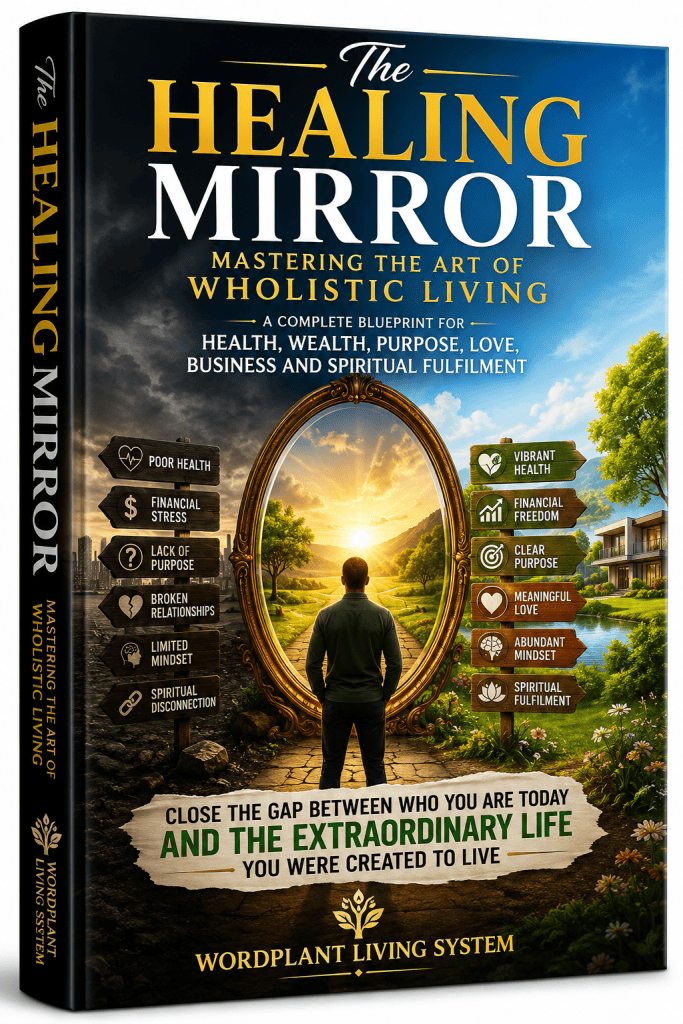
Discover The Healing Mirror: Mastering the Art of Wholistic Living—a guide to closing the gap between where you are today and the life you want to build across health, wealth, purpose, love, business, and spiritual fulfilment.
The central invitation is simple: understand your present position, clarify your desired destination, identify the barriers, and take meaningful steps forward.
A Message from Wordplant Living System
At Wordplant Living System, we believe better health begins with better information, thoughtful lifestyle choices, responsible use of nature, and appropriate healthcare.
Our mission is to help people understand their bodies, cultivate supportive habits, and make informed decisions about their wellbeing.
Wordplant Living System
Restoring Health Naturally Through Knowledge, Lifestyle and Nature.
Warm regards,
Alfred Okoko
Founder, Healing Gap Framework
Wordplant Living System
Life Transformation & Wellness Empowerment
Health note: This newsletter is for education and general wellbeing, not a diagnosis or a substitute for professional medical advice. Lifestyle changes can support health but do not replace indicated treatment. Do not stop or change prescribed medicines without consulting your healthcare professional.

