Skip to content
    • About The Body Garden Mastery
    • CONTACT THE BODY GARDEN MASTERY
    • PRIVACY POLICY
    • THE BODY GARDEN JOURNAL
    • THE BODY GARDEN MASTERY

The Body Garden Mastery

  • Why Water Matters to the Human Body|The Body Garden Mastery

    September 24th, 2026
    Water and Wellness

    Discover why water matters to the human body, how hydration supports everyday body functions, signs of dehydration, healthy hydration habits, and how to cultivate better hydration as part of your wellness journey.

    Introduction

    What is the first thing you reach for when you feel thirsty?

    For many people, the answer is water.

    We drink it when we wake up.

    We drink it with meals.

    We drink it after physical activity.

    We drink it when the weather is hot.

    We drink it when thirst reminds us that our body needs fluid.

    Yet water is so ordinary that we can easily forget how important it is.

    We may spend considerable time thinking about food, exercise, supplements and other aspects of wellness while overlooking one of the most basic requirements of life.

    Water matters.

    The human body depends on water for many essential functions. Water is involved in regulating body temperature, transporting substances throughout the body, maintaining blood volume, supporting digestion, lubricating tissues and joints, and helping the kidneys remove waste.

    This does not mean that drinking enormous amounts of water will automatically make someone healthier.

    More is not always better.

    Hydration is about balance.

    At The Body Garden Mastery, we use the garden as a simple picture for understanding wellness.

    A garden needs water.

    Too little water can cause plants to wilt.

    But flooding a garden is not the answer either.

    The goal is appropriate nourishment and balance.

    Your body works in a similar way.

    Let’s explore why water matters and how you can cultivate better hydration habits.

    Your Body Is a Water-Rich Garden

    The human body contains a substantial amount of water, although the exact percentage varies according to factors such as age, sex, body composition and other individual characteristics.

    Water is found inside cells and in the fluids surrounding them.

    It is part of blood and other body fluids.

    This means hydration is not simply about having a drink because your mouth feels dry.

    Water is part of the environment in which your body’s cells and tissues function.

    Think about a garden.

    The plants need water because water supports their normal biological processes.

    Your body similarly requires adequate fluid to maintain normal physiological functions.

    This is why hydration belongs among the fundamental pillars of the Body Garden approach.

    What Does Water Actually Do?

    Water has many jobs.

    It is not simply a substance that satisfies thirst.

    Water Helps Regulate Body Temperature

    Your body constantly works to maintain a relatively stable internal temperature.

    When you become hot, your body can lose water through sweating.

    As sweat evaporates from the skin, it helps cool the body.

    This is particularly important during exercise, physical work and hot weather.

    If you lose substantial amounts of fluid and do not replace them appropriately, dehydration can develop.

    This is one reason hydration deserves greater attention when temperatures rise or physical activity increases.

    Water Supports Blood Volume and Circulation

    Blood contains a large amount of water.

    Adequate fluid balance contributes to maintaining normal blood volume and circulation.

    When significant fluid losses occur, blood volume can decrease.

    The body then has to respond to maintain circulation and normal functioning.

    This is another reason why fluid balance matters.

    Hydration is not a separate activity disconnected from the rest of your body.

    It is part of the environment in which many body systems operate.

    Water Supports Digestion

    Water is also important for normal digestive function.

    It contributes to saliva and digestive fluids and helps maintain the appropriate consistency of material moving through the digestive tract.

    Adequate fluid intake can be part of a healthy approach to preventing constipation, particularly when combined with sufficient dietary fiber and regular physical activity.

    However, constipation has many possible causes.

    If it is persistent, severe or accompanied by concerning symptoms, it should be appropriately evaluated rather than assuming that drinking more water is the complete solution.

    Water Helps the Kidneys Remove Waste

    Your kidneys continuously filter your blood and help regulate water and electrolyte balance.

    They also help remove waste products from the body through urine.

    Water is an important component of this process.

    When you are adequately hydrated, your kidneys have the fluid they need to perform their normal functions.

    However, it is important to understand a common misconception:

    Drinking excessive amounts of water does not “detox” the body in some magical way.

    Your body already has sophisticated systems for processing and eliminating waste, including the kidneys and liver.

    The goal is to support normal body function, not to force the body by consuming extreme amounts of water.

    Water Supports Physical Performance

    Have you ever exercised or worked physically on a hot day and felt unusually tired?

    Fluid loss may be one factor.

    During physical activity, you can lose water through sweat.

    The amount depends on factors such as exercise intensity, duration, temperature, humidity and individual physiology.

    Even moderate dehydration can make physical activity feel more difficult.

    For longer or intense exercise, especially in hot conditions, fluid and electrolyte losses may require more deliberate attention.

    The key lesson is simple:

    Movement increases the importance of paying attention to hydration.

    Water and Your Brain

    Your brain also depends on adequate fluid balance.

    Significant dehydration can contribute to symptoms such as headache, fatigue, dizziness and difficulty concentrating.

    If you are struggling to focus, feeling unusually tired or developing a headache, dehydration may be one possible contributor.

    But don’t automatically assume that water is the answer to every headache or episode of fatigue.

    There can be many causes.

    Your body communicates through symptoms, and symptoms deserve appropriate attention.

    This is why our philosophy is:

    Symptoms are messages, not enemies.

    Listen to them, but don’t automatically diagnose them yourself.

    How Much Water Do You Need?

    This is where many people become confused.

    You may have heard statements such as:

    “Everyone should drink exactly eight glasses a day.”

    But there is no single amount of water that is appropriate for every person under every circumstance.

    Fluid requirements vary.

    They can be influenced by:

    Body size.

    Age.

    Physical activity.

    Climate.

    Temperature.

    Pregnancy or breastfeeding.

    Diet.

    Illness.

    Medication.

    Sweating.

    Other individual circumstances.

    Your total water intake also comes from food and other beverages, not only plain drinking water.

    Therefore, instead of becoming obsessed with one universal number, develop awareness of your body’s fluid needs and the circumstances that affect them.

    People with certain medical conditions may also have specific fluid restrictions or requirements.

    If you have been advised by a healthcare professional to limit or carefully manage your fluid intake, follow that individualized guidance rather than applying general hydration advice.

    Thirst Is One of Your Body’s Signals

    Your body has a built-in system for regulating fluid balance.

    Thirst is one of the signals that encourages you to drink.

    For many healthy adults, thirst can be a useful guide alongside normal eating and drinking patterns.

    However, thirst is not always an early or reliable signal in every situation.

    Older adults, people exercising intensely, people working in hot environments and people who are ill may require greater attention to fluid intake.

    The lesson is not to ignore thirst.

    It is to become more aware.

    What Are Common Signs of Dehydration?

    Dehydration can range from mild to severe.

    Possible signs can include:

    Thirst.

    Dry mouth.

    Dark or concentrated urine.

    Urinating less frequently than usual.

    Fatigue.

    Headache.

    Dizziness.

    Reduced physical performance.

    Confusion can occur with more severe dehydration.

    Severe dehydration can be a medical emergency.

    If someone is extremely weak, confused, fainting, unable to keep fluids down or showing other serious symptoms, appropriate medical attention should be sought promptly.

    Don’t rely on a glass of water as the solution to a potentially serious medical problem.

    Look at Your Urine

    Urine color can provide a rough indication of hydration status.

    Dark yellow urine may occur when urine is more concentrated, which can happen when fluid intake is low.

    Pale yellow urine is often associated with better hydration.

    But urine color is not a perfect diagnostic tool.

    Certain foods, supplements and medications can change urine color.

    Some medical conditions can also affect it.

    Use it as one clue rather than an absolute measurement.

    Water Is Not the Only Source of Hydration

    Many people think about hydration as “drinking water.”

    But your total fluid intake can come from several sources.

    Foods such as fruits and vegetables contain significant amounts of water.

    Soups and other foods also contribute fluid.

    Milk and other beverages contribute fluid as well.

    This doesn’t mean that every beverage is equally desirable as a regular hydration choice.

    Water is a simple option that contains no added sugar and is widely available.

    What About Tea and Coffee?

    Tea and coffee contain water and can contribute to total fluid intake.

    Although caffeine has a mild diuretic effect, moderate caffeine consumption does not simply cancel out the fluid contained in caffeinated beverages.

    However, adding large amounts of sugar or high-calorie ingredients can change the nutritional profile of a beverage.

    The important question is not:

    “Is this beverage absolutely good or bad?”

    Instead ask:

    “How does this beverage fit into my overall pattern?”

    What About Sugary Drinks?

    Soft drinks, sweetened juices, energy drinks and other sugary beverages can contribute substantial amounts of added sugar.

    They may provide fluid, but they should not necessarily become the foundation of your hydration strategy.

    If you regularly consume sugary drinks, one practical change could be replacing some of them with water.

    Don’t make the change unnecessarily complicated.

    Start with one substitution.

    Then repeat it.

    A small habit can become a bigger lifestyle change.

    Water Before, During and After Exercise

    Hydration around physical activity requires some awareness.

    Before exercise, beginning well hydrated can help you perform comfortably.

    During exercise, especially when activity is prolonged, intense or performed in heat, replacing fluids lost through sweating becomes increasingly important.

    After exercise, replacing lost fluids helps restore hydration.

    For short, moderate exercise sessions, plain water is often sufficient for many people.

    For prolonged or intense activity with substantial sweating, electrolyte replacement may sometimes be appropriate.

    Again, context matters.

    There is no need to turn every walk into a complicated hydration protocol.

    Don’t Force Excessive Water

    One of the most important hydration lessons is this:

    Too much water can also be dangerous.

    Drinking excessive amounts of water in a short period can dilute sodium levels in the blood, potentially causing a serious condition called hyponatremia.

    This is one reason why the goal should never be:

    “The more water I drink, the healthier I will become.”

    The goal is:

    “I want to maintain appropriate hydration.”

    Balance is the principle.

    A garden needs water.

    But a flooded garden is not a healthy garden.

    The Healing Gap Approach to Hydration

    Let’s apply the Healing Gap Framework™ to your hydration habits.

    Current State

    How much fluid do you normally drink?

    Do you regularly go for long periods without drinking?

    Do you rely heavily on sugary drinks?

    Do you drink more when you are physically active or when the weather is hot?

    Desired State

    What would better hydration look like for you?

    Perhaps you want to drink water more consistently.

    Perhaps you want to reduce sugary beverages.

    Perhaps you want to remember to carry water when traveling.

    Identify the Gap

    What separates your current habits from your desired habits?

    Maybe you forget.

    Maybe clean drinking water is not always accessible.

    Maybe you simply don’t enjoy drinking plain water.

    Maybe your daily routine is unpredictable.

    Identifying the barrier is important.

    Create an Action Step

    Make the action simple.

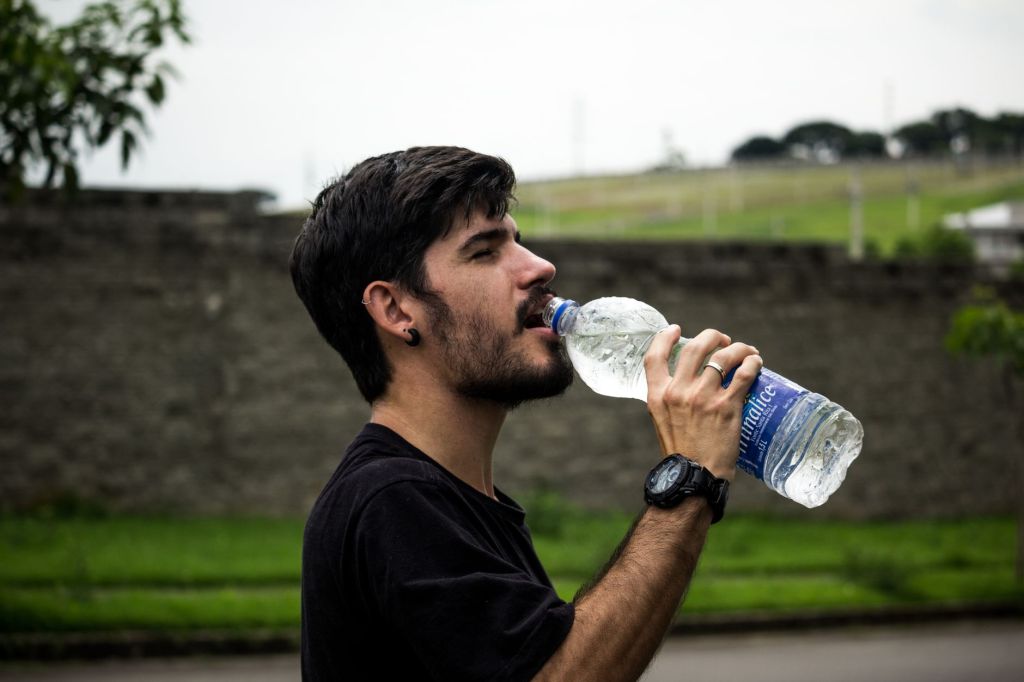
    Carry a reusable water bottle.

    Drink water with meals.

    Keep water accessible at your workspace.

    Drink when you feel thirsty.

    Include water-rich foods in your meals.

    Choose water more often instead of sugary beverages.

    Observe Your Progress

    Don’t just make a promise.

    Observe your behavior.

    Did you actually drink more?

    Did you reduce sugary drinks?

    Do you feel more prepared during physical activity?

    What worked?

    What didn’t?

    Adjust

    If the strategy doesn’t work, change the strategy.

    Maybe carrying a bottle helps.

    Maybe setting a reminder helps.

    Maybe drinking water with meals is easier.

    Wellness is not about proving that one method works.

    It is about discovering what works appropriately for you.

    Grow

    Once hydration becomes easier, allow the habit to become part of your lifestyle.

    That’s cultivation.

    Hydration and the Eight Pillars

    Water also connects with the other pillars of the Body Garden.

    Nutrition: Fruits and vegetables contribute water and nutrients.

    Movement: Physical activity can increase fluid losses.

    Sleep: Good overall lifestyle habits include appropriate hydration.

    Stress: Emotional stress can change daily habits, including eating and drinking patterns.

    Digestion: Adequate fluid intake can support normal digestive function.

    Environment: Heat and humidity can increase fluid losses.

    Relationships: Family and community habits can influence what and how we drink.

    Purpose: Caring for your body can become part of a broader commitment to intentional living.

    This is why we don’t treat hydration as an isolated health trick.

    It is one part of the garden.

    Simple Ways to Cultivate Better Hydration

    You don’t need a complicated system.

    Try these practical habits.

    Start your day with awareness.

    Notice how you feel and whether you are thirsty.

    Keep water accessible.

    Convenience influences behavior.

    Drink with meals.

    This can make hydration part of an existing routine.

    Carry water when appropriate.

    Especially when traveling, working outdoors or exercising.

    Eat water-rich foods.

    Fruits and vegetables can contribute to your overall fluid intake.

    Reduce excessive sugary drinks.

    Replace some with water.

    Pay attention to hot weather.

    You may lose more fluid through sweating.

    Drink during physical activity.

    Adjust according to the duration, intensity and conditions.

    Listen to your body.

    Thirst, urine concentration and changes in energy can provide useful clues.

    Don’t force excessive amounts.

    Hydration is about balance.

    A Simple Body Garden Hydration Check

    Today, ask yourself:

    Do I drink water regularly?

    Do I wait until I am extremely thirsty?

    Do I drink enough when the weather is hot?

    Do I replace fluids after significant sweating?

    How often do sugary drinks replace water?

    Do I have easy access to safe drinking water?

    Have I been given medical advice about fluid intake?

    These questions can help you identify your current hydration state.

    And remember:

    Awareness comes before adjustment.

    The Body Garden Hydration Challenge

    For the next seven days, make hydration an experiment in awareness.

    Don’t try to drink an extreme amount.

    Instead:

    Carry water when appropriate.

    Drink when thirsty.

    Include water with meals.

    Choose water more often.

    Pay attention to your urine color.

    Notice how you feel during hot weather and physical activity.

    Observe your habits.

    At the end of the week, ask:

    What did I learn?

    That’s the Body Garden approach.

    You are not simply following a rule.

    You are becoming a student of your own habits.

    Final Thoughts

    Water is simple.

    It is inexpensive in many settings.

    It does not require a complicated recipe.

    And yet it plays an extraordinary role in the human body.

    Water helps regulate temperature.

    It supports circulation.

    It contributes to digestion.

    It supports normal kidney function.

    It helps maintain the body’s fluid balance.

    It supports physical activity.

    It contributes to the normal functioning of cells and tissues.

    But hydration is not a competition.

    You don’t need to prove your wellness by drinking enormous quantities of water.

    You don’t need to follow a universal number without considering your individual circumstances.

    And you don’t need to believe that water can cure every health problem.

    You simply need to understand its importance and cultivate appropriate hydration as part of a balanced lifestyle.

    Think of your body as a garden.

    Food provides nourishment.

    Movement provides activity.

    Sleep provides restoration.

    Purpose provides direction.

    Relationships provide connection.

    And water helps sustain the environment in which your body performs its everyday functions.

    Water your garden wisely.

    Not too little.

    Not excessively.

    But appropriately.

    Start where you are.

    Observe.

    Adjust.

    Cultivate.

    Grow.

    Your body is a garden. Learn how to cultivate wellness.


    Health Information Disclaimer: This article provides general educational information and is not a substitute for individualized medical advice, diagnosis or treatment. Fluid requirements vary between individuals. People with kidney disease, heart conditions, certain endocrine conditions, or other medical circumstances may have specific fluid requirements or restrictions and should follow advice from their qualified healthcare professional. Severe dehydration or symptoms such as confusion, fainting or inability to keep fluids down require prompt medical attention.


  • What Is a Healthy Plate? A Beginner’s Guide to Balanced Nutrition|The Body Garden Mastery

    September 24th, 2026

    Learn what a healthy plate is, how to balance vegetables, fruits, whole grains, protein and healthy fats, and how simple food choices can help you cultivate better nutrition and wellness.

    Introduction

    What did you eat on your plate today?

    It is a simple question, but it can reveal a great deal about how we nourish our bodies.

    For many people, healthy eating sounds complicated.

    There are diets.

    There are food rules.

    There are superfoods.

    There are fasting plans.

    There are low-carbohydrate diets, high-protein diets, plant-based diets and countless other approaches competing for our attention.

    With so much information available, it is easy to become confused.

    But healthy eating does not have to begin with complicated calculations.

    Sometimes, it can begin with something much simpler:

    Look at your plate.

    A healthy plate is a practical way of thinking about balanced nutrition. Instead of obsessing over individual nutrients or labeling foods as completely “good” or “bad,” the healthy-plate approach encourages you to consider the overall composition of a meal.

    Are you eating vegetables or fruits?

    Do you have a source of protein?

    Are your carbohydrates mostly nutrient-rich choices?

    Have you included some healthy fats?

    Are your portions appropriate for your needs?

    And perhaps most importantly:

    Does your overall eating pattern give your body the nourishment it needs?

    At The Body Garden Mastery, we use the garden as a picture for understanding wellness.

    Your body is a garden.

    Food is one of the ways you cultivate that garden.

    Let’s explore what a healthy plate really means.

    What Is a Healthy Plate?

    A healthy plate is a simple visual approach to building a balanced meal.

    Rather than focusing on one food or one nutrient, you aim to include several food groups in appropriate proportions.

    A general healthy-plate model emphasizes:

    Vegetables and fruits

    Protein-rich foods

    Whole or minimally refined carbohydrate sources

    Healthy fats

    The exact proportions do not need to be identical at every meal.

    Your nutritional needs can vary depending on your age, activity level, body size, health circumstances, cultural food traditions and other individual factors.

    The goal is not to create a perfect plate.

    The goal is to develop a balanced pattern of eating over time.

    That distinction is important.

    One meal does not determine your health.

    One food does not make a diet healthy or unhealthy.

    Your body experiences your eating pattern repeatedly, day after day.

    That is where cultivation comes in.

    Think of Your Plate as a Garden

    Imagine preparing a garden.

    You would not expect one type of plant to provide everything the garden needs.

    Different plants have different characteristics.

    Likewise, different foods provide different nutrients.

    Vegetables can provide vitamins, minerals, fiber and many beneficial plant compounds.

    Fruits can provide vitamins, minerals, fiber and naturally occurring carbohydrates.

    Beans, peas, lentils, eggs, fish, poultry, dairy products, nuts and other foods can provide protein and other nutrients.

    Whole grains and other carbohydrate-rich foods can provide energy, fiber and nutrients.

    Healthy fats can provide essential fatty acids and help with the absorption of certain fat-soluble vitamins.

    The lesson is simple:

    Variety matters.

    Your body needs a variety of nutrients, and variety becomes easier when your meals contain a variety of nutritious foods.

    Start With Vegetables

    One of the simplest ways to improve a meal is to make vegetables a regular part of your plate.

    Vegetables come in many forms and colors.

    Think about:

    Spinach.

    Kale.

    Sukuma wiki.

    Cabbage.

    Carrots.

    Tomatoes.

    Pumpkin.

    Broccoli.

    Cauliflower.

    Green beans.

    Peppers.

    Eggplant.

    Traditional leafy greens.

    Other locally available vegetables.

    Different vegetables provide different combinations of nutrients and plant compounds.

    Instead of asking, “Which vegetable is the healthiest?”

    A more useful question may be:

    How can I eat a greater variety of vegetables over time?

    You can vary the colors.

    You can vary the textures.

    You can vary preparation methods.

    You can eat some vegetables raw when appropriate, while cooking others.

    You can include locally available seasonal vegetables.

    The objective is not perfection.

    It is variety and consistency.

    Don’t Forget Fruits

    Fruit can also form an important part of a balanced eating pattern.

    Examples include:

    Bananas.

    Oranges.

    Mangoes.

    Pawpaw.

    Pineapple.

    Watermelon.

    Passion fruit.

    Avocado.

    Berries where available.

    Apples.

    Guavas.

    And many other locally available fruits.

    Whole fruit generally provides fiber along with its naturally occurring sugars.

    This is different from drinking large quantities of fruit juice, which can make it easier to consume more sugar and less fiber than you would by eating the whole fruit.

    A practical principle is:

    When possible, eat the fruit rather than simply drinking it.

    That does not mean fruit juice can never be consumed.

    It means whole fruit can be a useful default choice within a balanced eating pattern.

    Add a Protein Source

    Protein is an essential nutrient involved in many functions throughout the body.

    It contributes to the maintenance and repair of tissues and plays important roles in enzymes, hormones and other biological processes.

    Protein-rich foods include:

    Beans.

    Lentils.

    Peas.

    Eggs.

    Fish.

    Chicken.

    Lean meats.

    Milk.

    Yoghurt.

    Other dairy products.

    Nuts and seeds.

    Soy and other plant-based protein sources.

    One of the advantages of combining different food groups is that you can create satisfying meals without relying on a single food.

    For example, a meal could combine beans with vegetables and a whole-grain carbohydrate.

    Another meal could include fish, vegetables and a suitable carbohydrate source.

    A vegetarian meal could combine legumes, vegetables, grains and other nutritious plant foods.

    The best choices depend on individual needs, preferences, availability and dietary patterns.

    Understand Carbohydrates

    Carbohydrates have sometimes become the villain of modern diet culture.

    But carbohydrates are not automatically unhealthy.

    They are found in many nutritious foods, including fruits, vegetables, legumes and whole grains.

    The more useful question is often:

    What type of carbohydrate am I eating, and how much?

    Instead of building meals primarily around highly refined carbohydrate foods, consider including more minimally processed sources such as:

    Whole grains.

    Oats.

    Brown rice.

    Whole-grain maize.

    Millet.

    Sorghum.

    Sweet potatoes.

    Beans and other legumes.

    Fruits.

    Vegetables.

    These foods can provide carbohydrates alongside varying amounts of fiber, vitamins, minerals and other nutrients.

    This does not mean every carbohydrate-rich food needs to be eliminated.

    It means learning to distinguish between different carbohydrate sources and considering the overall quality of your eating pattern.

    Include Healthy Fats

    Fat is another nutrient that has often been misunderstood.

    Your body needs dietary fat.

    The important question is which fats, how much and as part of what overall eating pattern?

    Sources of unsaturated fats include:

    Avocados.

    Nuts.

    Seeds.

    Some vegetable oils.

    Olives and olive oil.

    Fatty fish.

    These foods can contribute beneficial fats and other nutrients.

    At the same time, many highly processed foods contain large amounts of saturated fats, added sugars and sodium.

    A healthy eating pattern generally emphasizes nutrient-rich foods and limits excessive consumption of highly processed foods.

    Again, balance matters.

    The goal is not to fear fat.

    The goal is to understand it.

    What About Portion Size?

    A healthy plate is not only about what you eat.

    It is also about how much you eat.

    Portion needs vary considerably from person to person.

    Someone who performs physically demanding work may have different energy requirements from someone who spends most of the day sitting.

    Children, adults and older people have different nutritional needs.

    Athletes may have different requirements from less active individuals.

    Medical conditions can also change dietary needs.

    Therefore, a healthy plate should be considered a flexible educational model rather than a rigid prescription.

    Pay attention to hunger, fullness, energy needs and overall dietary quality.

    Eating slowly can also help you become more aware of how much food you actually need.

    A Simple Healthy Plate Example

    Imagine preparing lunch.

    Instead of filling the entire plate with one food, build variety.

    You might have:

    A generous serving of vegetables.

    A portion of beans, fish, eggs or another protein source.

    A suitable serving of whole-grain maize, brown rice, millet, sorghum or sweet potato.

    A small amount of healthy fat, such as avocado.

    You might add a piece of whole fruit afterward or include it elsewhere during the day.

    This is not a magic formula.

    It is simply an example of how different food groups can work together.

    And remember:

    Healthy eating does not have to look the same in every household.

    A healthy plate in Kenya may look different from one in India, Jamaica, Europe or the United States.

    Cultural foods can absolutely be part of healthy eating.

    The question is how they fit into the overall pattern.

    Traditional Foods Can Belong on a Healthy Plate

    There is tremendous value in looking at the foods that are already available within local communities.

    Traditional diets in many cultures contain nutritious foods that deserve greater appreciation.

    In Kenya, this might include foods such as:

    Beans.

    Green leafy vegetables.

    Traditional vegetables.

    Maize.

    Millet.

    Sorghum.

    Sweet potatoes.

    Arrowroots.

    Pumpkin.

    Avocado.

    Fruits.

    Fish.

    Other locally available foods.

    Healthy eating does not require abandoning your culture.

    Instead, you can examine traditional foods through the lens of balance, preparation methods, portions and variety.

    The goal is not to make every meal foreign.

    The goal is to make your familiar foods work within a nutritious pattern.

    Be Careful With Ultra-Processed Foods

    Modern food environments make highly processed foods easy to access.

    Some processed foods can fit into a balanced diet.

    Processing itself is not automatically bad.

    For example, freezing, drying, fermenting, pasteurizing and other processes can be useful ways of preserving or preparing food.

    The concern arises when highly processed foods become the foundation of the diet and frequently displace more nutrient-dense foods.

    Many highly processed foods are designed to be extremely convenient and highly palatable.

    They may contain substantial amounts of added sugars, sodium or unhealthy fats.

    Instead of thinking:

    “I can never eat processed food.”

    Try asking:

    “What forms the foundation of most of my meals?”

    That question moves the conversation away from perfection and toward patterns.

    Healthy Eating Is Not About Perfection

    One of the biggest mistakes people make when changing their diet is expecting perfection.

    They start a new plan on Monday.

    They eat perfectly for several days.

    Then they have a meal that does not fit the plan.

    They feel guilty.

    They conclude that they have failed.

    And they abandon the entire effort.

    This is unnecessary.

    One meal is not your entire diet.

    One day is not your entire lifestyle.

    If one meal is less balanced than you intended, return to your normal healthy pattern at the next opportunity.

    Don’t turn one imperfect meal into an imperfect week.

    Cultivation requires consistency, not perfection.

    The Healthy Plate and the Healing Gap

    This is where the Healing Gap Framework™ becomes useful.

    Ask yourself:

    Where am I now?

    What does my current diet actually look like?

    Do I regularly eat vegetables?

    Do I eat fruit?

    Do I include protein?

    Do I drink enough fluids?

    How often do highly processed foods dominate my meals?

    Where do I want to be?

    Perhaps you want to eat more vegetables.

    Perhaps you want more consistent meals.

    Perhaps you want to reduce excessive sugary foods.

    Perhaps you want to improve your overall food quality.

    What Is the Gap?

    Identify the difference between your current eating pattern and your desired pattern.

    What Are the Barriers?

    Is it cost?

    Time?

    Availability?

    Food preferences?

    Family habits?

    Work schedules?

    Lack of planning?

    Emotional eating?

    Understanding the barrier is important because the solution depends on the problem.

    What Action Can You Take?

    Don’t try to change everything at once.

    Perhaps your first action is simply:

    Add one serving of vegetables to lunch every day.

    Once that becomes easier, build another habit.

    How Will You Measure Progress?

    Track what you are actually doing.

    Not what you intended to do.

    Progress becomes easier to understand when it is visible.

    What Does Your Freedom Day Look Like?

    Your Freedom Day might represent reaching a meaningful wellness milestone.

    It could mean developing confidence in your food choices.

    It could mean establishing a sustainable healthy eating routine.

    It could mean no longer feeling confused every time you plan a meal.

    The objective is to create a sustainable relationship with food.

    A Simple Healthy Plate Checklist

    Before eating, ask yourself:

    Where are my vegetables?

    Where is my fruit?

    Where is my protein?

    What is my main carbohydrate source?

    Have I included a healthy source of fat?

    Is this portion appropriate for me?

    Am I eating mostly whole or minimally processed foods?

    Am I drinking enough water throughout the day?

    Am I eating because I am hungry, or for another reason?

    These questions can turn an ordinary meal into an opportunity for awareness.

    Your Plate Is a Daily Wellness Classroom

    Every meal provides an opportunity to learn.

    You learn what makes you feel satisfied.

    You learn how different foods fit into your lifestyle.

    You learn how to prepare healthier meals.

    You learn what foods are available locally.

    You learn how to plan.

    You learn how to listen to your body while recognizing that symptoms should not be self-diagnosed.

    And you learn that healthy eating does not have to be complicated.

    The plate in front of you can become a simple reminder:

    Nourishment is cultivation.

    Start Small

    If your current diet is far from where you want it to be, don’t become overwhelmed.

    Start with one change.

    Add vegetables.

    Choose whole fruit more often.

    Include a protein source.

    Experiment with whole grains.

    Drink water regularly.

    Reduce your reliance on highly processed foods.

    Learn to read food labels where available.

    Prepare more meals at home when practical.

    Eat mindfully.

    Then repeat.

    Small improvements can become habits.

    Habits can become routines.

    Routines can become a lifestyle.

    And lifestyle is one part of the garden you cultivate every day.

    The Body Garden Challenge

    For your next meal, don’t try to create a perfect plate.

    Simply observe it.

    Look at the foods in front of you.

    Ask what is missing.

    Then make one improvement.

    Maybe add vegetables.

    Maybe add a protein source.

    Maybe replace a refined carbohydrate with a less processed alternative.

    Maybe add a piece of fruit.

    Maybe drink water instead of a sugary beverage.

    One improvement.

    Then another tomorrow.

    This is how cultivation begins.

    Final Thoughts

    A healthy plate is not a rigid formula.

    It is a practical way to think about balanced nutrition.

    It encourages variety.

    It encourages nutrient-dense foods.

    It encourages appropriate portions.

    It encourages greater awareness.

    Most importantly, it reminds us that healthy eating is not about finding one perfect food.

    It is about creating a pattern.

    Your body is your garden.

    Every meal is an opportunity to cultivate it.

    You don’t need to change everything today.

    Start with the plate in front of you.

    Look at it.

    Learn from it.

    Improve it where you can.

    Then do it again tomorrow.

    Learn.

    Cultivate.

    Observe.

    Adjust.

    Grow.

    That is the Body Garden way.

    Your body is a garden. Learn how to cultivate wellness.


    Health Information Disclaimer: This article is provided for general educational purposes and is not individualized medical or nutritional advice. Nutritional needs vary between individuals, and people with medical conditions, allergies, special dietary requirements or concerns about their nutrition should consult an appropriately qualified healthcare professional or registered dietitian.

  • The Seven Steps of the Healing Gap Framework Explained|The Body Garden Mastery

    September 23rd, 2026

    Learn the seven steps of the Healing Gap Framework and discover how to move from your current state toward your desired wellbeing through awareness, identifying barriers, practical action, progress tracking and sustainable lifestyle change.

    Introduction

    Many people want to improve their health, but wanting change and creating lasting change are two different things.

    You may know that you should eat better, move more, sleep sufficiently, manage stress and take better care of yourself. You may even have tried several health programs before.

    Yet knowing what to do does not always make it easy to do it consistently.

    This is where a structured approach can help.

    The Healing Gap Framework  is a practical wellness education model built around one central question:

    What is the gap between where I am today and where I want my wellbeing to be—and what practical steps can I take to close that gap?

    The framework is not about searching for a single miracle solution. It is about developing awareness, identifying obstacles, taking appropriate action, learning from progress and continually cultivating healthier habits.

    The seven steps are:

    Current State → Desired State → Healing Gap → Barriers → Action Steps → Progress → Freedom Day

    Together, these steps create a roadmap for personal wellness.

    Step One: Understand Your Current State

    Every journey begins with knowing where you are.

    Imagine using a map to plan a journey. Before deciding how to reach your destination, you need to know your starting point.

    Wellness works the same way.

    The first step is to honestly examine your current lifestyle and wellbeing.

    Ask yourself:

    • How do I normally eat?
    • How much water do I drink?
    • How active am I?
    • How well do I sleep?
    • How do I respond to stress?
    • How is my digestion?
    • How connected am I to family and community?
    • What gives my life meaning?
    • What habits support my wellbeing?
    • Which habits may be working against my goals?

    This is your Current State.

    It is not a judgment.

    It is a baseline.

    The purpose of a baseline is to create awareness.

    Without awareness, it is difficult to know what needs attention.

    Create Your Baseline Day

    One practical application of the framework is to establish a Baseline Day.

    On this day, record your current habits and wellness goals.

    You might record:

    • Sleep duration
    • Physical activity
    • Meals
    • Water intake
    • Energy levels
    • Stress levels
    • Mood
    • Personal observations

    If you have a diagnosed medical condition, relevant clinical measurements should be discussed and monitored with your healthcare professional rather than interpreted independently.

    The purpose is to establish a starting point from which you can observe change.

    Step Two: Define Your Desired State

    Once you know where you are, you need to decide where you want to go.

    This is your Desired State.

    Many health goals are too vague.

    For example:

    “I want to be healthier.”

    That sounds positive, but it does not provide a clear destination.

    A more useful goal might be:

    “I want to establish a regular walking routine five days a week.”

    Or:

    “I want to develop a consistent bedtime routine.”

    Or:

    “I want to include vegetables in most of my main meals.”

    The goal should be meaningful, realistic and appropriate to your circumstances.

    Your desired state is not necessarily about achieving a particular body shape or eliminating every health problem.

    It can be about improving your quality of life and developing sustainable habits.

    Ask:

    What would better wellbeing look like for me?

    Step Three: Identify Your Healing Gap

    Now comes the central idea of the framework.

    The Healing Gap is the space between your current state and your desired state.

    For example:

    Current state:

    “I rarely exercise.”

    Desired state:

    “I want to become physically active most days.”

    The gap is:

    I need to develop a sustainable movement routine.

    Another example:

    Current state:

    “I often stay awake late and wake feeling tired.”

    Desired state:

    “I want a more consistent sleep routine.”

    The gap becomes:

    I need to improve my evening routine and sleep habits.

    The gap transforms a vague problem into an area that can be worked on.

    This is important because many people focus only on the outcome.

    The Healing Gap Framework focuses on the bridge between the present and the desired future.

    Step Four: Identify the Barriers

    Knowing the gap is not enough.

    You must understand what is preventing you from closing it.

    These are your barriers.

    Barriers can be physical, emotional, social, financial, environmental or behavioural.

    For example, someone may want to exercise but work long hours.

    Another person may want to eat healthier but have limited access to certain foods.

    Someone may want to sleep earlier but spend excessive time on their phone at night.

    Another person may understand what they need to do but struggle with consistency.

    Instead of saying:

    “I lack discipline.”

    ask:

    “What is making this behaviour difficult?”

    That question creates room for problem-solving.

    Common Wellness Barriers

    Some common barriers include:

    Time

    A busy schedule can make healthy routines difficult.

    Environment

    Your surroundings can influence your choices.

    Knowledge

    You may not know where to begin.

    Habits

    Old routines can be difficult to change.

    Stress

    Stress can affect eating, sleeping, movement and decision-making.

    Social influence

    Family, friends and colleagues can influence behaviour.

    Financial limitations

    Healthy choices need to be realistic for an individual’s circumstances.

    Unrealistic expectations

    Expecting immediate results can lead to discouragement.

    The goal is not to blame yourself.

    The goal is to understand the obstacle.

    Once you understand the barrier, you can begin looking for practical solutions.

    Step Five: Create Action Steps

    This is where awareness becomes action.

    A goal without an action plan often remains a wish.

    The Healing Gap Framework encourages practical, manageable steps.

    Instead of:

    “I will completely change my lifestyle.”

    Try:

    “I will walk for 20 minutes after work three days this week.”

    Instead of:

    “I will eat perfectly.”

    Try:

    “I will add one additional serving of vegetables to my main meal each day.”

    Instead of:

    “I will eliminate stress.”

    Try:

    “I will spend ten minutes each evening practising a relaxation activity.”

    The objective is to make the next step clear.

    The Small-Step Principle

    Large goals can feel overwhelming.

    Small actions are easier to start.

    You can gradually increase the challenge as your habits become more established.

    Think of it as planting one seed at a time.

    The goal is not to transform the entire garden in one afternoon.

    The goal is to cultivate it consistently.

    Step Six: Measure Progress

    The sixth step is Progress.

    You cannot improve what you never observe.

    Progress measurement does not necessarily mean weighing yourself every day.

    Different goals require different measurements.

    If your goal is movement, track:

    • Walking sessions
    • Exercise sessions
    • Duration
    • Consistency

    If your goal is sleep, track:

    • Bedtime
    • Wake time
    • Sleep duration
    • Evening habits

    If your goal is nutrition, track:

    • Meal patterns
    • Vegetable intake
    • Water consumption
    • Eating routines

    If your goal is stress management, track:

    • Stress triggers
    • Relaxation practices
    • Mood patterns
    • Recovery time

    The purpose is not to become obsessed with numbers.

    The purpose is to learn.

    Progress Is Information

    Sometimes progress will be faster than expected.

    Sometimes it will be slower.

    Sometimes you may move backward temporarily.

    That does not necessarily mean the process has failed.

    It may mean the strategy needs adjustment.

    This is one of the most important principles of the framework:

    Learn, adjust and keep moving.

    If a particular action is not working, investigate why.

    Maybe the goal was too ambitious.

    Maybe the timing was wrong.

    Maybe the environment needs to change.

    Maybe additional support is needed.

    Progress provides information that helps you make better decisions.

    Step Seven: Reach Your Freedom Day

    The final step is Freedom Day.

    Freedom Day represents a meaningful milestone.

    It is the point at which you can look back and recognize that you have successfully closed an important gap.

    Freedom Day does not necessarily mean that every aspect of your health or life is perfect.

    Instead, it represents meaningful progress toward a personal goal.

    For example:

    “I can now walk consistently.”

    “I have established a regular sleep routine.”

    “I have developed healthier eating habits.”

    “I understand my stress triggers better.”

    “I have created a sustainable wellness routine.”

    Freedom Day is about recognizing progress.

    But there is an important lesson here.

    The journey does not necessarily end at Freedom Day.

    Once one gap has been addressed, another opportunity for growth may emerge.

    The garden continues to grow.

    How the Seven Steps Work Together

    The power of the Healing Gap Framework comes from the relationship between the steps.

    Consider this sequence:

    1. Current State

    Where am I?

    ↓

    2. Desired State

    Where do I want to go?

    ↓

    3. Healing Gap

    What separates where I am from where I want to be?

    ↓

    4. Barriers

    What is preventing progress?

    ↓

    5. Action Steps

    What can I realistically do?

    ↓

    6. Progress

    What is working and what needs adjustment?

    ↓

    7. Freedom Day

    What meaningful milestone have I achieved?

    This creates a continuous learning cycle.

    The Eight Wellness Pillars

    The framework can also be applied across different areas of life.

    Nutrition

    What am I putting into my body?

    Hydration

    Am I maintaining healthy hydration habits?

    Movement

    How regularly do I move?

    Sleep

    Am I allowing my body sufficient time for rest and recovery?

    Stress and Emotional Wellness

    How do I manage pressure and emotional challenges?

    Environment

    Does my environment support healthier living?

    Digestion

    What habits support my digestive wellbeing?

    Purpose and Relationships

    Do I have meaningful connections, purpose and support?

    These pillars can help you identify where your greatest wellness gaps may exist.

    The Healing Gap Is Personal

    There is no universal wellness plan that works identically for everyone.

    People differ in:

    • Age
    • Physical condition
    • Lifestyle
    • Culture
    • Environment
    • Resources
    • Responsibilities
    • Preferences
    • Medical circumstances

    Therefore, the Healing Gap Framework should be used as a thinking and planning system, not as a rigid prescription.

    What is appropriate for one person may not be appropriate for another.

    For people with medical conditions, persistent or concerning symptoms, or special health circumstances, appropriate professional medical advice remains important.

    Wellness education should complement—not replace—appropriate healthcare.

    Why the Framework Starts With Awareness

    One of the biggest mistakes people make when attempting lifestyle change is jumping directly into action.

    They buy a program.

    They start a diet.

    They begin exercising.

    They make a long list of resolutions.

    But they have not first asked:

    What is actually happening?

    Awareness creates direction.

    If you understand your current patterns, you can make better decisions about what needs attention.

    That is why the Healing Gap Framework begins with the Current State.

    Why You Should Not Try to Fix Everything at Once

    Imagine discovering ten different weeds in your garden.

    Would you panic and attempt to remove all of them simultaneously?

    Probably not.

    You would begin somewhere.

    The same principle applies to wellness.

    If you discover gaps in nutrition, movement, sleep, stress, hydration and relationships, trying to change everything overnight can become overwhelming.

    Instead, identify the most important or practical starting point.

    Close one gap.

    Build confidence.

    Then address another.

    This creates sustainable momentum.

    Your Body Is a Garden, Not a Project

    A project has an endpoint.

    A garden requires ongoing cultivation.

    This distinction is important.

    Wellness should not become another source of pressure.

    You are not trying to become a perfect human being.

    You are learning to care for yourself more intentionally.

    Some days will be productive.

    Some days will be difficult.

    There may be setbacks.

    There may be unexpected circumstances.

    The objective is to keep returning to the process.

    A Simple Healing Gap Exercise

    Take a piece of paper and divide it into seven sections.

    Write:

    Current State

    Where am I today?

    Desired State

    Where would I like to be?

    Healing Gap

    What separates the two?

    Barriers

    What is making change difficult?

    Action Steps

    What can I realistically do this week?

    Progress

    How will I know whether I am moving forward?

    Freedom Day

    What milestone will tell me that I have meaningfully closed this gap?

    Then choose one area to begin with.

    Not ten.

    One.

    Start there.

    Final Thoughts

    The Healing Gap Framework™ provides a simple way to turn wellness from a vague idea into a practical journey.

    It begins with awareness.

    You identify where you are.

    You define where you want to go.

    You identify the gap.

    You understand the barriers.

    You choose practical actions.

    You measure progress.

    And eventually, you recognize a meaningful milestone—your Freedom Day.

    The deeper lesson is that wellness is not about perfection.

    It is about cultivation.

    Your body is your garden.

    Your habits are the seeds.

    Your environment is part of the soil.

    Consistency is the water.

    Purpose is the sunlight.

    Awareness is the gardener’s knowledge.

    And every day gives you another opportunity to cultivate.

    You may not be able to change everything today.

    But you can identify one gap.

    You can take one useful action.

    You can learn from one experience.

    You can make one better choice.

    And you can continue moving forward.

    Start where you are. Understand your gap. Cultivate what matters. Keep growing.

  • Your Body Is a Garden: What Does It Mean to Cultivate Wellness?|The Body Garden Mastery

    September 23rd, 2026

    Discover the meaning behind the phrase “Your body is a garden” and learn how cultivating daily habits related to nutrition, hydration, movement, sleep, emotional wellbeing, environment, digestion and purpose can support long-term wellness through the Body Garden approach.

    Introduction

    Imagine walking into two different gardens.

    The first garden is green, vibrant and full of life. The soil is rich, the plants are healthy, the flowers are blooming, and everything appears balanced. This garden did not become beautiful by accident. Someone prepared the soil, planted good seeds, watered consistently, removed weeds and cared for it over time.

    The second garden tells a different story. Weeds have spread everywhere. The soil is dry. Plants struggle to grow. Some areas have been neglected for months or years. The potential is still there, but the garden needs attention, understanding and steady care.

    In many ways, our bodies are similar to these gardens.

    The phrase “Your body is a garden” is more than a poetic expression. It is a practical way of understanding health and wellness. It reminds us that wellbeing is not usually built through one action, one meal, one exercise session or one good decision. Wellness grows through daily habits, consistent care and informed choices.

    Just as gardeners learn to work with nature, people can learn to work with their bodies by understanding the factors that influence health and making small improvements over time.

    This is the foundation of what we may call cultivating wellness.

    What Does It Mean to Cultivate Wellness?

    To cultivate means to prepare, nurture, support and encourage growth.

    When applied to health, cultivating wellness means intentionally creating habits and environments that support physical, emotional, mental and social wellbeing.

    Many people think about health only when they feel unwell. Yet wellness is not simply the absence of illness. Wellness involves the daily practices that influence how we feel, move, think, rest and live.

    Cultivating wellness asks important questions:

    • What am I feeding my body?
    • How much water do I drink?
    • How often do I move?
    • Am I getting enough sleep?
    • How do I manage stress?
    • What kind of environment surrounds me?
    • How healthy are my relationships?
    • What gives meaning and purpose to my life?

    These questions encourage us to look at the whole picture rather than focusing on only one aspect of health.

    The Soil: Your Foundation

    Every garden begins with soil.

    Healthy soil supports growth because it contains nutrients, microorganisms, moisture and the conditions necessary for life.

    In the same way, every person has a foundation that influences wellbeing.

    Your foundation includes:

    • Family habits
    • Living environment
    • Education
    • Cultural practices
    • Access to healthy foods
    • Physical activity patterns
    • Sleep habits
    • Emotional experiences
    • Beliefs and attitudes

    No one chooses every aspect of their starting point in life. However, people can gradually improve the conditions in which healthier habits grow.

    Understanding your foundation is important because it helps answer an important question:

    Where am I today?

    Awareness is often the first step toward positive change.

    The Seeds: What Are You Planting Each Day?

    A gardener understands that seeds matter.

    If healthy seeds are planted and cared for, growth is more likely. If harmful influences dominate the garden, the results will be different.

    Every day, people plant seeds through their choices.

    The food you eat is a seed.

    The amount of water you drink is a seed.

    The thoughts you repeatedly entertain are seeds.

    The people you spend time with are seeds.

    The habits you practise become seeds.

    Books, conversations, entertainment, work environments and routines all contribute to the garden of life.

    Many of these seeds may seem small at first.

    A short walk.

    An extra glass of water.

    Going to bed earlier.

    Eating more vegetables.

    Taking time to relax.

    Reducing unnecessary stress.

    These actions may appear insignificant in a single day, but over months and years they can influence long-term wellbeing.

    The gardener understands a simple truth:

    Small actions, repeated consistently, can create meaningful change.

    Water: The Power of Consistency

    Even the best seeds cannot grow without water.

    Water represents consistency.

    Many people start health goals with enthusiasm. They begin a new eating plan, start exercising or commit to positive changes. But after a few weeks, the effort fades.

    Gardens do not thrive because of occasional care. They thrive because of regular attention.

    Wellness works in a similar way.

    Consistency does not require perfection.

    It means returning to healthy habits again and again.

    One missed workout does not define a person.

    One unhealthy meal does not define a person.

    One difficult week does not define a person.

    What matters most is the overall pattern.

    Consistent habits often have more influence than occasional extreme efforts.

    Sunlight: Purpose and Meaning

    Plants need sunlight to grow.

    People also need sources of motivation, meaning and connection.

    Research has shown that social relationships, purpose and emotional wellbeing play important roles in quality of life.

    Purpose does not always mean grand achievements.

    Purpose can include:

    • Caring for family
    • Serving the community
    • Learning new skills
    • Faith and spirituality
    • Meaningful work
    • Creative activities
    • Helping others

    Purpose gives direction.

    It provides reasons to continue making positive choices even when challenges arise.

    People who have a sense of meaning often find it easier to maintain healthy habits because those habits become connected to something larger than themselves.

    Weeds: Identifying What Competes With Wellness

    Every garden has weeds.

    Weeds compete for space, nutrients, water and sunlight.

    Life also contains “weeds” that can interfere with wellbeing.

    Examples include:

    • Chronic stress
    • Lack of sleep
    • Sedentary living
    • Excessive consumption of highly processed foods
    • Smoking
    • Harmful alcohol use
    • Social isolation
    • Persistent worry
    • Negative environments
    • Unhelpful routines

    Removing weeds does not happen all at once.

    Gardeners remove them gradually.

    Similarly, improving wellness often involves making one practical change at a time.

    The goal is not perfection.

    The goal is progress.

    The Eight Pillars of the Body Garden

    A thriving garden requires many elements working together.

    Likewise, wellness is supported by multiple interconnected factors.

    The Body Garden approach can be understood through eight pillars.

    Nourish

    Food provides energy and nutrients.

    Balanced eating patterns that include vegetables, fruits, whole grains, healthy protein sources and appropriate portions can support general wellbeing.

    Hydrate

    Water supports many important body functions.

    Building regular hydration habits is a simple but valuable practice.

    Move

    Movement supports strength, mobility, balance and fitness.

    Walking, stretching, gardening, dancing and structured exercise are all forms of movement.

    Rest

    Sleep and recovery are essential.

    Rest is not laziness.

    Rest is part of growth.

    Calm

    Managing stress and emotional wellbeing can influence many aspects of life.

    Relaxation, reflection, breathing exercises and supportive relationships may contribute to resilience.

    Clean

    Healthy environments matter.

    Clean air, safe water, healthy surroundings and reduced exposure to harmful substances support wellbeing.

    Digest

    Digestion plays an important role in nutrition and overall health.

    Eating patterns, hydration and dietary variety can influence digestive wellness.

    Connect

    Human beings are social.

    Relationships, community, faith, purpose and belonging contribute to quality of life.

    When these pillars work together, the body garden becomes stronger.

    The Healing Gap: Understanding the Space Between Today and Tomorrow

    Many people have goals for their wellbeing.

    They may want:

    • More energy
    • Better sleep
    • Improved fitness
    • Healthier eating habits
    • Less stress
    • Better mobility
    • Greater balance in life

    The difference between the current situation and the desired future can be called a gap.

    Understanding this gap is important because it turns vague wishes into practical action.

    Instead of asking:

    Why am I not where I want to be?

    A more helpful question may be:

    What small steps can help me move forward?

    This approach encourages progress through realistic actions rather than through unrealistic expectations.

    Becoming the Gardener

    One of the most important ideas in the Body Garden philosophy is this:

    You are the gardener.

    No one can make every choice for you.

    Others can teach, encourage and support.

    Healthcare professionals can provide advice and treatment when needed.

    Family and friends can help.

    Communities can inspire.

    But daily decisions still matter.

    Being the gardener means:

    • Paying attention
    • Learning
    • Making informed choices
    • Adjusting when necessary
    • Being patient
    • Staying consistent

    Gardens change with seasons.

    People also experience different seasons of life.

    Some seasons are productive.

    Some are difficult.

    Some require rest.

    Some require rebuilding.

    What matters is continuing to cultivate.

    Progress Over Perfection

    Many people abandon healthy habits because they expect perfection.

    But gardeners understand that nature is not perfect.

    Some plants grow faster than others.

    Some seasons bring challenges.

    Some efforts require time.

    Health and wellness often work in the same way.

    Progress is usually gradual.

    Small improvements matter.

    Drinking more water matters.

    Walking more matters.

    Sleeping better matters.

    Managing stress matters.

    Improving food choices matters.

    Every positive habit is like planting another seed.

    Over time, these seeds can create meaningful changes.

    A Long-Term View of Wellness

    Modern life often encourages quick solutions.

    People may expect immediate results.

    But gardens teach patience.

    Healthy habits work best when viewed as long-term investments.

    A tree does not grow overnight.

    Strong roots develop over time.

    Likewise, lasting wellness often grows through years of consistent attention.

    The goal is not to create a perfect body.

    The goal is to create a healthier relationship with the body you have.

    This means:

    • Listening to your body
    • Caring for your body
    • Respecting your body’s limits
    • Supporting your body’s needs
    • Building habits that can last

    Practical Steps to Start Cultivating Your Body Garden

    You do not need to change everything at once.

    Start small.

    Consider simple actions such as:

    • Drinking more water
    • Walking regularly
    • Including more vegetables in meals
    • Sleeping at consistent times
    • Taking breaks to relax
    • Spending time outdoors
    • Reducing unnecessary stress
    • Connecting with supportive people
    • Reflecting on personal goals

    Small steps can lead to larger changes over time.

    Final Thoughts

    The idea that your body is a garden offers a powerful way of thinking about wellness.

    Gardens do not flourish because of one action.

    They flourish through attention, balance, patience and care.

    Wellness is not a destination reached in a single day.

    It is a journey of cultivation.

    Each day offers an opportunity to plant better seeds.

    Each habit contributes to growth.

    Each small improvement matters.

    No matter where you are today, your garden still holds potential.

    The question is not whether growth is possible.

    The question is:

    What will you choose to cultivate today?


    About the Author

    Published by Alfred Okoko
    Founder, The Body Garden Mastery | Creator of the Healing Gap Framework

    Alfred Okoko is a wellness educator, author, and advocate of practical, whole-person approaches to cultivating better health. Through The Body Garden Mastery, he teaches readers to view the body as a garden that requires the right conditions, consistent care, knowledge, and purposeful action.

    His work combines lifestyle education, nutrition, movement, rest, emotional wellbeing, traditional knowledge, and responsible use of nature-based approaches. His Healing Gap Framework helps people identify the gap between their current state and their desired state of wellbeing, understand the barriers, and develop practical steps for moving forward.

    Explore More Works by Alfred Okoko

    📚 The Healing Mirror: Mastering the Art of Wholistic Living
    A complete blueprint for health, wealth, purpose, love, business, and spiritual fulfilment.

    📖 Freedom From Arthritis Naturally
    An educational guide exploring lifestyle, nutrition, movement, and natural approaches to supporting healthier joints.

    📘 Roll Your Way to Relief
    An introduction to using hand and foot reflexology principles and wooden rollers as part of a broader wellness routine.

    📗 The Healing Gap Framework
    Learn how to identify where you are, define where you want to be, understand the gap, and take practical steps toward your desired outcome.

    🌿 The Body Garden Mastery
    Cultivating wellness through knowledge, lifestyle, nature, and consistent daily care.

    Continue Your Wellness Journey

    Don’t just read about better health—cultivate it.

    Explore more educational articles, books, guides, wellness resources, and practical tools from Alfred Okoko and The Body Garden Mastery.

    Your body is your garden.
    Your daily choices are the seeds.
    Your lifestyle is the cultivation.
    Your results are the harvest.

    For inquiries: Call/WhatsApp: +254 726 530 868

    Educational content only. Information shared on this blog is not a substitute for diagnosis, treatment, or individualized medical advice from a qualified healthcare professional.

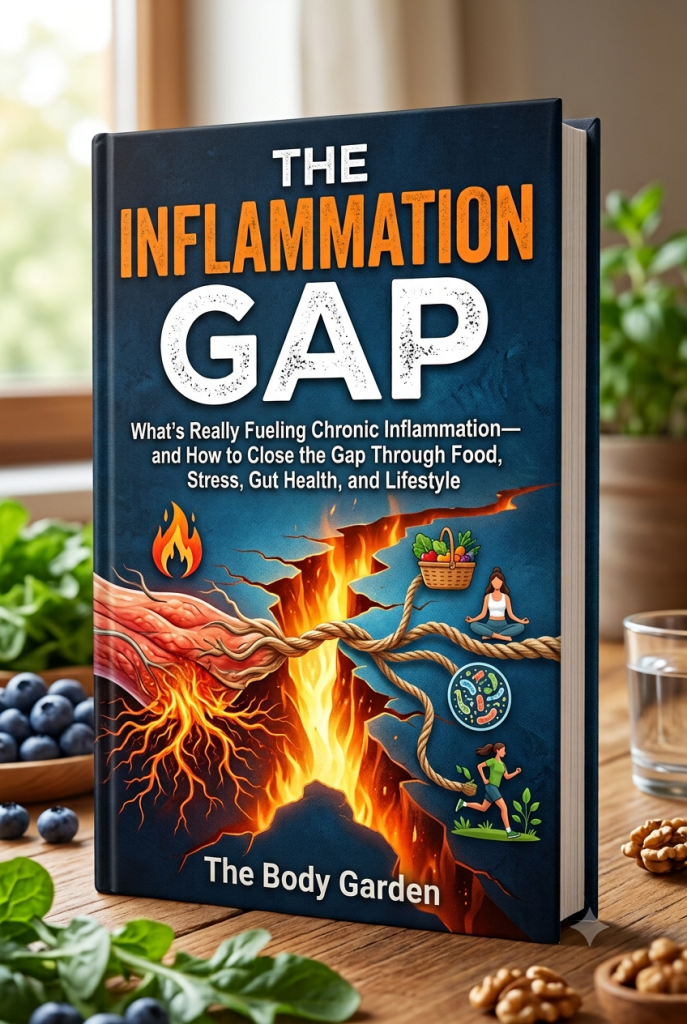
  • 10 Vital Lessons From The Inflammation Gap|The  Body Garden Mastery

    September 22nd, 2026

    Here are 10 Vital Lessons from The Inflammation Gap, distilled into practical principles readers can remember and apply.

    1. Inflammation Is Not Automatically the Enemy
      Inflammation is a normal protective process. The important question is whether the response is appropriate, persistent, or dysregulated.
    2. Look for Patterns, Not a Single Villain
      Chronic inflammation rarely has one simple explanation. Food, stress, sleep, movement, gut health, metabolic health, environment, genetics, infections, and other factors can interact.
    3. The Five Fires Are a Map, Not a Diagnosis
      Sugar and refined carbohydrates, oxidation and highly fried foods, chronic stress, gut/microbial signals, and metabolic/liver health provide a useful framework for asking better questions—not for diagnosing disease.
    4. Your Overall Dietary Pattern Matters More Than One Food
      Instead of creating lists of “good” and “bad” foods, build meals around vegetables, fiber-rich foods, adequate protein, healthy fats, and minimally processed carbohydrates.
    5. Your Gut Is an Ecosystem, Not an Enemy
      The goal is not to “kill bad bacteria” or constantly cleanse the gut. Nourishing the intestinal ecosystem with dietary fiber, plant diversity, adequate fluids, movement, and healthy routines is a more useful foundation.
    6. Stress Requires Regulation and Recovery
      Cortisol is a necessary hormone, not something the body needs to eliminate. The goal is appropriate stress responses followed by adequate recovery, including sleep, movement, relaxation, connection, and addressing sources of chronic stress.
    7. The Liver Doesn’t Need a Magical Detox
      Your body already has sophisticated systems for transforming and eliminating substances. Supporting the liver means reducing unnecessary harmful exposures, maintaining healthy habits, using medicines responsibly, and avoiding questionable “detox” products.
    8. Movement Is Part of Metabolic Health
      Physical activity is not merely a weight-loss tool. Regular movement supports cardiovascular health, glucose regulation, muscular function, mood, sleep, and everyday physical capacity.
    9. Small Repeated Actions Can Close a Large Health Gap
      Sustainable change usually comes from consistent behaviors rather than dramatic short-term interventions. One better meal, one walk, one improved night’s sleep, and one healthier response to stress can become part of a larger system.
    10. You Are the Driver—but You Don’t Have to Drive Alone
      The Healing Gap Framework encourages personal responsibility without pretending that every health problem can be solved through lifestyle alone. Learn your current state, define your desired state, identify the gap, take appropriate action, monitor progress, and seek professional care when needed.

    The central lesson of the book:
    Don’t fear the fire. Understand what may be feeding it, identify the gaps you can influence, and take practical steps toward better health.

    To order your digital copy WhatsApp+254 726 530 868 the word INFLAMMATION.

    Support Your Body’s Wellness Journey with the Wordplant Living System Healing Gap Framework Herbal Package

    Inflammation and swelling can be signs that something in the body needs attention. Rather than focusing only on the visible symptom, the Wordplant Living System Healing Gap Framework encourages you to look at the bigger picture—nutrition, hydration, movement, rest, digestion, stress, environmental influences and other lifestyle factors that can affect overall wellbeing.

    This is the philosophy behind our Healing Gap Framework Herbal Package for Inflammation & Swelling.

    At Wordplant Living System, we believe your body is not simply a collection of symptoms. Your body is a living garden that requires the right conditions to thrive. Our approach combines traditional herbal wisdom with practical lifestyle education to help you become more intentional about caring for your body.

    What Is the Healing Gap?

    The Healing Gap is the space between where you are today and where you want your wellbeing to be.

    Instead of asking only, “What can I take for this symptom?”, we encourage you to ask:

    What could be contributing to my current state, and what practical steps can I take to move toward better wellbeing?

    The framework looks at your current situation, identifies possible barriers, establishes practical action steps and encourages consistent progress.

    A Holistic Herbal Wellness Approach

    The Wordplant Living System package is designed to complement healthy lifestyle practices. Depending on your individual circumstances, the wellness approach may include traditional herbs alongside guidance around:

    • Eating patterns and food quality
    • Adequate hydration
    • Gentle movement
    • Rest and sleep
    • Stress and emotional wellbeing
    • Digestive and gut wellness
    • Environmental factors
    • Healthy daily routines

    The goal is not to promise an instant solution. The goal is to help you develop a better-informed wellness routine that supports your body’s natural processes.

    Why Choose Wordplant Living System?

    Wordplant Living System is built around the principle:

    “Restoring Health Naturally Through Knowledge, Lifestyle and Nature.”

    Our Healing Gap Framework encourages you to become an active participant in your wellness journey. Herbs can be part of a broader lifestyle strategy—not a replacement for appropriate medical diagnosis or treatment.

    If you have persistent or unexplained swelling, severe pain, difficulty breathing, sudden swelling, or other concerning symptoms, seek medical attention promptly. If you take prescription medicines, are pregnant or breastfeeding, or have a diagnosed medical condition, consult a qualified healthcare professional before using herbal products.

    Ready to Begin Closing Your Healing Gap?

    If inflammation and swelling are affecting your wellbeing and you would like to explore a traditional herbal wellness approach supported by lifestyle education, contact Wordplant Living System today.

    Order your Healing Gap Framework Herbal Package for Inflammation & Swelling via WhatsApp:

    📱 +254 726 530 868

    🇰🇪 Delivery available all over Kenya only.

    Wordplant Living System
    Restoring Health Naturally Through Knowledge, Lifestyle and Nature.

    Your body is your garden. Your daily choices are the gardening tools. Start cultivating better wellbeing today.

  • What Kind of Health Harvest Are You Cultivating? |The Body Garden Mastery

    September 9th, 2026

    What kind of health harvest are you cultivating? Discover how daily food, movement, sleep, hydration, stress, mindset and lifestyle choices shape your long-term wellness.

    Introduction

    Every garden eventually tells a story.

    Walk through a well-cultivated garden and you can see evidence of attention.

    The soil has been prepared.

    Seeds have been planted.

    Water has been provided.

    Weeds have been removed.

    Plants have been protected.

    And eventually, the garden begins producing a harvest.

    Your body and your life work in a surprisingly similar way.

    Every day, you are cultivating something.

    Every meal is a seed.

    Every night’s sleep is part of the cultivation.

    Every walk is a seed.

    Every stressful reaction can become a seed.

    Every nourishing thought can become a seed.

    Every repeated habit becomes part of the garden.

    And eventually, those choices begin producing results.

    The important question is therefore not simply:

    “Am I healthy today?”

    A deeper question is:

    “What kind of health harvest am I cultivating for tomorrow?”

    Because today’s garden is often the result of yesterday’s cultivation.

    And tomorrow’s harvest is being planted today.

    Your Health Harvest Is Not Created Overnight

    A farmer does not plant a seed in the morning and demand a harvest by evening.

    That would be unreasonable.

    Yet people often expect their bodies to respond instantly to lifestyle changes.

    They may eat one healthy meal and expect immediate transformation.

    Exercise once and expect dramatic physical changes.

    Sleep well for one night and expect years of exhaustion to disappear.

    Drink more water for a day and expect everything to feel different.

    But living systems do not work that way.

    Growth requires time.

    Adaptation requires repetition.

    Cultivation requires consistency.

    This does not mean that individual healthy choices have no value.

    It means their greatest power often comes from repetition.

    One seed matters.

    But a field is created through many seeds.

    One healthy decision matters.

    But a lifestyle is created through repeated decisions.

    What Are You Planting?

    Every day presents you with a collection of seeds.

    Some are obvious.

    Others are almost invisible.

    You plant seeds through:

    • what you eat
    • what you drink
    • how much you move
    • how you sleep
    • how you handle stress
    • what you think about repeatedly
    • what you believe about yourself
    • who you spend time with
    • what information you consume
    • how you spend your time
    • how you respond to setbacks
    • how you care for your environment
    • whether you listen to your body’s signals

    None of these choices exists completely in isolation.

    Together, they create patterns.

    Patterns become habits.

    Habits become lifestyle.

    And lifestyle contributes to the kind of health harvest you cultivate over time.

    The Harvest Begins With the Seeds

    Imagine two people planting different gardens.

    One repeatedly plants nourishment, movement, rest, hydration and healthy routines.

    The other repeatedly plants poor sleep, inactivity, excessive stress and highly processed choices.

    Neither garden will necessarily look dramatically different after one day.

    But give the process enough time and the differences may become much more visible.

    This is why the question:

    “What did I do today?”

    is useful.

    But the question:

    “What do I repeatedly do?”

    is often more revealing.

    Your future health is influenced not merely by isolated actions but by patterns of behavior sustained over time.

    The Soil Matters

    Seeds cannot grow independently of their environment.

    That is why the Body Garden Principle has four major components:

    Seeds.
    Soil.
    Weeds.
    Harvest.

    The seeds are your choices.

    The soil is your environment.

    The weeds are patterns that compete with your desired growth.

    The harvest is what eventually emerges from the entire system.

    Consider your environment.

    Does your home make healthy choices easier?

    Does your schedule allow adequate recovery?

    Do you have access to nourishing foods?

    Do the people around you support positive changes?

    Does your workplace encourage constant stress?

    Are you surrounded by information that creates fear, anger and anxiety?

    Your environment can either support cultivation or make cultivation harder.

    Sometimes changing your health journey requires changing your soil.

    Your Kitchen Is Part of Your Garden

    One of the most practical places to begin is your kitchen.

    Your food environment influences your food choices.

    If nutritious foods are available and convenient, they become easier to choose.

    If less nutritious foods dominate your environment, they may become the default.

    This is not about creating a perfect diet.

    It is about designing an environment that supports better decisions.

    Ask:

    What foods are easiest for me to reach?

    What do I normally eat when I am tired?

    What do I keep buying even though I know it does not support my goals?

    What healthier options can I make more convenient?

    Small environmental changes can reduce the amount of willpower required to make better choices.

    That is good gardening.

    Your Sleep Is Part of the Harvest

    Sleep is not wasted time.

    It is part of cultivation.

    Your body needs periods of rest and recovery.

    Yet modern life often encourages people to sacrifice sleep in the name of productivity.

    The result can be a strange contradiction:

    People work longer because they want to accomplish more, while neglecting one of the foundations that supports their ability to function well.

    Ask yourself:

    What kind of harvest am I expecting from a garden that I never allow to rest?

    Recovery matters.

    Your garden cannot be permanently in harvest mode.

    There must be periods of restoration.

    Movement Tends the Soil

    A garden requires tending.

    The soil must be cared for.

    In the same way, your body benefits from regular movement.

    Movement does not have to mean extreme exercise.

    Walking counts.

    Stretching counts.

    Strength-building activity can count.

    Dancing counts.

    Active work counts.

    The appropriate amount and type of activity varies between individuals and circumstances.

    The bigger principle is simple:

    A body designed for movement should not be treated as though movement is optional.

    Find sustainable ways to move.

    Start where you are.

    Progress gradually.

    And make movement part of your normal lifestyle rather than something you do only when you feel guilty.

    Hydration Helps Sustain the Garden

    Water is another essential part of cultivation.

    The body depends on adequate hydration for many normal functions.

    Yet hydration can easily disappear from our attention during busy days.

    You may become absorbed in work.

    You may travel.

    You may spend hours in meetings.

    You may simply forget.

    Instead of treating hydration as something you remember occasionally, make it part of your routine.

    Keep water accessible.

    Build regular opportunities to drink into your day.

    Pay attention to thirst and other bodily signals.

    Individual hydration needs vary, so there is no single number that applies perfectly to everyone.

    The goal is consistent care rather than obsession.

    Stress Can Become a Weed

    Not all weeds are physical.

    Some live in the mind.

    Chronic unmanaged stress can affect how you feel, sleep, behave and function.

    That is why stress management belongs inside the Body Garden.

    The question is not:

    “How can I eliminate all stress?”

    That is unrealistic.

    The better question is:

    “How can I respond to stress more effectively?”

    You may need periods of quiet.

    You may need movement.

    You may need supportive relationships.

    You may need boundaries.

    You may need better time management.

    You may need meaningful recreation.

    You may need professional support.

    You may need to change circumstances that continually create unnecessary pressure.

    Stress management is not weakness.

    It is garden maintenance.

    Your Thoughts Are Seeds Too

    One of the most neglected gardens is the garden of the mind.

    What thoughts do you repeatedly plant?

    “I can’t.”

    “I’m too old.”

    “Nothing will change.”

    “My body is against me.”

    “It’s too late.”

    “I always fail.”

    Repeated thoughts can influence behavior and motivation.

    Now consider alternative thoughts:

    “I can start where I am.”

    “I can learn.”

    “I can make one better choice today.”

    “I don’t need perfection.”

    “I can improve gradually.”

    “I can ask for help.”

    These are not magical affirmations.

    They are directional statements.

    The purpose is not to pretend that problems do not exist.

    The purpose is to develop a mindset that makes constructive action more possible.

    What Weeds Are Stealing Your Harvest?

    Sometimes the problem is not that you are failing to plant good seeds.

    The problem is that weeds are taking over.

    Ask yourself:

    What is consuming my energy without giving value back?

    Maybe it is chronic procrastination.

    Maybe it is constant worrying.

    Maybe it is an unhealthy relationship.

    Maybe it is excessive screen time.

    Maybe it is poor sleep.

    Maybe it is emotional eating.

    Maybe it is inactivity.

    Maybe it is saying yes to everything and leaving no time for yourself.

    Maybe it is constantly comparing yourself with others.

    You do not need to remove every weed simultaneously.

    Choose one.

    Identify it.

    Understand it.

    Reduce it.

    Replace it with something healthier.

    Then move to the next.

    The Harvest You Want Determines What You Plant

    Imagine walking into a garden and saying:

    “I want tomatoes.”

    Then planting only flowers.

    Would you be surprised when tomatoes do not appear?

    Probably not.

    Yet people sometimes approach life this way.

    They want energy but repeatedly sacrifice sleep.

    They want physical strength but avoid movement.

    They want emotional peace but continually feed stressful environments.

    They want better relationships but rarely invest time in connection.

    They want financial stability but refuse to examine their spending patterns.

    They want meaningful lives but spend little time identifying what actually matters to them.

    The principle is simple:

    Your desired harvest should influence your daily cultivation.

    If you know what you want to grow, you can make better decisions about what to plant.

    Define Your Desired Health Harvest

    What does wellness actually mean to you?

    Do not automatically borrow someone else’s definition.

    Maybe your desired harvest is:

    • waking with more energy
    • moving more comfortably
    • sleeping more consistently
    • feeling stronger
    • improving your relationship with food
    • managing stress more effectively
    • becoming more emotionally resilient
    • having greater confidence
    • being more present with your family
    • having greater capacity for meaningful work
    • aging with greater independence
    • developing healthier routines

    Your harvest may be different from someone else’s.

    That is perfectly acceptable.

    The important thing is to define it.

    Because vague goals create vague cultivation.

    The Baseline Garden

    The first step in the Healing Gap Framework is recognizing where you are now.

    Call this your Baseline Day.

    Do not judge it.

    Observe it.

    What are your current eating patterns?

    How active are you?

    How do you sleep?

    How do you manage stress?

    How hydrated are you?

    How do you feel emotionally?

    What habits are helping you?

    What habits are hurting you?

    What does your current garden look like?

    Honest observation is not criticism.

    It is cultivation.

    You cannot intelligently change what you have never examined.

    The Freedom Day Garden

    Now imagine the direction you want to move toward.

    Call this your Freedom Day.

    What would a more cultivated version of your life look like?

    What habits would exist?

    What would you be doing differently?

    How would you want to feel?

    What would you have more capacity to do?

    The purpose is not to create an unrealistic fantasy.

    It is to establish direction.

    Your Baseline Day tells you:

    Where am I?

    Your Freedom Day asks:

    Where am I going?

    The gap between them becomes the space for cultivation.

    Do Not Confuse Speed With Progress

    Modern culture rewards speed.

    Fast food.

    Fast communication.

    Fast transportation.

    Fast results.

    But biological and behavioral transformation often requires patience.

    A gardener understands this.

    You cannot shout at a seed and make it grow faster.

    You cannot pull a plant upward by its leaves to accelerate growth.

    You cultivate the conditions.

    Then you allow time to do its work.

    The same principle applies to sustainable lifestyle change.

    Build the habit.

    Repeat it.

    Adjust it.

    Learn.

    Continue.

    Do not mistake slow progress for no progress.

    The Harvest Is Also About Who You Become

    There is another dimension to the health harvest.

    You are not merely cultivating outcomes.

    You are cultivating identity.

    Every time you keep a promise to yourself, you strengthen self-trust.

    Every time you choose movement despite feeling lazy, you reinforce discipline.

    Every time you choose rest instead of unnecessary exhaustion, you reinforce self-care.

    Every time you prepare a nourishing meal, you reinforce intentionality.

    Every time you pause before reacting, you reinforce emotional maturity.

    The harvest is therefore not only:

    “What did I get?”

    It is also:

    “Who did I become while cultivating it?”

    That may be the greatest harvest of all.

    There Will Be Failed Crops

    Even experienced gardeners lose plants.

    Some seeds do not germinate.

    Some crops fail.

    Some seasons are difficult.

    Your lifestyle journey will have setbacks too.

    You may miss workouts.

    You may return to old eating habits.

    You may sleep poorly.

    You may become overwhelmed.

    You may lose motivation.

    Do not turn one setback into an identity.

    A failed day is not a failed life.

    A missed habit is not the end of the journey.

    Return to the garden.

    Plant again.

    The Gardener Does Not Quit Because of Weeds

    The presence of weeds does not mean the garden is hopeless.

    It means the garden needs attention.

    That distinction matters.

    You are not broken because you have unhealthy habits.

    You are not hopeless because you have neglected yourself.

    You are not finished because your current garden is not what you want.

    You can begin cultivation from where you are.

    The first step may be very small.

    But small does not mean insignificant.

    Your Daily Health Harvest Checklist

    At the end of each day, ask yourself:

    What did I plant today?

    Did I nourish my body?

    Did I drink enough fluids for my needs?

    Did I move?

    Did I rest?

    Did I manage stress constructively?

    Did I cultivate positive relationships?

    Did I feed my mind useful information?

    Did I remove at least one weed?

    Did I listen to my body’s signals?

    Did I do something aligned with my purpose?

    You do not need to answer “yes” to everything.

    The purpose is awareness.

    Tomorrow gives you another opportunity.

    Think in Seasons, Not Moments

    One bad day should not define your health journey.

    One good day should not make you complacent.

    Think in seasons.

    What has the last month looked like?

    What has the last three months looked like?

    What patterns have become stronger?

    What patterns have weakened?

    What is growing?

    What is dying?

    What needs pruning?

    This longer perspective helps you avoid emotional reactions to individual days.

    A gardener studies seasons.

    You can study your patterns too.

    The Harvest You Want Tomorrow Is Being Planted Today

    This is the central lesson.

    The future is not created entirely in some distant moment.

    It is being cultivated through ordinary decisions.

    Today’s meal.

    Tonight’s sleep.

    Today’s walk.

    Today’s thought.

    Today’s conversation.

    Today’s boundary.

    Today’s decision to stop ignoring a problem.

    Today’s decision to ask for help.

    Today’s decision to begin again.

    These moments may appear small.

    But life is made of small moments.

    And repeated small moments become patterns.

    Patterns become lifestyles.

    Lifestyles contribute to outcomes.

    That is why today’s choices matter.

    Become the Gardener

    You cannot control every condition in your garden.

    You cannot control every biological factor.

    You cannot control every environmental circumstance.

    You cannot guarantee a particular health outcome through lifestyle choices alone.

    But there are areas where you have influence.

    You can choose what to plant.

    You can improve the soil.

    You can remove some weeds.

    You can water consistently.

    You can provide care.

    You can learn.

    You can seek appropriate professional guidance when necessary.

    And you can keep returning.

    That is the gardener’s advantage.

    The gardener does not demand perfection.

    The gardener practices cultivation.

    The Question That Changes Everything

    Instead of constantly asking:

    “What is wrong with my health?”

    consider asking:

    “What kind of health harvest am I cultivating?”

    That question moves your attention from fear to responsibility.

    From isolated symptoms to lifestyle patterns.

    From quick fixes to cultivation.

    From passive waiting to intentional action.

    It does not replace appropriate medical care.

    It does not promise that every condition can be prevented or reversed through lifestyle.

    It simply reminds you that the things within your control deserve attention.

    Your Harvest Is Still Being Written

    Perhaps your garden today does not look the way you want.

    That does not mean the story is finished.

    Perhaps you have neglected your health.

    Begin again.

    Perhaps your habits have become inconsistent.

    Rebuild them.

    Perhaps stress has taken over your life.

    Start removing the weeds.

    Perhaps you have forgotten what nourishment feels like.

    Begin with one better choice.

    Perhaps you have spent years waiting for the perfect moment.

    Stop waiting.

    The garden does not need perfection.

    It needs cultivation.

    And cultivation can begin today.

    Final Reflection

    Close your eyes for a moment and imagine your health as a garden.

    Look at the soil.

    Look at the plants.

    Look at the weeds.

    Look at the empty spaces.

    Now ask:

    What am I growing?

    What am I neglecting?

    What needs water?

    What needs pruning?

    What needs protection?

    What needs to be planted?

    And finally:

    What kind of harvest do I want my future self to receive from the garden I am cultivating today?

    You may not be able to change everything today.

    You do not need to.

    Plant one better seed.

    Water it.

    Protect it.

    Repeat.

    Then plant another.

    Because your health harvest is not created in a single day.

    It is cultivated one choice at a time.

    Your body is a garden.
    Your habits are seeds.
    Your environment is soil.
    Your patterns are cultivation.
    And your future health is the harvest.

    Choose your seeds wisely.

    Tend your garden patiently.

    And keep becoming a better gardener.

    #BodyGarden #BodyGardenPrinciple #HealthHarvest #HealthyLifestyle #HealthyHabits #WholisticLiving #HolisticWellness #NaturalWellness #WellnessJourney #LifestyleTransformation #MindBodyWellness #HealthyChoices #IntentionalLiving #SelfCare #Nutrition #Hydration #Movement #SleepAndRecovery #StressManagement #HealingGapFramework #WordplantLivingSystem #CultivateWellness #WellnessMindset #HealthyLiving

  • The Body Garden Principle: Seeds, Soil, Weeds and Harvest|The Body Garden Mastery

    September 9th, 2026

    Discover the Body Garden Principle and learn how seeds, soil, weeds and harvest can transform the way you think about health, habits, lifestyle and long-term wellness.

    Introduction

    What if your body is not a machine that you simply repair when something goes wrong?

    What if it is a garden?

    A living, changing, responsive garden that reflects—over time—what you repeatedly plant, what you feed, what you protect, what you remove and how consistently you care for it?

    This is the Body Garden Principle.

    It is a simple way of looking at wellness through four powerful ide

    Seeds.
    Soil.
    Weeds.
    Harvest.

    Every day, you are planting something.

    Every day, you are cultivating something.

    And eventually, something grows.

    The challenge is that gardens do not produce their harvest immediately.

    You plant today.

    You water tomorrow.

    You continue caring for the soil.

    You remove weeds.

    You wait through seasons.

    Then one day, the results become visible.

    Your body and your lifestyle often work in much the same way.

    A single healthy meal may not transform your health.

    One night of good sleep may not repair years of exhaustion.

    One walk may not undo months of inactivity.

    One positive thought may not eliminate years of negative thinking.

    But repeated choices can gradually change the direction of your life.

    That is the deeper lesson of the Body Garden Principle:

    Your daily choices are seeds. Your environment is soil. Your harmful habits are weeds. Your future results are the harvest.

    The First Principle: Everything Begins With a Seed

    Every garden begins with a seed.

    The seed may look insignificant.

    Small.

    Almost invisible.

    Yet inside that tiny seed is the potential for something much larger.

    Lifestyle choices work the same way.

    A glass of water is a small choice.

    A nutritious meal is a small choice.

    Going to bed earlier is a small choice.

    Taking a walk is a small choice.

    Choosing to pause instead of reacting in anger is a small choice.

    Reading something that improves your thinking is a small choice.

    Taking time to connect with someone you love is a small choice.

    None of these actions necessarily produces dramatic results overnight.

    But repeated choices accumulate.

    That is why wellness is less about spectacular moments and more about ordinary decisions repeated consistently.

    The question is not simply:

    “What did I do today?”

    A more powerful question is:

    “What am I repeatedly planting?”

    Because your repeated choices eventually become your lifestyle.

    And your lifestyle influences your long-term wellbeing.

    Seeds Can Be Helpful or Harmful

    Not every seed produces the same harvest.

    Some choices nourish your life.

    Others gradually weaken it.

    Consider the difference between these two patterns.

    One person repeatedly plants:

    • nutritious foods
    • adequate hydration
    • regular movement
    • sufficient sleep
    • meaningful relationships
    • constructive thoughts
    • manageable routines
    • purposeful activity

    Another repeatedly plants:

    • highly processed foods
    • chronic sleep deprivation
    • prolonged inactivity
    • constant stress
    • excessive alcohol or tobacco use
    • isolation
    • negative self-talk
    • chaotic routines

    The difference may not be obvious after one day.

    But after months and years, the gardens can look very different.

    This is why we should pay attention to patterns rather than isolated events.

    A single unhealthy meal is not the whole story.

    A single missed workout is not the whole story.

    A difficult night is not the whole story.

    What matters is what becomes normal.

    Your body garden responds to what you repeatedly give it.

    The Soil Determines What Can Grow

    Seeds matter.

    But seeds are not the whole story.

    A seed planted in fertile soil has different possibilities from a seed planted in depleted, compacted or neglected soil.

    The same principle applies to your lifestyle.

    Your environment matters.

    Your routines matter.

    Your relationships matter.

    Your access to healthy food matters.

    Your work conditions matter.

    Your sleep environment matters.

    Your emotional environment matters.

    Your daily schedule matters.

    Even your information environment matters.

    What are you constantly watching?

    What are you constantly listening to?

    What ideas are you repeatedly allowing into your mind?

    What kind of people surround you?

    What behaviors does your environment make easy?

    These questions matter because willpower alone is often not enough.

    If your environment constantly encourages unhealthy choices, maintaining healthy habits can become unnecessarily difficult.

    Therefore, improving wellness is not simply about changing yourself.

    Sometimes you need to change the soil around yourself.

    Preparing the Soil

    A gardener does not simply throw seeds onto hard ground and walk away.

    The soil may need preparation.

    The same is true of lifestyle transformation.

    Before adding another habit, sometimes you need to create the conditions that allow the habit to survive.

    For example, if you want to sleep earlier, you may need to change your evening routine.

    If you want to eat better, you may need to change what foods are readily available in your home.

    If you want to walk every morning, you may need to prepare your clothes and shoes the night before.

    If you want to reduce stress, you may need to identify the activities, commitments or patterns that continually create unnecessary pressure.

    If you want to improve your thinking, you may need to change what information you consume every day.

    The question becomes:

    “What can I change in my environment so that the healthier choice becomes easier?”

    That is soil preparation.

    The Third Principle: Every Garden Has Weeds

    Even a beautiful garden develops weeds.

    Weeds compete for space.

    They consume resources.

    They can prevent desirable plants from flourishing.

    Your body garden also has weeds.

    Some weeds are physical habits.

    Some are emotional patterns.

    Some are mental patterns.

    Some are environmental.

    Some are simply routines that once served a purpose but no longer serve you.

    Examples might include:

    • chronic overeating
    • persistent inactivity
    • poor sleep routines
    • excessive stress
    • constant worrying
    • destructive self-talk
    • procrastination
    • unhealthy relationships
    • excessive screen time
    • neglecting recovery
    • ignoring persistent symptoms
    • living without meaningful boundaries

    The important thing is not to condemn yourself for having weeds.

    Every garden has them.

    The important thing is learning to identify them.

    You Cannot Cultivate What You Refuse to See

    One of the most powerful steps in personal transformation is awareness.

    You cannot remove a weed that you refuse to recognize.

    You cannot change a pattern that you refuse to examine.

    You cannot cultivate a different future while pretending that your current habits do not exist.

    This is why self-observation is so important.

    Ask yourself:

    What am I doing repeatedly that is taking me away from the harvest I want?

    Not:

    “Why am I such a failure?”

    Not:

    “What is wrong with me?”

    Instead:

    “What pattern needs attention?”

    That question changes everything.

    It moves you from shame to responsibility.

    From judgment to observation.

    From helplessness to possibility.

    Some Weeds Are Hidden Beneath the Surface

    A garden can look beautiful while problems are developing beneath the soil.

    The same can happen in life.

    Someone may appear successful while living with constant exhaustion.

    Someone may appear financially secure while carrying enormous stress.

    Someone may appear happy while struggling internally.

    Someone may have a healthy-looking routine while ignoring important warning signs from their body.

    This is why wellness cannot be judged entirely by appearances.

    Sometimes you have to look beneath the surface.

    How do you sleep?

    How do you recover?

    How do you handle stress?

    How do you nourish yourself?

    How active are you?

    How connected are you?

    How meaningful does your life feel?

    What does your body repeatedly tell you?

    These questions help you inspect the garden beneath the visible leaves.

    And when persistent or concerning symptoms appear, appropriate professional medical evaluation remains important.

    The Fourth Principle: Gardens Need Water

    Seeds need water.

    So does your body.

    Hydration is one of the simplest foundations of everyday wellbeing.

    Water supports many essential functions in the body, including normal temperature regulation, circulation and digestion.

    Yet hydration is often treated as an afterthought.

    People may wait until they are extremely thirsty before thinking about water.

    The Body Garden Principle invites a different mindset.

    Instead of asking:

    “How much water do I need because I feel thirsty?”

    begin thinking:

    “How can I make healthy hydration part of my daily cultivation?”

    Keep water accessible.

    Build hydration into your routine.

    Pay attention to your body’s signals.

    And remember that individual needs can vary depending on factors such as climate, activity, diet and health circumstances.

    The point is not obsession.

    The point is cultivation.

    The Fifth Principle: Gardens Need Light

    Plants need light.

    People need something that plays a similar role in another dimension: purpose and direction.

    A person can have food, shelter and financial resources and still feel deeply disconnected from life.

    Wellness is not merely about keeping the body functioning.

    It is also about having reasons to get up in the morning.

    What are you building?

    Who are you serving?

    What do you value?

    What contribution do you want to make?

    What kind of person are you becoming?

    Purpose gives direction to behavior.

    When you know what matters, your daily choices become easier to evaluate.

    You begin asking:

    “Does this habit take me toward the life I want to cultivate?”

    That is a powerful question.

    The Sixth Principle: Gardens Need Pruning

    Gardeners do not only add.

    They also remove.

    Sometimes growth requires pruning.

    The same is true of life.

    You may need to remove commitments.

    Remove distractions.

    Remove unnecessary consumption.

    Remove unhealthy routines.

    Remove environments that continually undermine your goals.

    Remove beliefs that keep you trapped.

    Remove the expectation that transformation must happen overnight.

    Pruning can feel uncomfortable because you are giving something up.

    But not everything you carry belongs in your future.

    Sometimes the next level of growth requires subtraction.

    The Seventh Principle: Harvest Is the Result of Cultivation

    Eventually, the garden produces something.

    That is the harvest.

    In life, harvest can take many forms.

    It may be greater energy.

    Better physical capacity.

    Improved sleep.

    Greater emotional resilience.

    More productive relationships.

    Greater confidence.

    A stronger sense of purpose.

    Better financial habits.

    More consistency.

    A healthier relationship with food.

    A more peaceful relationship with yourself.

    The harvest is not always dramatic.

    Sometimes the greatest harvest is simply becoming a different kind of person.

    Someone who takes responsibility.

    Someone who listens to their body.

    Someone who chooses deliberately.

    Someone who understands that small actions matter.

    Someone who no longer waits for a crisis before caring for the garden.

    Harvest Reveals What Has Been Cultivated

    The harvest is feedback.

    If the garden produces what you wanted, continue cultivating it.

    If it produces something you did not want, examine the process.

    What seeds were planted?

    What soil supported them?

    What weeds were allowed to remain?

    What did you neglect?

    What did you repeat?

    This perspective is powerful because it replaces blame with learning.

    Instead of saying:

    “Why is this happening to me?”

    you can begin asking:

    “What does this result teach me about the way I have been cultivating my life?”

    That does not mean every health outcome is caused by personal choices. Biology, genetics, environment, socioeconomic conditions, infections, injuries and many other factors influence health.

    But it does mean that the choices within your control deserve attention.

    The Body Garden Principle and the Healing Gap

    This is where the Healing Gap Framework becomes useful.

    Imagine two points.

    The first is your Baseline Day.

    This represents where your garden is today.

    The second is your desired Freedom Day.

    This represents the direction you want your life and wellbeing to move toward.

    Between the two is the gap.

    That gap may contain:

    • unhealthy routines
    • nutritional imbalances
    • inactivity
    • poor sleep
    • unmanaged stress
    • disconnection
    • lack of purpose
    • environmental obstacles
    • habits that no longer serve you

    The objective is not to leap across the gap overnight.

    The objective is to cultivate your way across it.

    One seed.

    One habit.

    One decision.

    One improvement.

    One day at a time.

    Stop Trying to Transform the Entire Garden in One Day

    This may be one of the most important lessons.

    A gardener does not plant every possible crop in one morning.

    The gardener begins somewhere.

    You can do the same.

    Maybe start with water.

    Then improve breakfast.

    Then establish a consistent bedtime.

    Then introduce regular movement.

    Then create time for reflection.

    Then improve your environment.

    Then strengthen your relationships.

    Then examine another habit.

    Progress becomes manageable when transformation becomes sequential.

    You do not have to fix everything today.

    You need to cultivate something today.

    Your Body Garden Has Seasons

    Every garden experiences seasons.

    There are seasons of planting.

    Seasons of growth.

    Seasons of pruning.

    Seasons of harvesting.

    And seasons when progress appears almost invisible.

    Your life will have similar seasons.

    There may be periods when your progress is obvious.

    There may be periods when you are simply maintaining.

    There may be seasons of recovery.

    There may be unexpected setbacks.

    There may be circumstances beyond your control.

    Do not interpret every difficult season as failure.

    A garden does not stop being a garden because winter arrives.

    Likewise, your wellness journey does not become meaningless because you experience a setback.

    Return to cultivation.

    The Gardener’s Mindset

    The Body Garden Principle ultimately asks you to develop a new identity.

    Stop thinking only like someone who wants to fix a problem.

    Start thinking like a gardener.

    A gardener observes.

    A gardener prepares.

    A gardener plants.

    A gardener waters.

    A gardener removes weeds.

    A gardener protects.

    A gardener waits.

    A gardener learns from seasons.

    A gardener returns.

    And most importantly:

    A gardener understands that cultivation is continuous.

    There is no final day when you can permanently stop caring for a living garden.

    Wellness is similar.

    It is not a finish line.

    It is a relationship.

    It is a practice.

    It is cultivation.

    Ask Yourself These Four Questions Every Day

    The Body Garden Principle can become a simple daily reflection.

    1. What seeds am I planting?

    What choices am I making today?

    What habits am I reinforcing?

    What thoughts am I feeding?

    2. What kind of soil am I creating?

    Does my environment support the person I want to become?

    Are my routines helping or hindering me?

    3. What weeds need attention?

    What habit, thought, relationship or routine is consuming resources without producing the harvest I want?

    4. What harvest am I cultivating?

    What kind of body, mind, relationships and life am I building through today’s repeated actions?

    These four questions can transform the way you approach personal wellness.

    The Garden Is Always Listening

    Your body is constantly responding to your environment.

    It responds to movement.

    It responds to rest.

    It responds to nourishment.

    It responds to stress.

    It responds to hydration.

    It responds to rhythms and routines.

    It communicates through signals.

    The goal is not to fear every signal.

    The goal is to become attentive.

    Your body is not your enemy.

    It is not an inconvenience that gets in the way of your ambitions.

    It is the garden in which you experience your life.

    That makes caring for it an investment in everything else you want to do.

    The Ultimate Harvest

    The ultimate harvest is not simply a number on a scale.

    It is not a particular appearance.

    It is not the absence of every discomfort.

    It is not perfection.

    The deeper harvest is capacity.

    The capacity to live.

    The capacity to move.

    The capacity to think clearly.

    The capacity to work.

    The capacity to love.

    The capacity to serve.

    The capacity to recover.

    The capacity to pursue meaningful goals.

    The capacity to enjoy the life you are building.

    That is why the Body Garden Principle is bigger than nutrition.

    It is bigger than exercise.

    It is bigger than any single health strategy.

    It is a philosophy of intentional living.

    Begin Planting Today

    You do not need a perfect garden.

    You do not need perfect discipline.

    You do not need to change everything at once.

    Start with one seed.

    Drink the water.

    Take the walk.

    Choose the nourishing meal.

    Create the better bedtime.

    Pause before reacting.

    Make the appointment you have been postponing.

    Spend time with someone who matters.

    Remove one weed.

    Prepare better soil.

    Repeat tomorrow.

    Then repeat again.

    Because the greatest transformations are often not created by one extraordinary decision.

    They are created by ordinary decisions that become extraordinary through repetition.

    Your body is a garden.

    Your habits are seeds.

    Your environment is soil.

    Your unhealthy patterns are weeds.

    Your future is the harvest.

    And every day, you are cultivating something.

    So the question is not:

    “Will my garden grow?”

    It will.

    The deeper question is:

    “What am I choosing to grow?”

    The Wordplant Living System Perspective

    At Wordplant Living System, wellness is approached as a process of conscious cultivation rather than a search for one magical solution.

    The Healing Gap Framework encourages you to understand where you are, identify the gap between your present condition and your desired direction, and begin making practical changes that support healthier living.

    You do not need to become a perfect gardener.

    You need to become a more conscious one.

    Observe your garden.

    Prepare your soil.

    Plant better seeds.

    Remove the weeds.

    Respect the seasons.

    Protect the roots.

    And keep returning.

    Because wellness is not something you simply achieve.

    It is something you cultivate.

    #BodyGardenPrinciple #BodyGarden #HolisticWellness #WholisticLiving #HealthyLifestyle #HealthyHabits #LifestyleTransformation #WellnessJourney #MindBodyWellness #NaturalWellness #HealingGapFramework #WordplantLivingSystem #HealthyLiving #PersonalGrowth #WellnessMindset #HealthAndWellness #IntentionalLiving #DailyHabits #HealthyChoices #CultivateWellness

  • Why Your Body Is More Than a Machine|The Body Garden Mastery

    September 9th, 2026

    Discover why your body is more than a machine and how nutrition, sleep, movement, emotions, environment, relationships, and daily habits work together to shape your overall health and wellbeing.

    Introduction

    We live in a world that loves machines.

    Machines are predictable.

    They have parts.

    When a part breaks, you replace it.

    When a component stops working, you repair it.

    When the machine needs more energy, you add fuel.

    This way of thinking has influenced the way many people think about their bodies.

    We talk about the heart as a pump.

    The lungs as bellows.

    The stomach as a processing chamber.

    The brain as a computer.

    We describe food as fuel.

    We speak about “fixing” the body.

    The machine metaphor can be useful for understanding certain aspects of physiology.

    But there is a problem when we take it too far.

    Your body is not simply a machine.

    It is a living, adaptive, interconnected system.

    It does not merely operate.

    It responds.

    It communicates.

    It adapts.

    It repairs.

    It learns.

    It changes with age, environment, behavior, emotions, sleep, nutrition, activity and countless other influences.

    And this changes the way we should think about health.

    A Machine Can Be Switched Off. Your Body Cannot

    A machine can often be disconnected from its environment.

    Your body cannot.

    You are constantly interacting with the world around you.

    You breathe the air.

    You consume food and water.

    You respond to temperature.

    You experience stress.

    You encounter microorganisms.

    You interact with other people.

    You receive information.

    You move through different environments.

    Your body is continually responding to these inputs.

    This means health cannot be understood only by looking at isolated parts.

    You must also consider the relationships between the parts.

    Your Body Is a System

    Think about what happens when you are exhausted.

    You may become less patient.

    You may make different food choices.

    You may find it harder to concentrate.

    You may have less motivation to exercise.

    Your stress may feel more difficult to manage.

    One change can influence several other areas.

    This is the nature of a system.

    Nutrition influences energy.

    Sleep influences recovery.

    Movement influences physical capacity.

    Stress influences behavior.

    Relationships influence emotional wellbeing.

    Your environment influences your choices.

    Your choices influence your habits.

    Your habits contribute to your lifestyle.

    Everything is connected.

    This is why treating the body as nothing more than a collection of separate mechanical parts can miss something important.

    Your Body Communicates

    A machine can produce warning lights.

    Your body has signals too.

    Fatigue.

    Hunger.

    Thirst.

    Pain.

    Changes in digestion.

    Changes in sleep.

    Changes in mood.

    Changes in physical capacity.

    These signals are not always simple messages with one obvious explanation.

    A symptom does not automatically tell you its exact cause.

    But symptoms can be invitations to pay attention.

    Instead of immediately silencing every signal, sometimes we should ask:

    “What is my body trying to tell me?”

    Persistent, severe or concerning symptoms deserve appropriate medical evaluation.

    Listening to the body does not mean diagnosing yourself.

    It means becoming more aware.

    Your Body Has an Environment

    A machine operates according to its design.

    A living organism interacts with its environment.

    Consider two people.

    One spends most of the day sitting indoors, eating irregularly, sleeping poorly and experiencing constant stress.

    Another has regular opportunities for movement, nourishing food, adequate sleep, supportive relationships and time for recovery.

    Their environments are different.

    Their lifestyles are different.

    Their bodies are receiving different inputs.

    This is why wellness is not simply about what happens inside the body.

    It is also about the environment in which the body lives.

    The Garden Is a Better Metaphor

    Instead of seeing your body only as a machine, consider another image:

    a garden.

    A garden is alive.

    It grows.

    It changes.

    It responds to conditions.

    It requires care.

    You cannot force a garden to produce fruit by shouting at it.

    You create conditions that support growth.

    You cultivate the soil.

    You provide water.

    You provide appropriate sunlight.

    You remove weeds.

    You protect the plants.

    You respect the seasons.

    Your body also requires cultivation.

    You cannot always force health into existence.

    But you can work toward creating healthier conditions.

    Food Is More Than Fuel

    Calling food “fuel” is convenient.

    But food is more than fuel.

    Fuel simply provides energy to a machine.

    Food provides nutrients that participate in numerous biological processes.

    Protein provides amino acids.

    Fats provide fatty acids.

    Carbohydrates provide energy.

    Vitamins and minerals support many physiological functions.

    Fiber supports digestive health.

    Water supports countless processes throughout the body.

    The quality and variety of your dietary pattern matter.

    This does not mean there is one perfect diet for everyone.

    Individual needs differ.

    But it does mean that what you regularly eat is part of the environment in which your body operates.

    Sleep Is More Than Recharging

    People sometimes describe sleep as “charging your battery.”

    Again, the analogy is useful—but incomplete.

    Sleep is not simply plugging yourself into a charger.

    Your body and brain undergo complex processes during sleep.

    Sleep supports recovery, cognitive function, emotional regulation and many aspects of physical health.

    This is why repeatedly sacrificing sleep for productivity can be a poor long-term strategy.

    You are not merely losing hours.

    You are reducing opportunities for recovery.

    Your body needs seasons of restoration.

    Movement Is More Than Exercise

    Another mistake is thinking movement only counts when you are wearing workout clothes.

    Movement is part of being human.

    Walking.

    Stretching.

    Climbing stairs.

    Gardening.

    Dancing.

    Carrying appropriate loads.

    Playing.

    Working with your hands.

    Exercise is valuable, but everyday movement matters too.

    Your body adapts to what you repeatedly ask it to do.

    If you regularly move, you practice movement.

    If you rarely move, you practice inactivity.

    The goal is not punishment.

    It is capacity.

    You want your body to remain capable of participating in the life you value.

    Stress Is Not Just a Mental Problem

    Stress is often described as something that happens “in your head.”

    But the mind and body are deeply connected.

    When you experience stress, your body responds.

    Your heart rate can change.

    Your breathing can change.

    Your muscles can tense.

    Your attention can shift.

    Your behavior can change.

    Short-term stress is a normal part of life.

    But chronic, unmanaged stress deserves attention.

    This is another reason your body cannot be understood purely as a mechanical object.

    Your emotional life and physical life constantly interact.

    Your Thoughts Matter

    Your thoughts are not physical objects.

    But they can influence behavior.

    If you repeatedly tell yourself:

    “I cannot change.”

    you may stop attempting to change.

    If you repeatedly tell yourself:

    “I can take one small step.”

    you may become more willing to act.

    Mindset does not replace medical treatment.

    Positive thinking cannot guarantee health.

    But mindset can influence choices.

    And choices influence habits.

    And habits shape lifestyle.

    Your mental garden therefore deserves cultivation too.

    Your Relationships Are Part of Your Health Environment

    A machine does not need friendship.

    A human being does.

    Connection matters.

    Being listened to matters.

    Belonging matters.

    Feeling supported matters.

    So does having healthy boundaries.

    Relationships can nourish your life.

    They can also become sources of stress.

    This does not mean that every relationship must be perfect.

    It means that your social environment deserves attention.

    Ask yourself:

    Who encourages me?

    Who challenges me constructively?

    Who drains me?

    Who do I encourage?

    What kind of person am I becoming in my relationships?

    Health is not merely an individual project.

    We are social beings.

    Your Body Has an Extraordinary Capacity to Adapt

    One of the most remarkable characteristics of living systems is adaptation.

    When you exercise consistently, your body can adapt to increased physical demands.

    When you practice a skill repeatedly, your nervous system adapts.

    When you establish routines, behaviors can become more automatic.

    When you expose yourself to different experiences, you can learn.

    This adaptability is one reason habits matter so much.

    Your body is continually responding to what you repeatedly do.

    That does not mean adaptation is unlimited.

    Nor does it mean every health condition can be reversed through lifestyle.

    It simply means that your repeated environment and behaviors matter.

    The Problem With the Quick-Fix Mentality

    If you believe your body is a machine, you may start looking for replacement parts.

    A pill for this.

    A supplement for that.

    A procedure for another problem.

    Again, these tools can be essential.

    Modern medicine has saved and improved countless lives.

    But health should not be reduced to repair alone.

    Imagine waiting until a garden is completely overgrown before deciding that cultivation matters.

    Prevention, healthy habits, early evaluation and appropriate treatment can all play different roles.

    The goal is not to reject medicine.

    The goal is to understand that healthcare and health cultivation are not identical concepts.

    Both matter.

    Your Body Needs Maintenance

    Machines require maintenance.

    Your body does too.

    But biological maintenance looks different.

    It may include:

    • Nourishing food
    • Adequate hydration
    • Regular movement
    • Sufficient sleep
    • Recovery
    • Stress management
    • Meaningful connection
    • Preventive healthcare
    • Appropriate medical evaluation
    • Healthy environments

    Maintenance is easier when it becomes routine.

    You do not wait until your car has completely failed before checking everything.

    Likewise, don’t wait for a major problem before beginning to care about your health.

    Your Body Is Not Your Enemy

    Another consequence of the machine mentality is that people sometimes become frustrated with their bodies.

    They criticize their weight.

    They hate their appearance.

    They become angry when their bodies cannot perform as expected.

    But your body is not your enemy.

    It has been working for you every day.

    Your heart has been beating.

    Your lungs have been breathing.

    Your immune system has been responding to challenges.

    Your nervous system has been processing information.

    Your body has been adapting to your circumstances.

    Instead of asking:

    “Why is my body failing me?”

    consider asking:

    “How can I better support the body that carries me through life?”

    That is a very different relationship.

    The Body Is a Messenger, Not Just a Machine

    Sometimes the body gives you signals that encourage you to investigate.

    Persistent fatigue may deserve attention.

    Persistent pain may deserve attention.

    Changes in digestion may deserve attention.

    Changes in sleep may deserve attention.

    Unexpected changes in physical function may deserve attention.

    Listening does not mean assuming you know the diagnosis.

    It means not automatically dismissing the signal.

    A wise gardener observes the plants.

    A wise person observes their body.

    The Eight Gardens of Wellness

    A useful way to apply this philosophy is to think about eight interconnected areas of your personal garden:

    Nutrition

    Cultivate nourishing and sustainable eating patterns.

    Hydration

    Give your body adequate fluids according to your needs.

    Sleep and Recovery

    Protect the time your body needs to restore itself.

    Movement

    Keep your body physically active in sustainable ways.

    Stress Management

    Develop healthier ways to respond to pressure and create recovery time.

    Gut Health

    Support digestive wellbeing through balanced nutrition and healthy lifestyle practices.

    Detoxification

    Respect the body’s natural systems for processing and eliminating waste, while avoiding exaggerated “detox” claims.

    Mindset and Purpose

    Cultivate thoughts, goals, values and activities that give your life meaning.

    These areas interact.

    You cannot always improve one without affecting another.

    That is the beauty—and complexity—of a living system.

    Your Baseline Matters

    Before improving your garden, you need to understand its current condition.

    This is your Baseline Day.

    Ask:

    How am I eating?

    How am I sleeping?

    How much do I move?

    How well am I recovering?

    How do I manage stress?

    How are my relationships?

    What is my mental and emotional environment like?

    What habits are helping me?

    What habits are holding me back?

    Do not use your baseline to condemn yourself.

    Use it to create awareness.

    You cannot cultivate what you refuse to examine.

    Your Desired Future Is Your Freedom Day

    Once you understand where you are, ask:

    Where do I want to go?

    What would better health allow me to do?

    Perhaps you want to walk more comfortably.

    Perhaps you want more energy for your family.

    Perhaps you want to travel.

    Perhaps you want to participate in activities you currently avoid.

    Perhaps you want greater confidence in managing your lifestyle.

    Your desired future becomes your Freedom Day.

    The distance between your current baseline and desired future is the gap you need to work on.

    Instead of attempting to leap across that gap, begin closing it through small, consistent actions.

    Stop Trying to Control Everything

    A garden teaches humility.

    You can plant.

    You can water.

    You can weed.

    You can protect.

    But you cannot control the weather.

    Health is similar.

    You can make healthy choices, but you cannot guarantee that you will never become sick.

    You can exercise, but you cannot control every genetic factor.

    You can eat well, but you cannot eliminate every environmental risk.

    You can manage stress, but you cannot control everything that happens in your life.

    This is important because healthy living should create responsibility without blame.

    Take responsibility for what you can influence.

    Seek help for what you cannot manage alone.

    Accept uncertainty.

    Keep cultivating.

    Health Is a Relationship With Your Body

    Perhaps the biggest change is psychological.

    Instead of treating your body as an object, begin treating it as a relationship.

    Listen to it.

    Care for it.

    Challenge it appropriately.

    Rest it.

    Feed it.

    Move it.

    Protect it.

    Seek help when something seems wrong.

    Learn from it.

    This does not mean obeying every sensation or assuming every symptom has a simple lifestyle explanation.

    It means developing greater awareness.

    The Body Garden Philosophy

    Your body is more than a machine.

    It is a living system.

    It is influenced by what you repeatedly give it.

    Your food.

    Your water.

    Your movement.

    Your sleep.

    Your stress.

    Your relationships.

    Your environment.

    Your thoughts.

    Your habits.

    Your medical care.

    These factors form an interconnected ecosystem.

    That is why health is not simply about fixing broken parts.

    It is about cultivating the whole.

    Become a Better Gardener

    You do not need to become perfect.

    You need to become more aware.

    You need to notice what you are planting.

    You need to understand what needs water.

    You need to identify the weeds.

    You need to protect the roots.

    You need to respect the seasons.

    You need to give the garden time.

    And when something goes wrong, you don’t abandon the garden.

    You investigate.

    You learn.

    You seek appropriate help.

    You adjust.

    Then you continue.

    That is what sustainable wellness looks like.

    The Question That Changes Everything

    Instead of asking:

    “How do I fix my body?”

    ask:

    “How can I cultivate the conditions that support my wellbeing?”

    Instead of asking:

    “Why isn’t my body working like a machine?”

    ask:

    “What is my body communicating, and how can I respond wisely?”

    Instead of waiting for illness before taking action, begin cultivating wellness today.

    One meal.

    One glass of water.

    One walk.

    One hour of sleep you protect.

    One stressful habit you change.

    One meaningful conversation.

    One better choice.

    One seed.

    Then another.

    And another.

    Because your body is not simply a machine waiting for repair.

    It is a living garden waiting for cultivation.

    And the gardener is you.

  • Your Health Is a Garden: Understanding the Power of Cultivation|The Body Garden Mastery

    September 9th, 2026

    Learn why your health is like a garden and how daily cultivation through nutrition, hydration, movement, sleep, mindset, stress management, and healthy habits can support lasting wellness.

    Introduction

    What if health is not something you find?

    What if it is something you cultivate?

    This is a radically different way of thinking about wellness.

    We often treat the body like a machine.

    When something goes wrong, we look for the broken part.

    We search for a quick fix.

    We look for a pill, procedure, supplement, diet, exercise or treatment that will make everything right again.

    Sometimes medical intervention is necessary and extremely important.

    But there is another dimension of health that deserves our attention:

    cultivation.

    Think about a garden.

    You do not create a healthy garden by visiting it only when the plants are dying.

    You cultivate it continuously.

    You prepare the soil.

    You plant seeds.

    You provide water.

    You remove weeds.

    You protect the plants.

    You allow them to receive sunlight.

    You observe the seasons.

    You adjust your care.

    And eventually, you harvest.

    Your health can be approached in much the same way.

    Your Body Is Living Soil

    Your body is a living system.

    It is constantly adapting to its environment.

    What you eat.

    What you drink.

    How you sleep.

    How much you move.

    How you manage stress.

    What you repeatedly think about.

    How you spend your time.

    Who you surround yourself with.

    These factors do not operate in isolation.

    They interact.

    This is why health cannot always be reduced to a single number, symptom or diagnosis.

    A person may focus intensely on one area while neglecting everything else.

    For example, someone may exercise regularly but sleep poorly.

    Another person may eat carefully but live under overwhelming stress.

    Someone else may prioritize physical health while completely neglecting relationships and purpose.

    The garden reminds us to think about the whole environment.

    Cultivation Is Different From Correction

    Correction asks:

    “What is wrong?”

    Cultivation asks:

    “What conditions can I create for better wellbeing?”

    Correction often happens after a problem appears.

    Cultivation happens before, during and after problems.

    Correction may involve addressing an immediate issue.

    Cultivation involves building habits that support long-term wellbeing.

    Both have their place.

    If you have a serious health concern, appropriate medical evaluation and treatment should never be replaced by a metaphor about gardening.

    But even when receiving medical care, lifestyle cultivation can still be an important part of overall wellbeing where appropriate.

    The garden approach simply encourages you to stop thinking about health only when something goes wrong.

    The Soil Comes First

    Before planting anything, a gardener pays attention to the soil.

    In your life, the “soil” represents the conditions surrounding your health.

    Your daily environment matters.

    Your schedule matters.

    Your food environment matters.

    Your sleep environment matters.

    Your relationships matter.

    Your work environment matters.

    Your emotional environment matters.

    You can have good intentions and still struggle if your environment constantly works against them.

    If healthy food is difficult to access, you may need to redesign your food environment.

    If your phone keeps you awake, you may need to redesign your nighttime environment.

    If your schedule leaves no room for movement, you may need to redesign your routine.

    If certain relationships constantly generate stress, boundaries may become necessary.

    Sometimes the solution is not more willpower.

    Sometimes you need better soil.

    Seeds Are Your Daily Choices

    Every day, you plant seeds.

    You may not think of them as seeds.

    But they are.

    The decision to drink water is a seed.

    The decision to take a walk is a seed.

    The decision to eat a nourishing meal is a seed.

    The decision to stay awake scrolling for hours is a seed.

    The decision to manage stress is a seed.

    The decision to ignore your body’s need for rest is a seed.

    The decision to spend time with people who encourage you is a seed.

    The decision to learn something new is a seed.

    No individual seed determines your entire life.

    But repeated seeds create patterns.

    Patterns create habits.

    Habits contribute to lifestyle.

    And lifestyle influences the environment in which your body operates.

    Water: Give Your Garden What It Needs

    Every garden needs water.

    Your body does too.

    Hydration is one of those basic aspects of wellness that can easily be overlooked because it seems too simple.

    But simplicity does not make something unimportant.

    Adequate water intake supports normal physiological functions.

    Instead of waiting until you feel extremely thirsty, develop a consistent hydration routine that fits your needs and circumstances.

    And remember that hydration is only one part of cultivation.

    Water alone cannot compensate for chronic sleep deprivation, poor nutrition, inactivity or unmanaged stress.

    A healthy garden needs more than water.

    So does your body.

    Sunlight: Respect Natural Rhythms

    Plants need light.

    Human beings also live according to biological rhythms influenced by light and darkness.

    Modern life can disrupt these natural patterns.

    Screens remain on late into the night.

    Artificial light extends our waking hours.

    Work schedules can become disconnected from natural rhythms.

    Spending appropriate time outdoors and getting regular exposure to natural light—particularly earlier in the day—can be part of a healthy daily routine.

    The larger lesson is this:

    Your body is part of nature.

    It benefits from rhythm.

    Activity and rest.

    Wakefulness and sleep.

    Work and recovery.

    Engagement and quiet.

    Health is not about constant stimulation.

    Sometimes the garden needs stillness.

    Sleep Is the Garden’s Recovery Season

    A garden has seasons of growth and seasons of rest.

    Your body needs recovery too.

    Sleep is not an optional luxury that can always be sacrificed for productivity.

    It is a fundamental part of physical and mental wellbeing.

    When you repeatedly sleep too little, you may compromise your ability to function well during the day.

    This is why sleep should be treated as part of your health strategy rather than something you do only after everything else is finished.

    Protect your bedtime.

    Create a calming evening routine.

    Reduce unnecessary stimulation.

    Make your sleeping environment as supportive as possible.

    And give your body the opportunity to recover.

    Movement Keeps the Garden Alive

    A neglected garden becomes overgrown.

    A body that rarely moves can lose physical capacity.

    Movement is one of the fundamental components of a healthy lifestyle.

    You do not have to begin with an extreme exercise program.

    Start with what is realistic.

    Walk.

    Stretch.

    Dance.

    Garden.

    Cycle.

    Swim.

    Perform appropriate strength exercises.

    Play.

    Take movement breaks during long periods of sitting.

    The goal is not punishment.

    The goal is participation.

    Your body was built to move.

    Find sustainable ways to keep it moving.

    Weeds: The Habits That Compete With Wellness

    Every gardener knows that weeds compete with desired plants.

    Lifestyle weeds can behave similarly.

    They may include:

    • Chronic sleep deprivation
    • Excessive sedentary behavior
    • Poor dietary patterns
    • Unmanaged stress
    • Excessive alcohol or substance use
    • Constant digital distraction
    • Social isolation
    • Neglect of recovery
    • Persistent negative self-talk

    Not every unwanted habit disappears overnight.

    Some have deep roots.

    That is why sustainable change requires patience.

    Identify one weed.

    Work on it.

    Replace it with something healthier where possible.

    Then move to the next.

    You do not have to clear the entire garden in one afternoon.

    Pruning Is Part of Growth

    Sometimes a plant grows in a way that requires pruning.

    Your life may need pruning too.

    You may need to reduce commitments.

    Reduce unnecessary stress.

    Reduce late nights.

    Reduce unhealthy food choices.

    Reduce digital distractions.

    Reduce activities that consume time without contributing meaningfully to your life.

    Pruning can feel like loss.

    But sometimes removing something creates space for something better.

    Ask yourself:

    What needs to be reduced so that something healthier can grow?

    Your Mind Is Part of the Garden

    Physical health is only one part of the picture.

    Your mental and emotional environment matters too.

    Your thoughts influence your decisions.

    Your decisions influence your behavior.

    Your behavior becomes repeated patterns.

    This is why the thoughts you repeatedly entertain deserve attention.

    If your internal dialogue constantly says:

    “I cannot.”

    “I will never change.”

    “It’s too late.”

    “I’m a failure.”

    you may make different decisions than someone who says:

    “I can learn.”

    “I can improve.”

    “I can start again.”

    “I can take one step.”

    This does not mean positive thinking magically eliminates real problems.

    It doesn’t.

    But your mindset can influence how you respond to those problems.

    Your thoughts are seeds too.

    Choose them consciously.

    Stress Is a Signal to Examine the Garden

    Stress is a normal part of life.

    The goal is not to eliminate every stressful experience.

    The goal is to develop healthy ways of responding to stress and creating opportunities for recovery.

    Ask yourself:

    Where is the stress coming from?

    What can I change?

    What can I accept?

    Where do I need boundaries?

    Where do I need support?

    Where do I need rest?

    Sometimes stress reveals that your garden is being overworked.

    A farmer cannot keep demanding harvest after harvest from soil that is never allowed to recover.

    Likewise, constantly demanding more from yourself without recovery is not sustainable.

    Relationships Need Cultivation Too

    A garden is not the only thing that needs cultivation.

    Relationships do too.

    Trust is cultivated.

    Respect is cultivated.

    Communication is cultivated.

    Friendship is cultivated.

    Love is cultivated.

    Strong relationships are rarely built through one dramatic gesture.

    They grow through repeated small actions.

    Listening.

    Being present.

    Keeping promises.

    Showing appreciation.

    Offering support.

    Apologizing.

    Forgiving.

    Making time.

    Your social environment can influence your overall wellbeing.

    So ask:

    Who is helping my garden grow?

    And perhaps an even more important question:

    Whose garden am I helping grow?

    Nutrition Is About Cultivating the Soil

    Food is not simply fuel.

    It is part of the environment in which your body functions.

    A balanced dietary pattern that includes a variety of nutritious foods can support overall health.

    Fruits and vegetables.

    Whole grains where appropriate.

    Healthy sources of protein.

    Healthy fats.

    Adequate fiber.

    Appropriate hydration.

    The exact dietary needs of individuals vary.

    Medical conditions, medications, age, activity level and other factors can influence nutritional needs.

    So avoid the idea that one diet must work for everyone.

    Think instead about building a sustainable nutritional pattern that supports your individual needs.

    Don’t Chase the Perfect Garden

    Perfection is one of the enemies of sustainable wellness.

    People often think:

    “If I can’t eat perfectly, why bother?”

    “If I can’t exercise for an hour, why exercise for fifteen minutes?”

    “If I can’t change everything, why change anything?”

    This is the wrong mindset.

    A garden does not need to be perfect to be alive.

    Your health journey does not need to be perfect to be meaningful.

    One better meal matters.

    One walk matters.

    One earlier bedtime matters.

    One glass of water matters.

    One stressful situation handled differently matters.

    Small improvements become powerful when repeated.

    The Power of Consistency

    Cultivation is fundamentally about consistency.

    A gardener returns to the garden.

    Again.

    And again.

    And again.

    Not because every visit produces an immediate harvest.

    But because consistency creates the conditions for growth.

    The same principle applies to healthy living.

    You don’t need to make an extraordinary decision every day.

    You need to make enough ordinary good decisions consistently.

    That is where lifestyle transformation happens.

    Your Baseline and Your Desired Garden

    Before changing your garden, assess it.

    This is your Baseline.

    Where are you now?

    How do you eat?

    How do you sleep?

    How much do you move?

    How do you handle stress?

    How hydrated are you?

    How are your relationships?

    What is your mindset?

    What habits are helping you?

    What habits are working against you?

    Then define your desired Freedom.

    What would greater wellness allow you to do?

    What activities would you like to enjoy?

    How would you like to feel?

    What kind of lifestyle would you like to build?

    The gap between your current baseline and desired future becomes your Healing Gap.

    You do not have to close that gap in one leap.

    You close it through cultivation.

    One seed at a time.

    The Harvest Is Not Instant

    One of the greatest lessons from nature is patience.

    Planting comes before harvesting.

    Roots develop before branches appear.

    Growth happens before fruit becomes visible.

    The same can happen with lifestyle change.

    You may not immediately see the results of better habits.

    That does not mean your efforts are meaningless.

    Give your habits time.

    Give your body appropriate care.

    Give yourself patience.

    But also remain realistic.

    Healthy lifestyle practices can support wellbeing, but they are not guarantees against every disease or condition.

    If you have persistent or concerning symptoms, seek appropriate medical advice rather than relying solely on lifestyle changes.

    Become the Gardener

    The most powerful shift is to stop thinking of yourself only as someone waiting for health to happen.

    Become the gardener.

    Observe your body.

    Learn about your needs.

    Pay attention to your habits.

    Improve your environment.

    Plant better seeds.

    Remove harmful weeds.

    Protect your recovery.

    Seek appropriate professional care when needed.

    And keep cultivating.

    You don’t need to control everything.

    You simply need to become more intentional about what you can influence.

    The Body Garden Principle

    Your health is not created in one day.

    It is cultivated every day.

    Your meals are seeds.

    Your sleep is water.

    Your movement is tending.

    Your mindset is sunlight.

    Your relationships are part of the ecosystem.

    Your harmful habits are weeds.

    Your recovery is the soil’s renewal.

    Your consistency is the gardener.

    And your wellbeing is the harvest you are continually preparing for.

    So perhaps the better question is not:

    “How can I fix my health?”

    Perhaps it is:

    “How can I cultivate my health every day?”

    That question changes everything.

    It moves you from reaction to intention.

    From quick fixes to foundations.

    From perfection to consistency.

    From fear to awareness.

    From neglect to cultivation.

    Begin With One Seed Today

    Do not wait for Monday.

    Do not wait for the new year.

    Do not wait for a crisis.

    Begin today.

    Drink some water.

    Eat something nourishing.

    Move your body.

    Rest.

    Take a few minutes to breathe and reflect.

    Reconnect with someone important.

    Remove one unnecessary source of stress.

    Plant one positive habit.

    Then repeat it tomorrow.

    Your body is already a garden.

    It has been growing and adapting throughout your life.

    The question is not whether cultivation is happening.

    It is.

    The question is whether you are cultivating intentionally.

    Because every day, you are planting something.

    Every choice is a seed.

    Every habit is an investment.

    Every repeated action is part of your cultivation.

    And eventually, the garden reveals what has been planted.

    You don’t need a perfect garden.
    You need to become a better gardener.

    That is the power of cultivation.

    That is the Body Garden way of thinking about health.

    And it begins with the next seed you choose to plant.

  • You Reap What You Sow: The Hidden Logic of Lifestyle|The Body Garden Mastery

    September 9th, 2026

    Discover how repeated daily choices shape your health, energy, mindset, relationships, and quality of life. Learn the hidden logic of lifestyle through the principle: you reap what you sow.

    Introduction

    There is an ancient principle that appears in almost every area of life:

    You reap what you sow.

    A farmer understands this naturally.

    If you plant maize, you expect maize.

    If you plant beans, you expect beans.

    If you consistently neglect the soil, you should not expect an abundant harvest.

    The farmer does not plant today and demand a harvest tomorrow.

    There is a process.

    There is a season.

    There is repetition.

    There is cultivation.

    Your lifestyle works in much the same way.

    Every day, you are planting something into your body, your mind, your relationships, your finances, your work and your future.

    Sometimes the seeds are deliberate.

    Sometimes they are planted unconsciously.

    But eventually, many of those seeds produce consequences.

    This is the hidden logic of lifestyle.

    Your Life Is a Farm of Repeated Choices

    Most people think their lives are shaped primarily by major decisions.

    Getting married.

    Starting a business.

    Changing jobs.

    Moving to another city.

    Buying a home.

    These decisions matter.

    But much of life is actually shaped by something less dramatic:

    repetition.

    What do you do every morning?

    What do you eat most days?

    How do you spend your evenings?

    What do you repeatedly think about?

    How do you respond to stress?

    How often do you move your body?

    How much time do you spend learning?

    What conversations do you repeatedly have?

    What do you repeatedly purchase?

    What habits do you practice when nobody is watching?

    These small actions may appear insignificant.

    But repeated actions accumulate.

    And accumulation creates outcomes.

    A Single Seed Does Not Create a Forest

    One healthy meal does not create lifelong wellness.

    One workout does not create physical fitness.

    One night of good sleep does not repair years of poor sleep.

    One positive thought does not transform your entire mindset.

    One saving deposit does not create financial security.

    One act of kindness does not build a lifelong relationship.

    But repetition changes everything.

    A single seed is small.

    A field is not.

    The difference is cultivation.

    This is why people sometimes underestimate small habits.

    They ask:

    “What difference can one small action make?”

    The better question is:

    “What happens when I repeat that small action for months or years?”

    Your Habits Are Seeds

    Every habit is a seed.

    Some seeds produce desirable outcomes.

    Others produce consequences you eventually wish you had avoided.

    Consider your morning routine.

    If you wake up, hydrate, move, eat appropriately, plan your day and protect your attention, you are planting certain seeds.

    If you wake up exhausted, immediately reach for your phone, skip meals, remain sedentary and spend the day reacting to distractions, you are planting different seeds.

    Neither harvest appears instantly.

    That is why lifestyle can be deceptive.

    The consequences are often delayed.

    You can make an unhealthy choice today and feel completely fine.

    You can make a healthy choice today and notice almost nothing.

    The delay can create the illusion that choices don’t matter.

    But cultivation is happening beneath the surface.

    The Hidden Power of Repetition

    Repetition creates familiarity.

    Familiarity can create habit.

    Habit can shape behavior.

    Behavior can influence outcomes.

    This is why your repeated choices deserve more attention than occasional perfection.

    Imagine someone who eats an extremely healthy meal once every few weeks but spends the rest of the time following habits that undermine their wellbeing.

    The single healthy meal is valuable, but it does not compensate for the entire pattern.

    Likewise, exercising intensely once a month does not create the same lifestyle effect as regular movement.

    The body responds to patterns, not merely intentions.

    You Reap What You Repeatedly Sow

    The principle becomes even more powerful when you add one word:

    repeatedly.

    You reap what you repeatedly sow.

    Your health reflects many repeated behaviors.

    Your fitness reflects repeated movement.

    Your knowledge reflects repeated learning.

    Your financial position reflects repeated financial decisions.

    Your relationships reflect repeated interactions.

    Your emotional patterns reflect repeated ways of responding to life.

    Your business reflects repeated customer service, marketing, selling and improvement.

    Your life is being cultivated through repetition.

    This does not mean that everything that happens to you is your fault.

    Life contains circumstances beyond individual control.

    Genetics matter.

    Environment matters.

    Economic conditions matter.

    Accidents happen.

    Illness happens.

    Other people’s decisions affect us.

    Unexpected events can change everything.

    The principle is not about blaming yourself.

    It is about recognizing the areas where your choices have influence.

    The Soil Matters Too

    A farmer knows that seeds alone are not enough.

    Soil matters.

    Water matters.

    Sunlight matters.

    Weather matters.

    Environment matters.

    Your habits operate within an environment too.

    You may want to exercise regularly, but your environment may make movement difficult.

    You may want to eat better, but your food environment may constantly encourage unhealthy choices.

    You may want to sleep earlier, but your work schedule may interfere.

    You may want to reduce stress, but your surroundings may be extremely demanding.

    This is why sustainable lifestyle change requires more than willpower.

    Sometimes you need to change the soil.

    Make healthy food easier to access.

    Keep distractions away from your sleeping area.

    Schedule movement.

    Create supportive relationships.

    Set boundaries.

    Organize your environment around the person you are trying to become.

    Weeds Grow Too

    A neglected garden does not remain empty.

    Weeds grow.

    Lifestyle works the same way.

    If you do not intentionally cultivate your attention, distractions will fill it.

    If you do not manage stress, worry can occupy more mental space.

    If you do not protect your sleep, late-night activities can gradually become normal.

    If you do not manage your money, unnecessary spending can become a habit.

    If you do not nurture relationships, distance can gradually develop.

    Neglect is not neutral.

    Something will grow.

    The question is whether you are deliberately cultivating what you want.

    What Are You Feeding?

    The principle of sowing and reaping becomes especially powerful when applied to what enters your life.

    What are you feeding your body?

    What are you feeding your mind?

    What are you feeding your emotions?

    What are you feeding your relationships?

    What are you feeding your attention?

    Your mind is constantly receiving information.

    News.

    Social media.

    Conversations.

    Books.

    Videos.

    Opinions.

    Stories.

    Advertising.

    If you repeatedly consume fear, anger, negativity and hopelessness, it can influence your mental environment.

    If you consistently expose yourself to learning, constructive ideas, meaningful conversations and encouraging perspectives, you create a different environment.

    This does not mean avoiding reality.

    It means becoming selective about what receives repeated access to your mind.

    The Harvest Is Often Delayed

    One reason people abandon good habits is because they expect immediate results.

    They start walking and expect dramatic physical transformation.

    They improve their diet and expect instant changes.

    They start saving and expect financial freedom within weeks.

    They begin studying and expect mastery immediately.

    But nature teaches patience.

    A farmer plants knowing that there will be a waiting period.

    You must learn the same principle.

    Delayed results do not mean that nothing is happening.

    The roots may be growing before the plant appears.

    The foundation may be developing before the structure becomes visible.

    Progress can be invisible before it becomes obvious.

    This is why consistency is so valuable.

    Your Future Self Is Living in Today’s Seeds

    Think about your future self.

    Five years from now.

    Ten years from now.

    What kind of body will you have?

    What kind of mind will you have?

    What relationships will surround you?

    What skills will you possess?

    What financial habits will you have developed?

    What kind of person will you have become?

    You cannot completely predict your future.

    But you can influence its direction.

    And one of the ways you do that is through today’s repeated choices.

    Your future self inherits many of the consequences of your present habits.

    Every healthy seed is an investment.

    Every destructive habit is also an investment—just in a different kind of future.

    The Harvest of Health

    When applied to health, the sowing principle becomes especially meaningful.

    Think of the major areas of your lifestyle.

    Nutrition

    What you regularly eat contributes to the nutritional environment of your body.

    Hydration

    Your hydration habits matter to normal physiological functioning.

    Sleep and Recovery

    How you regularly sleep and recover influences how you function.

    Movement

    Regular physical activity helps maintain physical capacity.

    Stress Management

    How you respond to stress can influence your overall wellbeing.

    Gut Health

    Your dietary and lifestyle patterns influence the environment in which your digestive system operates.

    Mindset and Purpose

    Your beliefs, goals and sense of meaning can influence your choices and behavior.

    These areas do not operate independently.

    They interact.

    Poor sleep may influence food choices.

    Stress may influence sleep.

    Inactivity may influence mood.

    Food choices may influence energy.

    Your lifestyle is a system.

    The Harvest of Relationships

    Relationships also follow a sowing-and-reaping pattern.

    Want trust?

    Plant honesty.

    Want connection?

    Plant presence.

    Want respect?

    Practice respect.

    Want encouragement?

    Become an encourager.

    Want stronger relationships?

    Invest time.

    Relationships rarely become strong accidentally.

    They are cultivated.

    A relationship can survive difficult seasons, but it usually requires repeated investment.

    Small acts matter.

    Listening matters.

    Keeping promises matters.

    Checking in matters.

    Showing appreciation matters.

    Apologizing matters.

    Forgiving matters.

    The harvest of connection comes from seeds planted repeatedly.

    The Harvest of Financial Security

    The same principle applies to money.

    Financial outcomes are influenced by repeated behavior.

    How do you spend?

    How do you save?

    How do you invest?

    How do you manage debt?

    How do you increase your skills?

    How do you create value?

    How do you respond to opportunities?

    One financial decision rarely determines an entire lifetime.

    But repeated financial behavior can create powerful momentum.

    The person who repeatedly spends everything they earn creates a different financial trajectory from someone who consistently saves, learns, invests and builds productive assets.

    The harvest is often the result of years of seeds.

    The Harvest of Personal Growth

    Growth is also cultivated.

    You become more knowledgeable by repeatedly learning.

    You become more skilled by repeatedly practicing.

    You become more disciplined by repeatedly doing what you said you would do.

    You become more resilient by learning from repeated challenges.

    You become more confident by repeatedly taking meaningful action.

    Confidence does not always arrive before action.

    Sometimes action creates confidence.

    The seed comes first.

    The harvest comes later.

    Change the Seed Before Demanding a Different Harvest

    One of the most frustrating experiences is wanting a different result while continuing the same behavior.

    People sometimes ask:

    “Why am I getting the same results?”

    The answer may be hidden in their routines.

    If you keep planting the same seeds, you should not be surprised when the same patterns continue appearing.

    This does not mean every outcome is predictable.

    But it does mean that sustainable change often requires changing the inputs.

    Instead of asking:

    “How can I get a different result?”

    ask:

    “What must I start planting differently?”

    That question moves you from frustration toward action.

    Start Small

    You do not need to plant an entire forest today.

    Choose one seed.

    Drink more water.

    Take a daily walk.

    Improve one meal.

    Go to bed earlier.

    Read for fifteen minutes.

    Save a small amount.

    Make one important phone call.

    Spend less time scrolling.

    Practice gratitude.

    Write down your priorities.

    Have a meaningful conversation.

    Then repeat it.

    Consistency beats intensity when intensity cannot be sustained.

    The goal is not to create a perfect day.

    The goal is to create a repeatable day.

    Your Lifestyle Is Your Garden

    Perhaps this is the hidden logic behind lifestyle:

    Your life is not built only by the big things you do occasionally.

    It is built by the small things you do repeatedly.

    Every morning, you enter the garden.

    You have choices.

    You can plant.

    You can water.

    You can prune.

    You can remove weeds.

    Or you can neglect the garden.

    But the garden continues changing regardless.

    Time keeps passing.

    Habits keep accumulating.

    Choices keep producing consequences.

    So become intentional.

    Create Your Personal Sowing Plan

    Ask yourself these questions today:

    What am I currently sowing?

    What harvest am I currently experiencing?

    Are the two connected?

    What habits are producing results I want?

    What habits are producing results I don’t want?

    What should I stop planting?

    What should I start planting?

    What can I repeat consistently for the next 30 days?

    You do not need to change everything.

    You need to identify the next seed.

    The Garden Does Not Lie

    A garden eventually reveals what has been happening beneath the surface.

    The harvest tells a story.

    Your lifestyle often does too.

    Your routines leave evidence.

    Your habits leave patterns.

    Your choices create momentum.

    And over time, your life begins to reveal what you have repeatedly cultivated.

    That can be uncomfortable.

    But it can also be empowering.

    Because if some of today’s results were influenced by yesterday’s seeds, then tomorrow’s harvest can begin with today’s choices.

    You Are the Gardener

    You are not completely in control of the weather.

    You cannot prevent every storm.

    You cannot control every season.

    You cannot guarantee every harvest.

    But you can become a better gardener.

    You can pay attention.

    You can learn.

    You can plant intentionally.

    You can remove weeds.

    You can improve the soil.

    You can water consistently.

    You can protect what matters.

    And you can keep returning to the garden.

    That is the deeper meaning of:

    You reap what you sow.

    It is not a promise that life will always give you exactly what you deserve.

    It is an invitation to become conscious of what you repeatedly cultivate.

    Your health.

    Your mindset.

    Your relationships.

    Your finances.

    Your business.

    Your character.

    Your future.

    All are gardens.

    And every day gives you another opportunity to plant.

    The Question for Today

    Do not ask only:

    “What do I want to harvest?”

    Ask:

    “What am I willing to sow repeatedly to create that harvest?”

    Because a better life is rarely created by one dramatic decision.

    It is cultivated through thousands of ordinary decisions.

    One meal.

    One walk.

    One thought.

    One conversation.

    One habit.

    One saving decision.

    One hour of learning.

    One night of rest.

    One courageous action.

    Repeated.

    And repeated again.

    Until the seeds become roots.

    The roots become plants.

    The plants become a garden.

    And the garden begins producing a harvest.

    You reap what you sow.

    So choose your seeds carefully.

    Plant them intentionally.

    Nurture them patiently.

    And keep returning to the garden.

←Previous Page
1 … 3 4 5 6
Next Page→

Blog at WordPress.com.

Loading Comments...
  • Subscribe Subscribed
    The Body Garden Mastery

    Have a WordPress.com account? Log in now.

  • The Body Garden Mastery
    View site in Reader
    Manage subscriptionsSign upLog in
    Report this content
    Collapse this bar